FOMO meaning in text is “Fear Of Missing Out.” When someone uses FOMO in a text message, social media post, group chat, or online conversation, they are expressing a feeling that they might be missing an exciting event, opportunity, trend, or experience that others are enjoying. In simple terms, FOMO means feeling left out or wishing you were part of something happening around you.
Whether you’ve seen the term on TikTok, Instagram, Snapchat, WhatsApp, Discord, or in a text from a friend, understanding FOMO meaning in text helps you interpret the emotion behind the message. Today, FOMO has become one of the most widely used pieces of internet slang, reflecting the influence of social media, digital culture, and modern online communication.
What Does FOMO Mean in Text?
The acronym FOMO stands for Fear Of Missing Out.
In texting and online conversations, people use FOMO when they feel they are missing an experience that others are enjoying.
Simple Definition
FOMO = Fear Of Missing Out
It refers to:
- Feeling excluded
- Missing an event
- Missing a trend
- Missing social activities
- Missing opportunities
- Wanting to be part of what’s happening
Example
Friend: “We all went to the beach today.”
You: “Seriously? Now I have major FOMO!”
In this example, FOMO means you’re disappointed that you weren’t able to join the experience.
What Someone Really Means When They Say “I Have FOMO”
Many people think FOMO is simply another texting abbreviation. However, the phrase often communicates deeper emotions.
When someone says:
“I’m getting FOMO.”
They may actually mean:
- “I wish I were there.”
- “That looks fun.”
- “I don’t want to miss out.”
- “Everyone else seems to be enjoying this.”
- “I feel left behind.”
The emotional meaning behind FOMO often involves social comparison, belonging, and the desire to stay connected with friends, communities, or trends.
How FOMO Is Used in Everyday Conversations
FOMO appears in many situations beyond social media.
When Friends Make Plans Without You
Imagine your friends go to a concert while you’re busy working.
Text Example:
“Those pictures look amazing. I’ve got serious FOMO right now.”
When Everyone Is Talking About a Trend
A viral challenge is taking over TikTok.
Example:
“Everyone is doing this challenge and my FOMO is kicking in.”
When You Miss an Event
Example:
“I couldn’t attend the wedding and now I have FOMO after seeing all the photos.”
When You Miss a Group Chat Conversation
Example:
“I was offline for one day and missed 300 messages. The FOMO is real.”
FOMO Meaning on Social Media Platforms
The meaning of FOMO remains similar across platforms, but the context can vary.
FOMO Meaning on TikTok
On TikTok, FOMO is often associated with:
- Viral trends
- Popular challenges
- Trending sounds
- Influencer content
Example:
“Everyone is trying this trend and it’s giving me FOMO.”
People feel pressure to participate before the trend disappears.
FOMO Meaning on Instagram
Instagram is one of the biggest drivers of FOMO because users constantly see:
- Vacation photos
- Luxury lifestyles
- Social gatherings
- Special events
Example:
“Seeing everyone’s travel pictures is giving me FOMO.”
The feeling usually comes from comparing your current situation with what others share online.
FOMO Meaning on Snapchat
On Snapchat, FOMO often appears when:
- Friends post stories together
- Someone misses an event
- Group activities happen without them
Example:
“You guys all hung out without me? My Snapchat stories are causing major FOMO.”
FOMO Meaning on WhatsApp
WhatsApp group chats frequently trigger FOMO.
Example:
“I missed the group chat for two hours and now I have FOMO.”
People feel disconnected when conversations move quickly.
FOMO Meaning on Discord
Within online communities and gaming groups, FOMO often involves:
- Special events
- Community announcements
- Limited-time activities
- Live discussions
Example:
“I missed the gaming event last night and now I have FOMO.”
Why People Experience FOMO
FOMO isn’t just internet slang. It reflects real human psychology.
The Human Need to Belong
Humans naturally seek:
- Connection
- Acceptance
- Inclusion
- Community
When we believe others are having rewarding experiences without us, we may feel uncomfortable or excluded.
Social Comparison
People often compare themselves to others.
Social media makes this easier than ever because users constantly see:
- Achievements
- Vacations
- Relationships
- Lifestyle updates
This comparison can increase feelings of FOMO.
Fear of Missing Opportunities
Sometimes FOMO isn’t about social events.
It can also involve:
- Career opportunities
- Investments
- Limited-time offers
- Educational opportunities
- Networking events
People worry that missing something today could negatively affect them later.
What Emotion Is Someone Expressing When They Say “FOMO”?
The answer depends on the situation.
Curiosity
“I wonder what I’m missing.”
Regret
“I wish I had gone.”
Excitement
“That looks amazing.”
Jealousy
“I wish I had that experience too.”
Loneliness
“I feel left out.”
Anxiety
“I don’t want to miss something important.”
Understanding the emotional context helps you better interpret what someone means when they use FOMO in text messages.
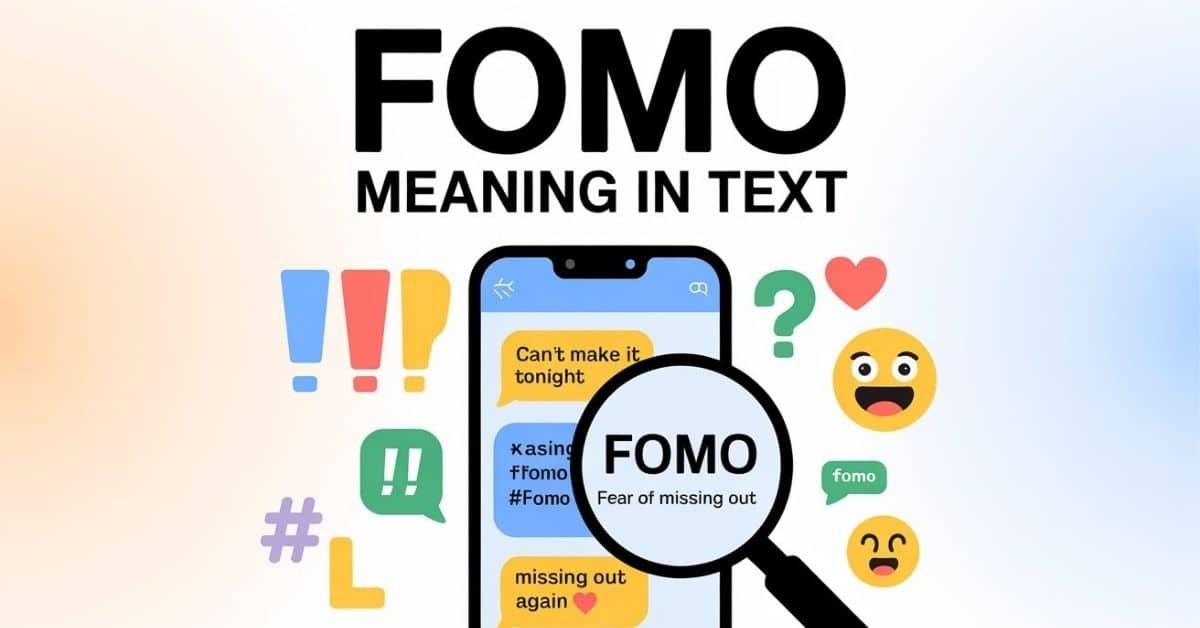
Real Examples of FOMO in Text Messages
Casual Friend Conversation
Friend: “We’re going bowling tonight.”
You: “Stop! You’re giving me FOMO already.”
Family Chat
Sibling: “Everyone is at Grandma’s house.”
You: “Now I have FOMO because I couldn’t come.”
Dating Example
Partner: “My friends are all going out tonight.”
Response: “Sounds fun. I’m getting FOMO.”
Workplace Example
Coworker: “The conference was incredible.”
You: “You’re giving me serious FOMO.”
Social Media Example
Instagram Post: “Best vacation ever.”
Comment: “This post is giving me travel FOMO.”
Learn More: Gluing or Glueing
How to Respond When Someone Says They Have FOMO
Many people understand the term but aren’t sure how to respond.
Friendly Responses
- “You’ll come next time.”
- “We missed having you there.”
- “We’ll plan another one soon.”
Funny Responses
- “Mission accomplished.”
- “Sorry, but the fun was worth it.”
- “Consider this your official FOMO warning.”
Supportive Responses
- “Don’t worry, there will be more opportunities.”
- “We’ll make sure you’re included next time.”
Flirty Responses
- “Maybe next time you should come with me.”
- “The event would’ve been better with you there.”
Is FOMO Positive or Negative?
The answer is both.
Positive Side of FOMO
Sometimes FOMO encourages people to:
- Try new activities
- Meet new people
- Explore opportunities
- Stay socially connected
Positive FOMO can motivate action.
Negative Side of FOMO
Excessive FOMO may lead to:
- Stress
- Anxiety
- Constant comparison
- Reduced satisfaction
- Social pressure
When people constantly compare their lives to others, FOMO can become emotionally draining.
FOMO vs Jealousy vs Envy
Many people confuse these emotions.
| Term | Meaning | Main Emotion |
|---|---|---|
| FOMO | Fear of missing experiences | Exclusion |
| Jealousy | Fear of losing something you have | Insecurity |
| Envy | Wanting something another person has | Desire |
| Social Anxiety | Fear of social judgment | Worry |
FOMO is unique because it focuses on missing experiences rather than possessions or relationships.
FOMO vs JOMO
You may also hear the term JOMO.
JOMO stands for Joy Of Missing Out.
Instead of feeling stressed about missing events, people with JOMO enjoy:
- Staying home
- Relaxing
- Disconnecting from social pressure
- Focusing on personal well-being
Example:
“Everyone went out tonight, but I’m enjoying my JOMO.”
JOMO is often viewed as the healthy opposite of FOMO.
Common Situations That Trigger FOMO
People experience FOMO in many areas of life.
Social Events
- Parties
- Weddings
- Gatherings
Travel
- Vacations
- Weekend trips
- Adventures
Social Media
- Instagram stories
- TikTok trends
- Snapchat posts
Career
- Job opportunities
- Conferences
- Networking events
Shopping
- Flash sales
- Limited-time offers
- Product launches
Entertainment
- Concerts
- Sporting events
- Festivals
Is FOMO Still Popular in 2026?
Yes.
Although the term has existed for years, it remains highly relevant because social media continues to play a major role in everyday life.
Modern platforms constantly expose users to:
- Trends
- Experiences
- Communities
- Opportunities
As long as people compare their experiences with others online, FOMO will likely remain part of digital culture.
How Gen Z Uses FOMO Today
Gen Z often uses FOMO casually and humorously.
Examples:
“This concert is giving me FOMO.”
“Everyone is talking about that show and I have FOMO.”
The term is frequently used even when the emotion isn’t serious.
Other Slang Terms Related to FOMO
JOMO
Joy Of Missing Out
FOBO
Fear Of Better Options
YOLO
You Only Live Once
ICYMI
In Case You Missed It
IYKYK
If You Know, You Know
POV
Point Of View
These internet slang terms often appear in the same online spaces where FOMO is commonly used.
When Should You Use the Word FOMO?
FOMO works best in casual settings.
Appropriate Uses
- Text messages
- Group chats
- Social media captions
- Online conversations
- Friendly discussions
Examples
“Your vacation photos are giving me FOMO.”
“I missed the event and now I have FOMO.”
“Everyone is talking about that trend. FOMO is real.”
Situations to Avoid
In highly formal communication, it’s usually better to use phrases such as:
- Feeling excluded
- Missing opportunities
- Regretting missing an event
Frequently Asked Questions About FOMO Meaning in Text
What does FOMO stand for?
FOMO stands for Fear Of Missing Out.
What does FOMO mean in texting?
In texting, FOMO means feeling left out or wishing you could participate in an experience others are enjoying.
Is FOMO a slang word?
Yes. FOMO is considered a popular piece of internet slang and digital communication terminology.
Why do people say FOMO?
People use FOMO to express disappointment, curiosity, regret, or anxiety about missing experiences.
What is an example of FOMO?
“Everyone went to the concert without me, and now I have FOMO.”
What is the opposite of FOMO?
The opposite is JOMO (Joy Of Missing Out).
What does FOMO mean on TikTok?
It usually refers to wanting to participate in viral trends, challenges, or popular online experiences.
Is FOMO positive or negative?
It can be both. It may motivate people to participate in experiences, but it can also create stress and anxiety.
Conclusion:
FOMO meaning in text is Fear Of Missing Out, a term used to describe the feeling of missing an enjoyable experience, opportunity, event, or trend. Whether it appears in text messages, TikTok comments, Instagram captions, Snapchat stories, WhatsApp group chats, or Discord communities, FOMO reflects a common human desire for connection, belonging, and participation. Understanding the emotional context behind FOMO helps you interpret conversations more accurately and use the term naturally in modern digital communication.