Introduction
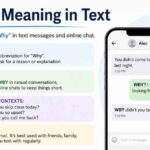
WBY meaning in text is “What About You?” It’s a popular texting abbreviation people use in text messages, Snapchat, Instagram DMs, WhatsApp, Discord, and other online conversations to ask for your thoughts, activities, opinions, or feelings while keeping the conversation going.
If you’ve ever received a message like:
“I’m watching a movie right now. WBY?”
The person is simply asking:
“What about you?“
Although the definition is straightforward, many people search for what does WBY mean in texting because they want more than a dictionary answer. They want to know how it’s used, how to reply naturally, whether it’s flirty, and if using WBY can accidentally make a conversation awkward.
In today’s world of digital communication, internet slang, online conversations, and texting culture, abbreviations help people communicate quickly. But understanding the context matters just as much as knowing the meaning itself.
This guide will teach you everything you need to know, from the basic definition to practical conversation tips that most articles completely ignore.
What Does WBY Mean in Text?
WBY stands for “What About You?”
People use it as a casual texting abbreviation to return a question back to someone else.
Simple example:
Person A:
I’m having a great day today. WBY?
Person B:
Pretty good. I just finished work and I’m relaxing at home.
Instead of typing:
“What about you?”
People shorten it to:
WBY
This saves time and keeps conversations flowing naturally.
WBY at a glance
| Abbreviation | Full Meaning | Tone | Usage |
|---|---|---|---|
| WBY | What About You | Casual | Very Common |
You will commonly see it in:
- SMS text messages
- Snapchat
- Instagram DMs
- TikTok comments
- Discord servers
- Messenger apps
- Online communities
What Does WBY Stand For?
The abbreviation breaks down very simply.
W = What
B = About
Y = You
When combined, it becomes:
What About You?
It’s considered part of internet slang, online language, and social messaging culture.
Unlike formal language, text abbreviations are designed for speed, convenience, and conversational flow.
Is WBY an Acronym or Texting Slang?
Technically, WBY is both a texting abbreviation and internet slang.
People often use these terms interchangeably.
However, there’s a small difference.
Texting abbreviation
A shortened version of a phrase.
Example:
- WBY = What About You
- WYD = What Are You Doing
- HBU = How About You
Internet slang
Informal language widely used online.
WBY falls into both categories because it’s commonly used across social media platforms and digital communication channels.
Why People Prefer WBY Instead of Typing Full Sentences
Many users wonder:
Why not just type “What about you?”
The answer is simple.
People value speed and efficiency.
Text messaging has evolved into a fast-paced communication style.
People often send dozens or hundreds of messages daily.
Typing:
What about you?
takes longer than:
WBY?
Over time, these shortcuts became normal.
Reasons people use WBY
- Saves typing time
- Feels casual
- Keeps conversations moving
- Matches modern texting habits
- Fits mobile-first communication
It also creates a more relaxed atmosphere.
How Is WBY Used in Real Conversations?
Many articles stop at the definition.
But context is what actually matters.
WBY is usually used after someone shares information.
For example:
Person A:
I just finished dinner. WBY?
Person B:
I’m about to start cooking.
Or:
Person A:
My day has been pretty busy. WBY?
Person B:
Mine has been relaxing so far.
The phrase acts as a conversation bridge.
Instead of making the discussion one-sided, it invites the other person to participate.
WBY Is a Way to Show Interest in Someone Else
Good conversations have balance.
If someone only talks about themselves, the interaction quickly becomes boring.
Using WBY demonstrates reciprocity.
It says:
“I’ve shared something about myself. Now I’d like to know about you too.”
This small phrase actually helps build stronger social connections.
That’s one reason it’s so common in online communication.
Why WBY Keeps Conversations Flowing
Conversation experts often mention a simple principle:
People enjoy talking to people who show interest in them.
WBY creates that feeling.
Instead of ending a message, it extends the interaction.
Without WBY
I had a good day.
Conversation may stop.
With WBY
I had a good day. WBY?
Conversation continues.
That tiny difference is powerful.
Real Examples of WBY in Different Situations
WBY Between Friends
Friend 1:
I’m going to watch football tonight. WBY?
Friend 2:
I’ll probably play video games.
WBY Between Classmates
Classmate 1:
Did you finish the assignment? WBY?
Classmate 2:
Almost done with it.
WBY Between Coworkers
Coworker 1:
Today has been busy. WBY?
Coworker 2:
Same here. Lots of meetings.
WBY in Casual Online Communities
User 1:
I’m from Canada. WBY?
User 2:
I’m from Australia.
WBY in a New Conversation With Someone You Like
Person:
I love traveling during summer. WBY?
Reply:
Same here. I recently visited a beach resort.
This is where many people wonder:
Is WBY flirting?
Not necessarily.
The phrase itself is neutral.
The surrounding context determines whether it’s flirty or simply friendly.
How Do You Reply to WBY Naturally?
This is one of the biggest reasons people search this keyword.
The best formula is simple.
The 3-Step Reply Formula
1. Answer
Respond to their question.
2. Add a little detail
Give extra information.
3. Keep the conversation going
Ask something back.
Example :
Instead of:
Good. WBY?
Say:
Pretty good. I just finished watching a movie. WBY?
The second response feels more engaging.
Short Reply Examples
- Pretty good.
- Just relaxing.
- Working right now.
- Watching Netflix.
- About to sleep.
Friendly Reply Examples
- Pretty good. I just got home from work.
- Doing well. Spending time with family.
- Great so far. I’m planning my weekend.
Conversation-Extending Reply Examples
- Pretty good. I just finished dinner. What are your plans tonight?
- Doing great. I started a new series recently. Have you watched anything good lately?
- Relaxing at home. How has your day been?
The goal isn’t to simply answer.
The goal is to keep the conversation flowing naturally.
WBY Meaning on Snapchat, Instagram, TikTok, WhatsApp, and Other Apps
One common question people ask is:
Does WBY mean the same thing on every app?
The short answer is yes.
Whether you see WBY on Snapchat, Instagram, WhatsApp, TikTok, Discord, Messenger, or regular text messages, it almost always means “What About You?”
However, the tone and purpose can vary slightly depending on the platform.
Where WBY is most commonly used
| Platform | Usage Level | Typical Tone |
|---|---|---|
| Text Messages | Very High | Casual |
| Snapchat | Very High | Friendly |
| Instagram DMs | High | Casual |
| High | Conversational | |
| TikTok | Moderate | Informal |
| Discord | Moderate | Community-based |
WBY on Snapchat
On Snapchat, conversations move quickly.
People often send short messages like:
Just woke up. WBY?
or
I’m at the gym 😂 WBY?
Snapchat users prefer quick, effortless communication.
WBY on Instagram DMs
Instagram conversations tend to be more social.
Examples:
I love your travel pictures. WBY? Do you travel often?
or
I mostly listen to pop music. WBY?
Instagram usage often leans toward getting to know someone better.
WBY on WhatsApp
On WhatsApp, people frequently use WBY in:
- Family chats
- Friend groups
- International conversations
- Everyday check-ins
Example:
My day was exhausting 😂 WBY?
WBY on TikTok
TikTok users may occasionally use WBY in comments or direct messages.
Example:
I love this creator. WBY?
WBY on Discord
Discord communities often use abbreviations heavily.
Example:
I’m a PC gamer. WBY?
In gaming communities, WBY simply helps build conversations.
Does WBY Mean the Same Thing Everywhere?
Almost always, yes.
However, the context changes its tone.
Think of WBY as a flexible social tool.
It can ask:
- What are you doing?
- How are you feeling?
- What’s your opinion?
- What’s your experience?
- What are your plans?
The surrounding conversation determines its meaning.
Is WBY Flirty, Rude, or Just Casual?
This is one of the biggest hidden questions behind this keyword.
The answer is:
WBY itself is neither flirty nor rude.
The context matters.
Is WBY Flirting?
Not automatically.
However, it can become flirtatious depending on the conversation.
Neutral example
I like traveling. WBY?
Flirty example
I love getting to know interesting people 😉 WBY?
The second message adds emotional cues.
The abbreviation itself doesn’t create flirtation.
The surrounding words do.
Is WBY Considered Rude?
No.
In fact, WBY often shows interest.
Instead of ending the conversation, it invites the other person to participate.
However, it may appear rude if:
- You constantly send one-word responses.
- You never add details.
- You repeatedly answer with only WBY.
Example:
Person:
How was your day?
You:
Good. WBY?
Over time, this can feel lazy.
Does WBY Sound Lazy?
Sometimes.
This depends on effort.
Low-effort response
Fine. WBY?
Better response
Pretty good. I just got back from work. WBY?
Adding context makes a huge difference.
Can WBY Sound Dry in a Conversation?
Yes.
Dry texting happens when conversations have no substance.
Bad example:
Person A:
Good. WBY?
Person B:
Fine. WBY?
The Person A:
Nothing. WBY?
This creates an endless loop.
Instead, expand your responses.
Learn More: What Does RD Mean in Text
Why People Use WBY Instead of Full Sentences
Understanding texting psychology helps explain why WBY became so popular.
People use it because modern communication values:
- Speed
- Simplicity
- Convenience
- Informality
- Efficiency
Our brains naturally prefer shortcuts when the meaning remains clear.
That’s why internet abbreviations continue to grow.
The Psychology Behind Text Abbreviations
Text abbreviations act as social efficiency tools.
People use them because they:
Reduce effort
Typing less saves time.
Match social norms
Everyone around us uses them.
Feel conversational
Short messages often feel more natural.
Lower communication barriers
They make conversations feel relaxed.
This explains why digital communication habits continue evolving.
Why Short Messages Feel More Natural Online
Most online conversations are spontaneous.
People communicate while:
- Traveling
- Working
- Studying
- Watching TV
- Multitasking
Long formal sentences often feel unnecessary in these situations.
That’s why internet slang has become part of everyday communication.
Common Mistakes People Make When Using WBY
Even though WBY is simple, people misuse it frequently.
Mistake #1: Overusing WBY
Not every message needs it.
Example:
I woke up. WBY?
I ate breakfast. WBY?
I’m watching TV. WBY?
Overuse becomes repetitive.
Mistake #2: Using WBY in Professional Settings
Avoid using WBY in:
- Job applications
- Business emails
- Formal reports
- Professional presentations
- Academic papers
Instead, write:
What about you?
Professional communication should remain clear and polished.
Mistake #3: Giving One-Word Responses
This quickly kills conversations.
Avoid:
Good.
Instead:
Pretty good. I just finished my workout.
Mistake #4: Accidentally Killing the Conversation
Never create dead-end replies.
Bad:
Fine.
Good:
Fine. I just finished dinner. What are you doing tonight?
The goal is to build momentum.
When Should You Avoid Using WBY?
WBY belongs in informal communication.
Avoid it in situations requiring professionalism.
Don’t use WBY in:
- Business meetings
- Cover letters
- Client emails
- University essays
- Professional LinkedIn posts
- Formal presentations
Remember:
Professional writing values clarity over speed.
WBY vs Similar Texting Abbreviations
Many people confuse these abbreviations.
Here’s the difference.
| Abbreviation | Meaning | Primary Use |
|---|---|---|
| WBY | What About You | Return a question |
| WBU | What About You | Similar meaning |
| HBU | How About You | Ask for input |
| WYD | What Are You Doing | Ask about activity |
| WSG | What’s Good | Casual greeting |
WBY vs WBU
These are essentially identical.
Both mean:
What About You?
Usage depends on personal preference.
WBY vs HBU
HBU means:
How About You?
It sounds slightly more conversational.
Example:
I like coffee. HBU?
WBY vs WYD
These are completely different.
WYD means:
What Are You Doing?
It specifically asks about someone’s activity.
Example:
WYD tonight?
How to Keep a Conversation Going After WBY
This is where many people struggle.
The secret is simple.
The Conversation Expansion Framework
1: Answer
2: Add detail
3: Ask a follow-up question
Example:
Person:
I just got home from work. WBY?
Weak response:
Same.
Strong response:
I just finished dinner and started watching a movie. What are you planning to do tonight?
The stronger response creates new opportunities for discussion.
Texting Mistakes That Make You Sound Uninterested
Avoid these habits.
- One-word replies
- Repeating WBY constantly
- Never asking follow-up questions
- Providing zero details
- Waiting too long to respond repeatedly
Small changes dramatically improve conversations.
Why WBY Can Sometimes Kill a Conversation
This is something most articles never discuss.
WBY itself isn’t the problem.
Low-effort communication is the problem.
Conversations die when people only exchange information without adding personality.
Instead of saying:
Good. WBY?
Try:
Pretty good. I just started a new TV series. Have you watched anything recently?
This makes the interaction more engaging.
How Different Age Groups Use WBY
Another interesting question many people have is:
Who actually uses WBY?
The answer is simple.
There isn’t a single age group that owns this abbreviation anymore.
Although Gen Z slang and social media trends helped popularize internet abbreviations, people of various ages now use them in everyday conversations.
How Gen Z Uses WBY
Gen Z grew up with smartphones, social media, and instant messaging.
For them, abbreviations feel natural.
You’ll commonly see WBY used on:
- Snapchat
- TikTok
- Discord
- Group chats
Examples:
I’m studying right now 😂 WBY?
I love this trend. WBY?
Gen Z often combines WBY with emojis and other internet slang.
How Millennials Use WBY
Millennials also use WBY frequently.
However, their communication style is often slightly more detailed.
Example:
Just got back from work. WBY?
Millennials tend to balance abbreviations with complete sentences.
Do Adults Use WBY?
Absolutely.
Many adults use WBY in:
- Family group chats
- Friend conversations
- Casual work chats
- Messaging apps
However, adults usually understand when to switch between informal and professional language.
Does Everyone Understand WBY?
Not always.
Some people, especially those less familiar with internet slang, may not immediately recognize it.
That’s why understanding your audience matters.
If you’re unsure whether someone understands abbreviations, simply type:
What about you?
Clear communication is always better than confusion.
5 Better Ways to Reply Than Simply Saying “WBY” Again
Repeating WBY endlessly creates boring conversations.
Instead, try expanding your responses.
Example 1
Instead of:
Good. WBY?
Say:
Pretty good. I just finished a workout.
Example 2
Instead of:
Nothing much. WBY?
Say:
Not much, just watching a movie and relaxing.
Example 3
Instead of:
Busy. WBY?
Say:
Busy day today. I’ve been working all afternoon.
Example 4
Instead of:
Fine. WBY?
Say:
Pretty good. Looking forward to the weekend.
Should You Use WBY at Work?
This is a question many people overlook.
The answer is:
It depends on the environment.
Safe situations
- Casual team chats
- Friendly coworker messages
- Internal group conversations
Avoid using WBY in:
- Professional emails
- Client communication
- Presentations
- Reports
- Job applications
When in doubt, write:
What about you?
instead.
Professional communication should prioritize clarity.
Frequently Asked Questions About WBY
What does WBY mean from a girl?
The meaning doesn’t change.
It still means “What About You?”
However, the tone depends on the conversation.
She could simply be:
- Being friendly
- Showing interest
- Continuing a conversation
- Getting to know you
The surrounding context matters more than the abbreviation itself.
What does WBY mean from a guy?
Again, the meaning remains the same.
It usually means:
What about you?
Most of the time, it’s simply a conversation tool.
Don’t automatically assume romantic interest.
Look at the entire interaction instead.
Is WBY Gen Z slang?
Partially.
Gen Z uses it frequently, but it’s no longer limited to one generation.
Many Millennials and adults use it too.
It has become part of broader internet communication culture.
Is WBY professional?
No.
WBY is considered informal.
Avoid using it in:
- Formal business communication
- Academic writing
- Official documents
Is WBY the same as WBU?
Yes.
Both generally mean:
What About You?
People choose one based on personal preference.
Can adults use WBY?
Absolutely.
Age doesn’t matter.
The setting matters more.
Is WBY used worldwide?
Yes.
Since English dominates many online platforms, WBY appears globally.
It’s especially common on:
- Snapchat
- Discord
- Messenger apps
However, its popularity may vary by region.
Should I use WBY with someone I just met?
Yes, if the conversation is casual.
For example:
I enjoy traveling during summer. WBY?
This sounds natural and friendly.
Avoid overusing it, though.
Balance abbreviations with genuine conversation.
Quick Summary: What WBY Really Means
Here’s the simple takeaway.
WBY = What About You
People use it to:
- For your opinion
- How you’re doing
- What you’re doing
- Keep conversations going
- Show interest in you
It’s one of the most common texting abbreviations used in digital communication, online conversations, and social messaging platforms.
Key Takeaways
- WBY means “What About You?”
- It’s a popular internet slang abbreviation.
- It’s used in text messages, Snapchat, Instagram, WhatsApp, TikTok, Discord, and Messenger apps.
- It’s generally casual and friendly.
- WBY is not automatically flirty or rude.
- Context determines its meaning.
- Avoid using WBY in formal communication.
- Adding details to your replies makes conversations more engaging.
- One-word responses can make conversations feel dry.
- The best conversations happen when both people actively participate.
Final Thought
The next time someone sends:
“WBY?”
You won’t just know the definition.
You’ll know why people use it, how to interpret the context, and how to reply in a way that keeps the conversation interesting.