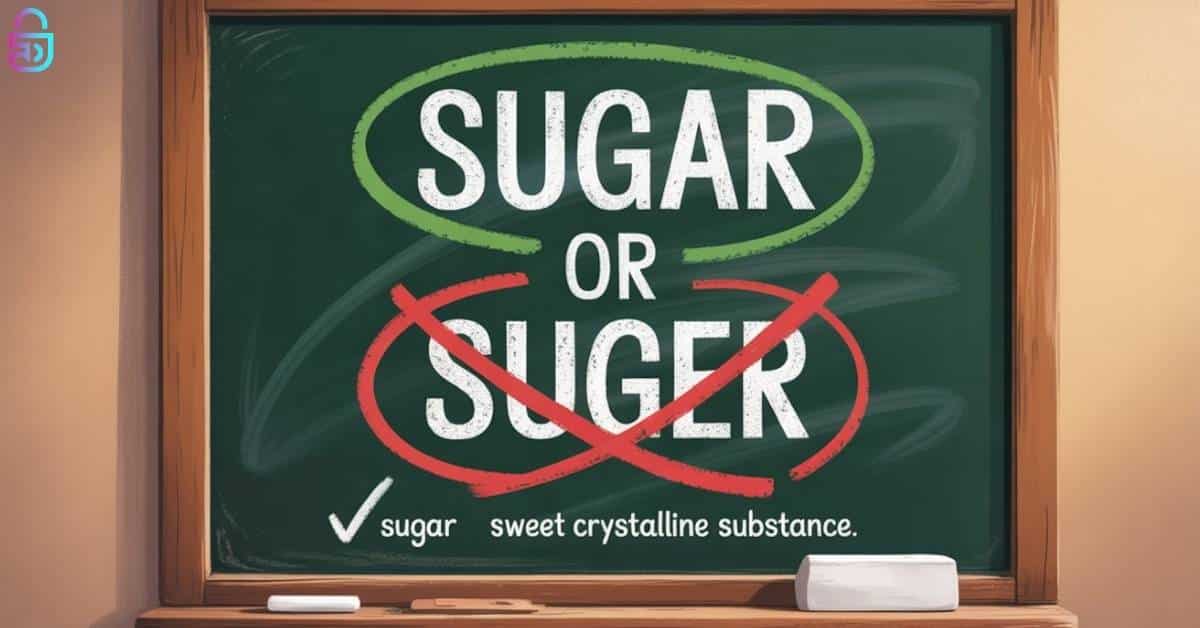
Sugar or suger — if you’ve ever typed this into a search engine, you’re not alone. Let’s answer it clearly right away: the correct spelling is “sugar,” while “suger” is a common misspelling. If you’re wondering “is it sugar or suger?”, the answer is simple—“sugar” is the only correct word in standard English.
But here’s where most articles stop—and where this one goes further.
This guide doesn’t just fix the sugar or suger spelling confusion. It explains what sugar really is, how it’s used, why people misspell it, its types, and even its impact on your health. By the end, you’ll have a complete understanding—not just a quick answer.
Sugar or Suger — What Is the Correct Spelling?
Let’s make it crystal clear:
| Term | Correct? | Explanation |
| Sugar | ✅ Yes | Standard English spelling |
| Suger | ❌ No | Common typo or phonetic mistake |
The confusion around is it sugar or suger comes mainly from pronunciation. People often write what they hear, and “sugar” can sound like “shuger” or “suger.”
👉 Quick Fact: Search engines like Google automatically correct “suger” to “sugar,” which shows how dominant the correct spelling is.
Why Do People Write “Suger” Instead of “Sugar”?
This mistake is more common than you might think. Here’s why:
1. Pronunciation Confusion
“Sugar” is pronounced /ˈʃʊɡər/, which doesn’t match its spelling perfectly.
2. Phonetic Typing
People often spell words the way they sound.
3. Fast Typing Errors
Typing quickly leads to dropping or replacing letters.
4. Lack of Awareness
Many users simply don’t realize “suger” is incorrect.
What Does “Sugar” Mean?
According to standard dictionaries like Merriam-Webster, sugar is:
“A sweet crystalline substance obtained from plants and used as a food ingredient.”
Simple Meaning
In everyday language, sugar is a sweet substance used in food and drinks.
Scientific Meaning
In science, sugar refers to a type of carbohydrate, including:
- Glucose
- Fructose
- Sucrose
What Is Sugar Made Of?
Sugar is composed of basic chemical units:
| Component | Description |
| Glucose | Main energy source for the body |
| Fructose | Naturally found in fruits |
| Sucrose | Table sugar (glucose + fructose) |
Natural Sources of Sugar
- Sugarcane
- Sugar beet
- Fruits
- Milk
Types of Sugar You Should Know
Most competitors ignore this—but it’s critical for SEO and user value.
1. Natural Sugar
- Found in fruits, vegetables, and milk
- Comes with nutrients and fiber
2. Added Sugar
- Added during processing
- Found in soft drinks, sweets, and packaged foods
3. Simple Sugars
- Glucose
- Fructose
4. Complex Sugars
- Chains of sugar molecules
- Found in grains and starches
Is Sugar a Carbohydrate?
Yes—sugar is a type of carbohydrate.
Carbohydrates are the body’s main energy source, and sugar is the simplest form.
Quick Breakdown
| Nutrient | Role |
| Carbohydrates | Provide energy |
| Sugar | Quick energy source |
How to Use “Sugar” in Sentences (Examples)
Understanding usage helps reinforce correct spelling.
Examples:
- I added sugar to my tea.
- This cake contains too much sugar.
- Fruits contain natural sugar.
Formal vs Informal Use
- Formal: “The product contains added sugar.”
- Informal: “This drink has a lot of sugar!”
Sugar Pronunciation: Why It Confuses People
The word “sugar” is pronounced:
👉 /ˈʃʊɡər/
This creates confusion because:
- The “sh” sound isn’t obvious from spelling
- It doesn’t follow simple phonetic rules
Common Misspellings of Sugar
Here are frequent mistakes:
- suger
- shugar
- suggar
👉 All of these are incorrect—but widely searched.
Sugar in Food and Daily Life
Sugar is everywhere, often hidden in everyday items.
Common Sources
| Category | Examples |
| Drinks | Soda, juice |
| Snacks | Cookies, chocolates |
| Processed foods | Sauces, cereals |
Is Sugar Bad for You? (Health Overview)
This is where your content outperforms competitors.
Sugar itself isn’t “bad”—but excess consumption is harmful.
According to World Health Organization:
“Reducing free sugar intake lowers the risk of obesity and tooth decay.”
Potential Effects of Too Much Sugar
- Weight gain
- Increased risk of diabetes
- Tooth decay
How Much Sugar Should You Consume Daily?
Recommended Intake
| Group | Limit |
| Adults | ~25–50g per day |
| Children | Even less |
👉 Moderation is key.
LEARN MORE: Onlay or Inlay
Natural vs Added Sugar — What’s the Difference?
| Type | Source | Health Impact |
| Natural Sugar | Fruits, milk | Generally safe |
| Added Sugar | Processed foods | Harmful in excess |
How to Reduce Sugar Intake
Simple but effective steps:
- Read food labels
- Avoid sugary drinks
- Choose whole foods
- Cook at home
Sugar Alternatives You Can Consider
If you want to reduce sugar:
- Honey
- Stevia
- Maple syrup
👉 These can be better options when used wisely.
Quick Summary: Sugar vs Suger
Let’s wrap up the core idea:
- Correct spelling: Sugar ✅
- Incorrect spelling: Suger ❌
- Sugar is a carbohydrate and energy source
- Excess sugar can affect health
Frequently Asked Questions
Is “suger” ever correct?
No, “suger” is always incorrect in standard English.
Why is sugar spelled this way?
It comes from historical language evolution, not phonetic logic.
What type of carbohydrate is sugar?
It is a simple carbohydrate.
What does sugar do to your body?
It provides energy but can cause health issues if overconsed.
Can I completely avoid sugar?
Not entirely—natural sugars are present in many healthy foods.
Final Thoughts
Understanding sugar or suger spelling is just the starting point. While “suger” is a simple mistake, the topic of sugar itself is much deeper—from its meaning and types to its role in your daily diet.
If you came here asking “is it sugar or suger,” now you not only know the correct answer—you understand the full picture.
And that’s exactly what helps content rank—not just answering a question, but owning the topic completely.