Quick Answer
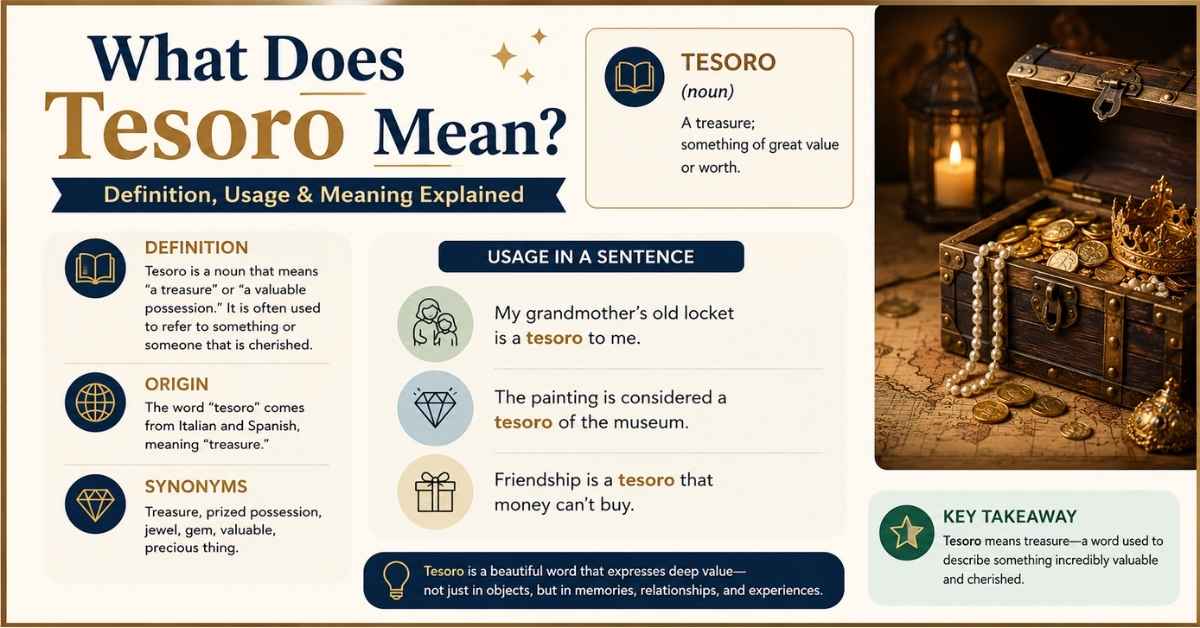
What does tesoro mean? It is a Spanish word that literally means “treasure.” However, in everyday conversation, it is more commonly used as an affectionate term meaning “darling,” “sweetheart,” or “my treasure.” It expresses warmth, care, emotional closeness, and love, depending on context.
In simple terms: when someone calls you tesoro, they are usually saying you are valuable to them emotionally, not just linguistically “a treasure.”
Understanding the True Meaning
At its core, tesoro belongs to the emotional vocabulary of the Spanish language and is widely used in both literal and affectionate contexts.
Literal Meaning
- Tesoro = Treasure
- Refers to something valuable, precious, or hidden
- Can describe physical wealth or objects
Emotional / Social Meaning
In real-life communication, tesoro shifts far beyond its dictionary definition. It becomes a term of endearment, similar to:
- Darling
- Sweetheart
- My love
- Dear
This dual meaning is why many people search “what does tesoro mean” after hearing it in conversation rather than seeing it in a dictionary.
Why It Confuses So Many People
Most users don’t search this keyword out of curiosity alone—they encounter it in real communication:
- A text message from a partner
- A comment on social media
- A romantic conversation
- A Spanish-speaking friend or colleague
This creates confusion because:
- It sounds emotional
- It feels personal
- It doesn’t translate directly into English emotion
So the real question users are asking is:
“Why did someone call me tesoro, and what does it mean about our relationship?”
What Does It Mean When Someone Calls You Tesoro?
The meaning depends heavily on context, tone, and relationship type.
❤️ Romantic Context
When used in romantic relationships, tesoro usually means:
- “My love”
- “My darling”
- “Someone I deeply care about”
Example:
“Buenos días, tesoro.” (Good morning, sweetheart.)
It often signals:
- Affection
- Emotional closeness
- Comfort in the relationship
💬 When a Crush Uses
This is where interpretation becomes important.
It may mean:
- Light flirting
- Friendly warmth
- Emotional interest
Key insight: In Spanish-speaking cultures, affectionate words are often used more freely than in English. So tesoro alone is not always a confession of love—it is a soft emotional signal, not a guarantee of romance.
👨👩👧 Family Usage
Within families, it is extremely common:
- Parents to children
- Grandparents to grandchildren
- Older relatives to younger family members
Example:
“Ven aquí, tesoro.” (Come here, my dear.)
Here, it expresses:
- Protection
- Care
- Emotional warmth
No romantic meaning is implied.
🤝 Friendly Usage
Among close friends, it can mean:
- “Dear friend”
- “Thanks, buddy”
- “You’re kind”
Example:
“Gracias, tesoro.” (Thank you, dear.)
This is where many learners misunderstand the tone—it is affectionate but not romantic.
Is It Is Romantic or Not?
The truth is: it can be both.
Romantic When:
- Used by a partner
- Used in intimate tone
- Accompanied by romantic language
- Repeated frequently in private communication
Non-Romantic When:
- Used by family
- Used in casual friendliness
- Used in warm but neutral conversations
👉 The key rule in Spanish communication culture is:
Words like tesoro describe emotional closeness, not just relationship type.
Cultural Meaning in Spanish Communication
In Spanish-speaking cultures (Spain and Latin America), emotional vocabulary is more expressive than in English.
As part of everyday communication, people naturally use words like:
- Tesoro
- Cariño
- Mi amor
- Corazón
- Querido/a
These words reflect a cultural tendency toward emotional expressiveness and warmth in speech.
Regional Notes
🇪🇸 Spain
- Very common in daily speech
- Used casually between friends and family
- Often not strictly romantic
🌎 Latin America
- Usage varies by country
- Can feel slightly more intimate depending on tone
- Still widely used in family contexts
Tesoro vs Other Spanish Terms of Endearment
A Tesoro vs Cariño
- Tesoro: Emotional value, “treasure”
- Cariño: Affection, “dear/affection”
The Tesoro vs Mi Amor
- Tesoro: Softer, more flexible
- Mi Amor: Strong romantic love
Tesoro vs Corazón
- Tesoro: Value-based affection
- Corazón: Emotional heart connection
Tesoro vs Bebé
- Tesoro: Warm and universal
- Bebé: More romantic, modern, intimate
What Does “Mi Tesoro” Mean?
When someone says “mi tesoro”, it intensifies the meaning:
“My treasure” → “Someone extremely valuable to me.”
This version often appears in:
- Romantic relationships
- Family expressions
- Deep emotional bonding
It increases emotional weight but still depends on context.
In Text Messages and Modern Communication
In digital communication, It is widely used across:
- WhatsApp chats
- Instagram DMs
- Facebook Messenger
- Dating apps
Why It’s Common in Texting:
- Short and emotional
- Expresses warmth quickly
- Builds connection instantly
Example:
“Hola tesoro, ¿cómo estás?” (Hi sweetheart, how are you?)
Is Calling Someone Tesoro Flirting?
Not always—but it can be.
Likely Flirting:
- New romantic context
- Repeated affectionate use
- Paired with compliments
Probably Not Flirting:
- Family communication
- Friendly conversation
- Casual cultural speechThe safest interpretation:
Tesoro is an emotional word, not a direct romantic declaration. Context determines meaning.
How to Respond When Someone Calls You ?
If You Like Them ❤️
You can respond warmly:
- “Hola, tesoro 😊”
- “Buenos días, cariño”
- Mirror their tone naturally
If You Are Unsure 🤔
- Keep it neutral
- Respond politely without emotional escalation
If You Want to Stay Friendly 🙂
- Use neutral gratitude
- Avoid romantic tone
- Maintain boundaries naturally
Learn More: Afterward or Afterwards
Common Misunderstandings
Many learners misunderstand this word because:
❌ Mistake 1: Thinking it always means romantic love
It does not.
❌ Mistake 2: Translating it literally
“Treasure” ≠ emotional meaning in all contexts.
❌ Mistake 3: Ignoring cultural usage
Spanish speakers use affectionate words more freely than English speakers.
Related Words You Will Often Hear
You must understand its semantic family:
- Cariño (affection)
- Mi amor (my love)
- Corazón (heart)
- Querido/a (dear)
- Cielo (heaven/darling)
- Precioso/a (beautiful/precious)
These words form a network of emotional Spanish expressions, often overlapping in meaning depending on tone and context.
Frequently Asked Questions
What does tesoro mean in Spanish?
It means treasure, but it is also used as an affectionate nickname meaning sweetheart or darling.
Is it romantic?
It can be, but it depends on context and relationship.
Can friends say tesoro?
Yes, close friends often use it affectionately.
What does mi tesoro mean?
It means “my treasure” and expresses strong emotional attachment.
What does it mean from a guy or girl?
It usually means affection, but romantic intent depends on context.
Is this is flirting?
Sometimes, but not always—it depends on tone and situation.
Final Insight: The Real Meaning
The true meaning of tesoro goes beyond translation.
It is not just a word—it is an emotional expression of value and closeness.
In Spanish communication, calling someone tesoro is less about saying “you are a treasure” and more about saying:
“You matter to me.”
And that is why understanding tesoro requires more than language—it requires understanding human emotion and cultural context.