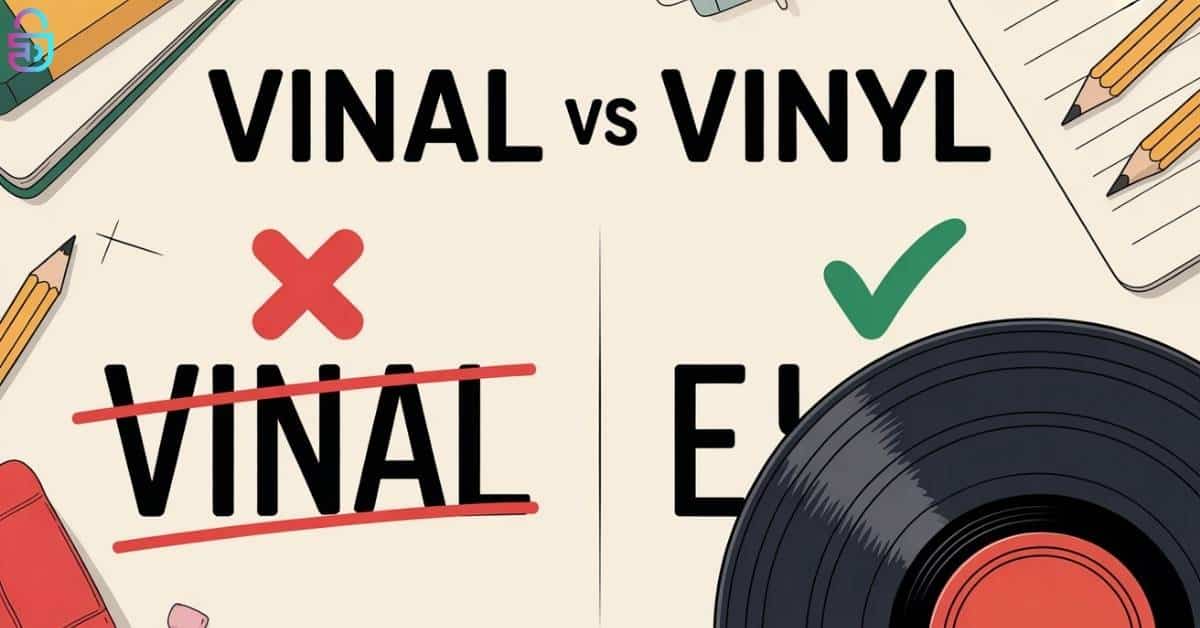
Vinal vs Vinyl is a common confusion, but the answer is simple: “vinyl” is the correct spelling, while “vinal” is usually a misspelling or, in rare cases, a highly technical term used in chemistry. If you’ve ever wondered whether you should write vinal flooring or vinyl records, the correct choice is always vinyl in everyday English.
This guide will clearly explain the difference between vinal and vinyl, their meanings, correct usage, pronunciation, and real-life examples—so you never make this mistake again.
Vinal vs Vinyl
- Vinyl → ✅ Correct spelling, widely used
- Vinal → ❌ Incorrect in most contexts (rare technical usage)
- Vinyl meaning → A plastic material (polymer) used in flooring, records, and more
Vinal vs Vinyl: Key Differences
| Feature | Vinyl | Vinal |
| Correct spelling | ✅ Yes | ❌ No |
| Meaning | Plastic/material | Rare/technical |
| Usage | Very common | Extremely rare |
| Context | Flooring, records, wraps | Chemistry (limited) |
What Does Vinyl Mean?
Definition of Vinyl
Vinyl refers to a synthetic plastic material, commonly made from polyvinyl chloride (PVC). It is widely used due to its durability, flexibility, and moisture resistance.
In simple terms, vinyl is a type of plastic used in everyday products.
Types of Vinyl
Vinyl comes in different forms depending on its use:
- PVC (Polyvinyl Chloride) – Most common type
- Flexible vinyl – Used in upholstery and fashion
- Rigid vinyl – Used in construction and pipes
Common Uses of Vinyl
Vinyl is everywhere in daily life:
- Vinyl flooring – Waterproof and durable
- Vinyl records – Used in music and analog sound
- Vinyl wraps – For cars and branding
- Upholstery – Furniture covering
Is “Vinal” a Real Word?
Dictionary Insight
Technically, “vinal” does exist, but only as a rare scientific term referring to a type of synthetic fiber.
Why It’s Usually Incorrect
In everyday English:
- It is not used in common vocabulary
- Most uses are simply spelling mistakes
- Search engines treat it as a variation of “vinyl”
👉 So, if you’re writing for general audiences, avoid using “vinal” completely.
Why Do People Confuse Vinal and Vinyl?
This confusion happens more often than you might think. Here’s why:
1. Similar Pronunciation
The word vinyl (/ˈvaɪ.nəl/) sounds very close to “vinal,” leading to errors.
2. Typing Mistakes
People often type quickly and replace “y” with “a” accidentally.
3. Lack of Awareness
Many users are unfamiliar with the correct spelling.
4. Autocorrect Issues
Some devices fail to correct “vinal,” reinforcing the mistake.
Pronunciation Guide
The correct pronunciation of vinyl is:
/ˈvaɪ.nəl/ → sounds like “vai-nuhl”
This pronunciation explains why people mistakenly write “vinal.”
How to Use Vinyl Correctly
Examples in Sentences
- “I bought a vinyl record for my collection.”
- “This house has vinyl flooring installed.”
- “Vinyl is a durable material for furniture.”
Usage in Different Contexts
1. Music Industry
Vinyl records are known for their analog sound quality.
2. Construction
Vinyl flooring is popular due to its waterproof properties.
3. Fashion & Design
Vinyl is used in bags, jackets, and upholstery.
Vinyl in Real Life: Practical Examples
🎵 Music Industry
Vinyl has made a strong comeback in recent years.
Case Study:
According to industry reports, vinyl record sales have surged globally, as listeners prefer authentic analog sound over digital formats.
🏠 Home Improvement
Vinyl flooring is widely used because it is:
- Affordable
- Water-resistant
- Easy to maintain
🏢 Commercial Use
Businesses use vinyl for:
- Branding wraps
- Signage
- Advertising materials
Vinyl vs Plastic: Are They the Same?
This is another common question.
- Vinyl is a type of plastic
- Not all plastic is vinyl
Key Difference:
| Material | Description |
| Vinyl | A specific polymer (PVC) |
| Plastic | A broad category of materials |
👉 So, vinyl is more specialized than general plastic.
Origin of the Word “Vinyl”
The term vinyl comes from chemistry, specifically from compounds derived from ethylene.
Over time, it evolved into a common term used in:
- Manufacturing
- Construction
- Music
How to Remember the Correct Spelling
Here’s a simple trick:
👉 “Vinyl has a ‘Y’ like ‘style’—used in design and materials.”
This helps you associate vinyl with real-world applications.
When Should You Use “Vinal”?
Almost never.
Use “vinal” only if:
- You are writing scientific or chemical content
- You specifically refer to synthetic fibers
Otherwise, always use vinyl.
Common Mistakes to Avoid
Many people make these errors:
- Writing “vinal flooring” ❌
- Saying “vinal records” ❌
- Assuming both words are interchangeable ❌
Vinal vs Vinyl in Search Trends
Interestingly, both terms are searched online.
Why “Vinal” Still Gets Traffic:
- Frequent spelling mistakes
- User confusion
- Voice search errors
Insight:
Targeting both keywords helps you:
- Capture misspelled traffic
- Rank for long-tail keywords
- Improve search visibility
FAQs
Is vinal a correct spelling?
No, vinal is generally incorrect and should be replaced with vinyl.
What does vinyl mean?
Vinyl is a synthetic plastic material (PVC) used in flooring, records, and more.
Why do people spell vinyl as vinal?
Because of similar pronunciation and typing mistakes.
How do you pronounce vinyl?
It is pronounced /ˈvaɪ.nəl/.
What is vinyl used for?
Vinyl is used in:
- Flooring
- Music records
- Furniture
- Commercial wraps
Learn More: Tweek vs Tweak
Final Verdict
Let’s make it clear:
- Vinyl → ✅ Correct, widely used
- Vinal → ❌ Incorrect (except rare technical usage)
If you remember one thing from this guide, let it be this:
👉 Always use “vinyl” in everyday writing.
Conclusion
Understanding the difference between vinal vs vinyl is essential for clear and accurate communication. While “vinal” may exist in a limited scientific sense, it has no place in everyday English usage.
By using the correct spelling, understanding its meaning, and applying it properly in sentences, you can avoid a very common mistake and improve your writing instantly.
As language continues to evolve, clarity remains key—and choosing the right word makes all the difference.