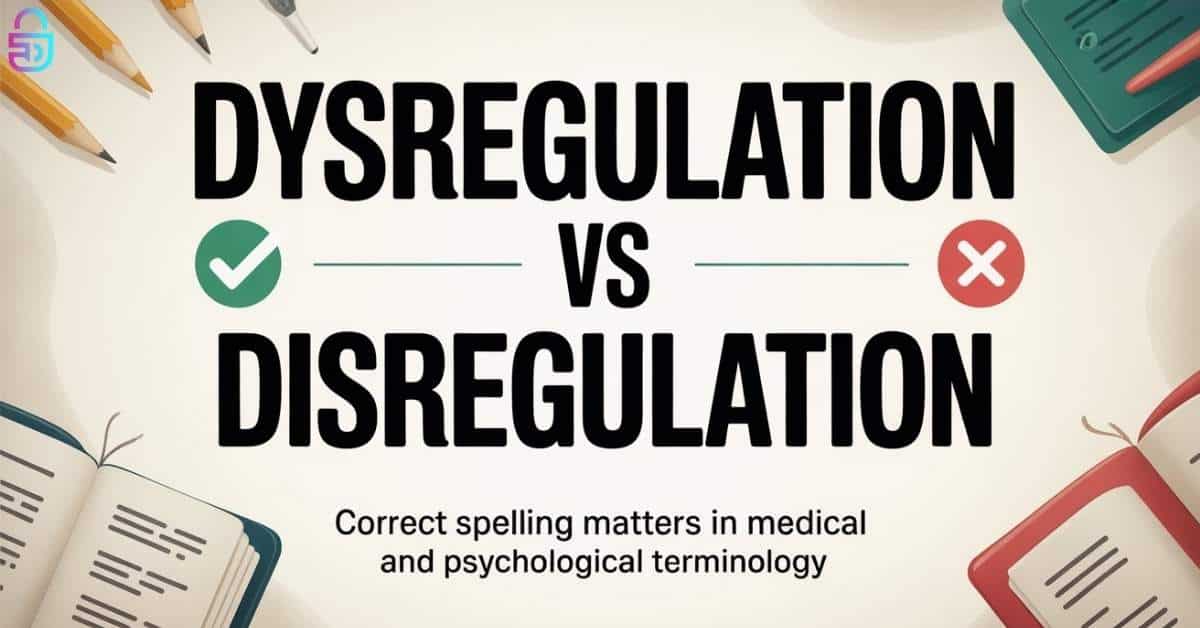
Dysregulation vs disregulation is a common search query, and the answer is simple: “dysregulation” is the correct and accepted term, while “disregulation” is generally considered a misspelling or non-standard word.
Most people searching this keyword are trying to confirm the correct spelling and understand whether both terms carry the same meaning.
The confusion often arises because both prefixes—“dis-” and “dys-”—exist in English, but they have very different meanings. While “dis-” typically implies absence or reversal, “dys-” refers to something functioning abnormally or improperly, which is exactly what dysregulation describes.
In modern usage, especially in psychology, biology, and mental health, the term dysregulation is widely used to describe an imbalance or impairment in emotional, physiological, or behavioral regulation.
Understanding this concept goes beyond spelling—it opens the door to understanding how the brain, emotions, and body respond to stress, trauma, and everyday challenges.
Is “Disregulation” a Real Word?
The short answer is: No, “disregulation” is not a standard or widely accepted word in English.
While you may occasionally find it used informally, it is not recognized in formal dictionaries or academic contexts. In contrast, dysregulation is a well-established term used in psychology, medicine, and neuroscience.
Quick Comparison Table
| Term | Status | Meaning | Usage Context |
| Dysregulation | ✅ Correct | Impaired or abnormal regulation | Psychology, biology |
| Disregulation | ❌ Incorrect | Non-standard / misspelling | Rare / informal |
👉 Conclusion: Always use “dysregulation” in professional and academic writing.
Key Difference.
The difference between dysregulation vs disregulation comes down to accuracy and meaning.
- Dysregulation refers to difficulty managing emotional, behavioral, or physiological responses.
- Disregulation is simply a spelling error or misunderstanding.
Why the Confusion Happens
This confusion is rooted in prefix similarity:
- “Dis-” = absence, removal (e.g., disconnect, disorder)
- “Dys-” = abnormal, impaired (e.g., dysfunction, dyslexia)
Because both prefixes sound similar, many users mistakenly type “disregulation” instead of “dysregulation.”
What Is Dysregulation?
Dysregulation means the inability to properly control or manage internal processes, especially emotions, behaviors, or bodily functions.
In simple terms:
👉 It’s when your system struggles to stay balanced.
This imbalance can affect:
- Emotions (e.g., mood swings, emotional instability)
- Behavior (e.g., impulsivity, overreaction)
- Body functions (e.g., stress response, nervous system activity)
Dysregulation in Psychology and Medicine
In psychology, dysregulation often refers to emotional dysregulation, which is the difficulty in managing emotional responses appropriately.
In biology or medicine, it can describe:
- Immune system dysregulation
- Hormonal imbalance
- Nervous system dysregulation
Expert Insight
“Emotional dysregulation is not about having emotions—it’s about the difficulty in managing them effectively.”
Dysregulated Meaning (Adjective Form)
The term “dysregulated” describes someone or something experiencing dysregulation.
Examples:
- A person may feel emotionally dysregulated after stress.
- A child may show behavioral dysregulation in school.
Types of Dysregulation
Understanding the types of dysregulation helps build topical depth and clarity.
1. Emotional Dysregulation
- Intense mood swings
- Difficulty calming down
- Overreacting to situations
2. Behavioral Dysregulation
- Impulsive actions
- Aggression or withdrawal
- Difficulty controlling reactions
3. Physiological Dysregulation
- Irregular heart rate
- Stress response imbalance
- Nervous system dysfunction
Emotional Regulation vs Dysregulation
This comparison is crucial for understanding the concept fully.
| Emotional Regulation | Emotional Dysregulation |
| Balanced emotional response | Extreme or unstable reactions |
| Controlled behavior | Impulsive or reactive behavior |
| Calm under stress | Overwhelmed easily |
👉 Key takeaway: Dysregulation is the opposite of emotional control.
Symptoms of Dysregulation
Recognizing symptoms helps identify the issue early.
Common Symptoms:
- Mood swings
- Emotional instability
- Impulsivity
- Difficulty focusing
- Stress sensitivity
Physical Signs:
- Fatigue
- Increased heart rate
- Sleep disturbances
Examples of Dysregulation in Everyday Life
To make this relatable, here are real-life examples:
Case Study 1: Workplace Stress
A person reacts aggressively to minor feedback due to stress response dysregulation.
Case Study 2: Relationships
Frequent arguments due to emotional overreaction.
Case Study 3: Parenting
A child throwing tantrums due to poor emotional control.
What Does Emotional Dysregulation Feel Like?
This is a high-intent user question.
People often describe it as:
- Feeling overwhelmed by emotions
- Difficulty “switching off” stress
- Experiencing intense reactions to small triggers
👉 It’s like your internal system is stuck in overdrive.
What Causes Dysregulation?
Dysregulation doesn’t happen randomly. It is often linked to underlying factors.
Common Causes:
- Chronic stress
- Trauma
- Brain chemistry imbalance
- Mental health conditions
Conditions Linked to Dysregulation
Dysregulation is associated with several conditions:
- ADHD
- PTSD
- Anxiety disorders
- Depression
These conditions affect brain regulation systems, leading to impaired emotional and behavioral control.
Dysregulation and the Nervous System
The nervous system plays a critical role in regulation.
When dysregulated:
- The body may stay in fight-or-flight mode
- Stress hormones remain elevated
- Relaxation becomes difficult
👉 This explains why people feel constantly on edge or overwhelmed.
How to Manage Emotional Dysregulation
This is where your article can outperform competitors.
Effective Strategies:
- Deep breathing techniques
- Mindfulness practices
- Emotional awareness training
Coping Strategies for Dysregulation
- Grounding exercises
- Journaling
- Physical activity
These techniques help restore balance and emotional control.
Therapy and Treatment Options
Professional help can significantly improve regulation.
Common Therapies:
- Cognitive Behavioral Therapy (CBT)
- Dialectical Behavior Therapy (DBT)
These focus on:
- Emotional control
- Behavioral patterns
- Coping mechanisms
How to Calm Dysregulation in the Moment
Quick actions:
- Pause and breathe
- Step away from triggers
- Focus on physical sensations
👉 These help reset the stress response system.
Emotional Dysregulation in Adults
Adults may experience:
- Workplace stress
- Relationship conflicts
- Anxiety-driven reactions
Emotional Dysregulation in Children
Children often show:
- Tantrums
- Impulsivity
- Difficulty expressing emotions
Early intervention is key.
Learn More: Trainning or Training
Dysregulation in Relationships
Dysregulation can lead to:
- Miscommunication
- Emotional conflicts
- Trust issues
👉 Healthy communication can improve outcomes.
How to Use “Dysregulation” in a Sentence
- “Emotional dysregulation can affect daily life.”
- “Stress can lead to nervous system dysregulation.”
- “Therapy helps manage behavioral dysregulation.”
Common Mistakes with Dysregulation
- Using “disregulation” instead of “dysregulation”
- Misunderstanding its meaning
- Overusing it without context
Frequently Asked Questions About Dysregulation vs Disregulation
Is disregulation a real word?
No, it is a misspelling of dysregulation.
What is dysregulation in psychology?
It refers to difficulty managing emotions and behavior.
Can dysregulation be treated?
Yes, through therapy and coping strategies.
Is dysregulation a mental illness?
No, but it is often linked to mental health conditions.
Conclusion About Dysregulation vs Disregulation
To sum up, dysregulation vs disregulation is not really a comparison—it’s a correction. The correct term is dysregulation, widely used in psychology, biology, and mental health to describe imbalances in emotional, behavioral, or physiological systems.
Understanding dysregulation is important because it affects how we think, feel, and respond to the world around us. With the right awareness and strategies, it is possible to manage and improve regulation, leading to better mental and emotional well-being.