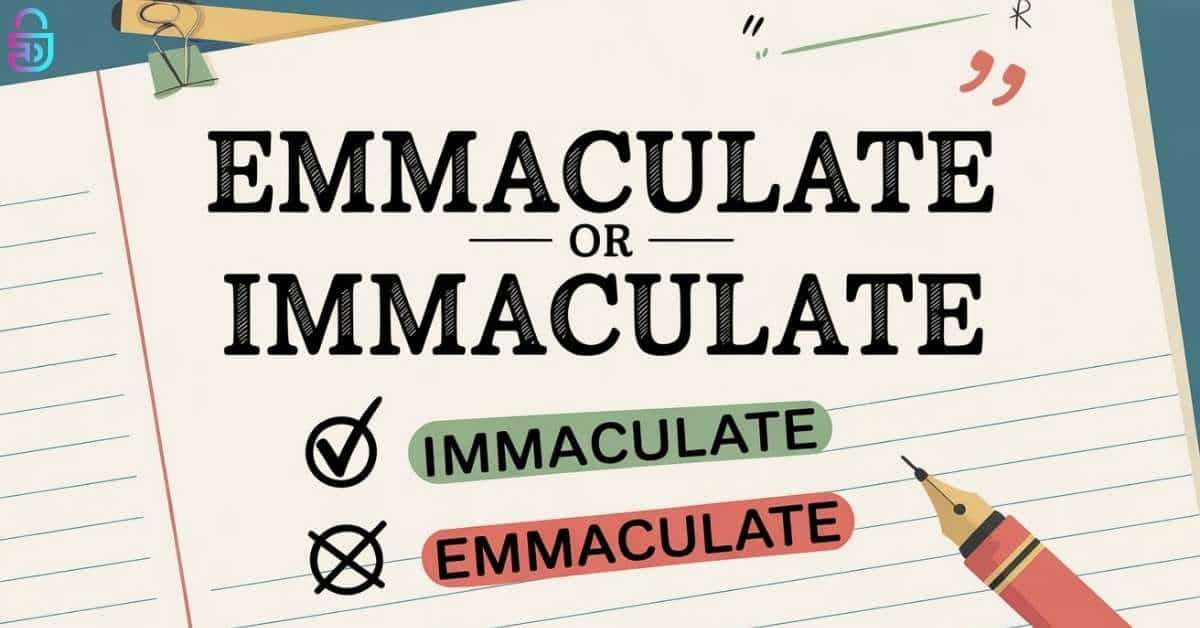
Immaculate or emaculate—which one is correct? The simple answer is: “immaculate” is the correct spelling, while “emaculate” is incorrect and not a real English word.
If you’ve ever wondered “is it immaculate or emaculate?” or searched for the “immaculate or emaculate meaning,” you’re not alone. This is a common spelling confusion caused by pronunciation habits and typing mistakes.
In this complete guide, you’ll learn the true meaning of “immaculate,” why “emaculate” is wrong, how to use the correct word confidently, and how to avoid similar spelling mistakes in English.
Is It Immaculate or Emaculate?
If you’re in a hurry, here’s the direct answer:
✅ Immaculate = Correct spelling (means perfect, spotless, flawless) ❌ Emaculate = Incorrect spelling (a misspelling/typo, no meaning)
So whenever you ask, “is it immaculate or emaculate?” — the correct choice is always immaculate.
What Does “Immaculate or Emaculate” Mean?
When people search for “immaculate or emaculate meaning,” they’re usually trying to understand whether both words exist.
Here’s the truth:
- Immaculate → A real English word with a clear meaning
- Emaculate → A misspelling of “immaculate” with no dictionary definition
This confusion often comes from phonetic spelling habits, where people write words the way they sound.
Meaning and Definition of “Immaculate”
Simple Definition
Immaculate means perfectly clean, spotless, or free from flaws.
Advanced Definition
In formal English, immaculate describes something that is:
- Completely free from dirt or stains
- Without mistakes or imperfections
- Morally pure or flawless
Synonyms of Immaculate
Some commonly used synonyms include:
- Spotless
- Flawless
- Pristine
- Pure
- Unblemished
These words belong to the same semantic field, helping search engines understand the topic deeply.
Antonyms of Immaculate
To fully understand the meaning, it helps to look at opposites:
- Dirty
- Flawed
- Imperfect
- Messy
Is “Emaculate” a Real Word?
No—“emaculate” is not a real English word.
It does not appear in any trusted dictionary, and it has no recognized meaning. When people use “emaculate,” they usually mean “immaculate” but make a spelling mistake.
Why Do People Think It’s a Word?
There are a few reasons:
- It sounds similar when spoken quickly
- English spelling rules can be confusing
- People rely on phonetic typing
So if you’re wondering, “is emaculate a word?” or “is emaculate a real word in English?” — the answer is clearly no.
Key Differences
Here’s a simple comparison to remove all confusion:
| Feature | Immaculate | Emaculate |
| Spelling | ✅ Correct | ❌ Incorrect |
| Meaning | Yes (perfect, spotless) | None |
| Usage | Standard English | Not used |
| Dictionary Status | Listed | Not listed |
This table alone answers the question: “which is correct emaculate or immaculate?”
Why Do People Confuse “Immaculate” and “Emaculate”?
This spelling mistake is more common than you might think. Let’s break down the main causes.
1. Pronunciation Confusion
The word immaculate is pronounced as:
/ɪˈmækjʊlət/
When spoken quickly, the first syllable may sound like “e,” leading to emaculate.
2. Typing Errors (Typos)
Fast typing often leads to:
- Missing letters
- Wrong vowel usage
- Spelling shortcuts
3. Lack of Vocabulary Familiarity
People who don’t use the word often are more likely to guess the spelling.
4. Phonetic Spelling Habits
Many learners write words based on sound, not structure. This leads to errors like:
- emaculate instead of immaculate
- seperate instead of separate
How to Remember the Correct Spelling of Immaculate
If you struggle with spelling, here’s a simple trick.
Break the Word Down
- Im = not
- Maculate = stained
So immaculate = not stained = perfectly clean
Memory Trick
Think of this phrase:
“I’m MACULATE? No, I’m IMMACULATE!”
This makes it easier to remember the correct form.
Pronunciation of Immaculate
Understanding pronunciation helps reduce spelling mistakes.
- Phonetic: /ɪˈmækjʊlət/
- Syllables: im-mac-u-late
Common Mispronunciations
- ee-maculate ❌
- eh-maculate ❌
Correct pronunciation improves both writing accuracy and speaking confidence.
Examples of “Immaculate” in Sentences
Using the word in context helps you remember it better.
Everyday Usage
- Her room was immaculate, with everything in place.
- He wore an immaculate white shirt.
Formal Writing
- The report was delivered with immaculate precision.
- The design reflects immaculate attention to detail.
Professional Context
- The company maintains an immaculate reputation.
- She has an immaculate track record in management.
Immaculate in Different Contexts
The word is versatile and used in many situations.
Common Contexts
- Immaculate appearance → perfectly dressed
- Immaculate record → no mistakes or failures
- Immaculate condition → like new
- Immaculate design → flawless execution
This diversity increases its importance in English vocabulary.
Immaculate vs Similar Words
Understanding similar words builds deeper clarity.
The Immaculate vs Impeccable
- Both mean flawless, but impeccable often refers to behavior or standards.
Immaculate vs Perfect
- Perfect is broader
- Immaculate emphasizes cleanliness and purity
Immaculate vs Spotless
- Spotless focuses on physical cleanliness
- Immaculate can be both physical and abstract
Common Misspellings Similar to “Emaculate”
This type of mistake is very common in English.
Examples of Common Errors
- definately → definitely
- seperate → separate
- occured → occurred
- untill → until
These are all examples of spelling mistakes caused by pronunciation confusion.
Why English Spelling Causes Confusion
English is not a phonetic language, which makes it tricky.
Key Reasons
- Irregular spelling patterns
- Silent letters
- Borrowed words from other languages
This explains why mistakes like emaculate happen frequently.
Learn More: Symptomology vs Symptomatology
How to Avoid Spelling Mistakes Like “Emaculate”
Improving your spelling is easier than you think.
Practical Tips
- Always use spell-check tools
- Read regularly to improve vocabulary
- Break words into parts
- Learn word origins (etymology)
- Practice writing daily
Consistency leads to long-term improvement.
Case Study: Why This Mistake Happens in Real Life
A student writing an academic essay once used “emaculate” multiple times. Despite strong ideas, the paper lost marks due to spelling errors.
After learning the correct form (immaculate), the same student improved writing quality significantly.
👉 This shows how small spelling mistakes can impact credibility.
FAQs
Is it immaculate or emaculate?
It is immaculate. “Emaculate” is incorrect.
Is emaculate a correct spelling?
No, it is a misspelling.
What does immaculate mean?
It means perfect, spotless, or flawless.
Why do people spell immaculate wrong?
Due to pronunciation confusion and typing errors.
How do you pronounce immaculate?
It is pronounced as /ɪˈmækjʊlət/.
Final Thoughts
To sum it up:
- Immaculate is the correct spelling and means perfect, clean, and flawless
- Emaculate is a common spelling mistake with no meaning
- Understanding pronunciation, structure, and usage helps avoid confusion
So next time you wonder “is it immaculate or emaculate?”, you’ll know exactly what to write.
Final Tip
Mastering words like immaculate doesn’t just improve your spelling—it enhances your overall communication, credibility, and confidence in English.
Keep learning, keep practicing, and aim for immaculate writing every time ✨