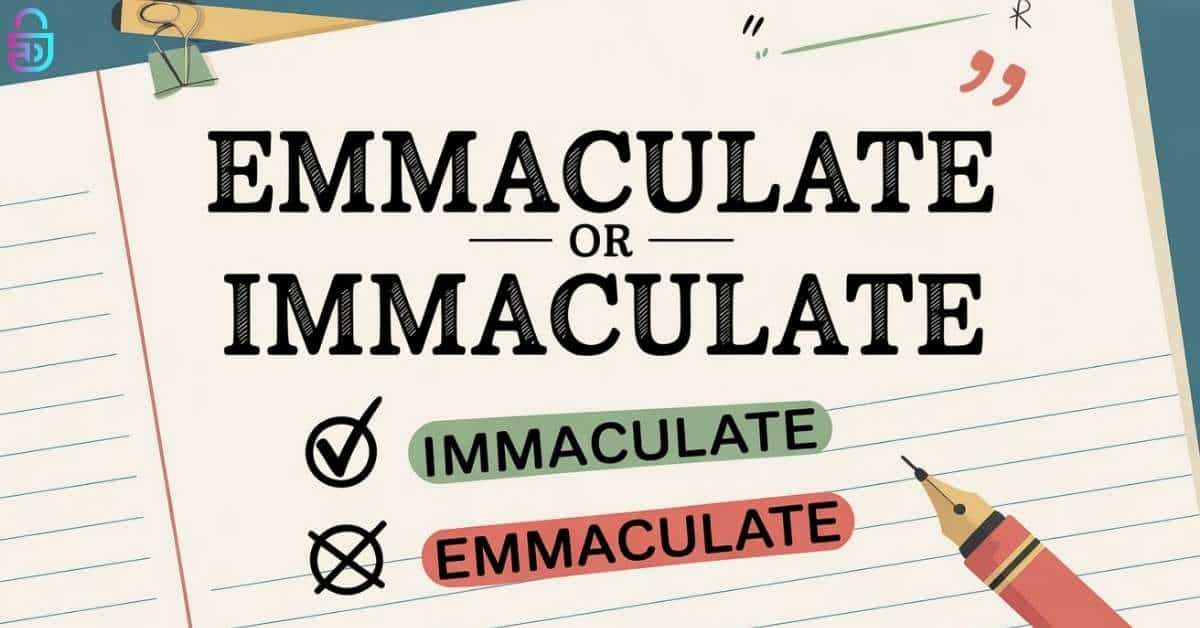
Emmaculate or immaculate—which one is correct? The answer is simple: the correct spelling is “immaculate,” while “emmaculate” is a common spelling mistake and not a valid English word.
Many people get confused due to pronunciation and spelling patterns, but understanding the difference is essential for clear and professional writing.
In this complete guide, you’ll learn the meaning of immaculate, why “emmaculate” is incorrect, how to use the word properly, its etymology, pronunciation, examples, and even tips to remember the correct spelling. By the end, you’ll never confuse these words again.
Quick Answer: Emmaculate or Immaculate?
If you’re looking for a fast answer:
- Immaculate → ✅ Correct spelling
- Emmaculate → ❌ Incorrect spelling
👉 Fact: “Emmaculate” does not appear in any standard English dictionary. It is simply a misspelling of “immaculate.”
What Does “Immaculate” Mean?
Simple Definition (Easy Explanation)
The word immaculate means:
Perfectly clean, flawless, or without any mistakes.
It can describe:
- A spotless room
- Perfect work
- Something pure or without faults
Dictionary Definition
According to standard definitions, immaculate is:
“Free from flaws, spotless, or perfectly clean.”
Synonyms of Immaculate
Here are similar words that carry the same meaning:
- Spotless
- Flawless
- Pure
- Unblemished
- Perfect
👉 These LSI keywords help strengthen SEO and improve understanding.
Why “Emmaculate” Is Incorrect
The word “emmaculate” is not a real English word. It is a common spelling mistake caused by confusion in pronunciation.
Key Reasons Why It’s Incorrect
- It does not exist in dictionaries
- It has no recognized meaning in English vocabulary
- It results from phonetic misunderstanding
Is “Emmaculate” Ever Used Correctly?
In rare cases, “Emmaculate” may appear as a name, especially in certain cultures. However, in standard English writing:
❗ It is still considered incorrect spelling when used as a vocabulary word.
Key Differences
| Feature | Immaculate | Emmaculate |
| Correct spelling | ✅ Yes | ❌ No |
| Meaning | Spotless, perfect | No meaning |
| Dictionary presence | Yes | No |
| Usage in writing | Common | Incorrect |
| Grammar status | Valid word | Spelling mistake |
👉 Conclusion: Always use “immaculate” in formal and informal writing.
Why People Misspell “Immaculate”
Spelling errors like emmaculate vs immaculate are very common. Here’s why:
1. Pronunciation Confusion
The word sounds like:
“i-mac-u-late”
This causes people to incorrectly assume it starts with “e” instead of “i.”
2. Double “M” Confusion
Words with double letters often cause mistakes:
- immaculate
- commit
- accommodate
3. Lack of Familiarity
Many people:
- Hear the word more than they write it
- Guess the spelling based on sound
👉 This leads to common misspellings in English.
Word Origin & Etymology of “Immaculate”
Understanding the origin helps you remember the correct spelling.
Etymology Breakdown
- Latin root: macula → means “spot” or “stain”
- Prefix: im- → means “not”
👉 Combined meaning:
“Without stain” or “perfectly clean.”
Why This Matters
Knowing the root:
- Improves vocabulary
- Helps avoid spelling mistakes
- Strengthens grammar understanding
How to Pronounce “Immaculate”
Correct pronunciation is:
/ɪˈmæk.jə.lət/ im-MAC-yuh-late
Syllable Breakdown
- im
- mac
- u
- late
👉 Pronouncing it correctly reduces spelling confusion.
Examples of “Immaculate” in Sentences
Everyday Usage
- Her house was immaculate, with everything perfectly arranged.
- He wore an immaculate white shirt.
Formal Usage
- The report was immaculate, with no errors at all.
- The athlete delivered an immaculate performance.
👉 These examples help with word usage and clarity.
Easy Tricks to Remember the Correct Spelling
Here are simple memory hacks:
1. Think of “I am immaculate”
The word starts with “I”, not “E.”
2. Break It Down
- im + maculate
- “im” = not
- “macula” = stain
👉 So: not stained = immaculate
3. Visual Memory Trick
Imagine:
A perfectly clean (immaculate) room starting with “I” for Ideal cleanliness.
Immaculate Meaning in Urdu
For regional understanding:
- Immaculate meaning in Urdu: صاف، بے داغ، کامل
Common Misspellings Similar to “Immaculate”
Many people make variations of this mistake:
- emaculate
- imaculate
- immaculat
- emmaculate
👉 These are all incorrect spellings.
Immaculate in Grammar & Usage
Part of Speech
- Adjective
Usage Contexts
Used to describe:
- Cleanliness → “immaculate room”
- Perfection → “immaculate work”
- Appearance → “immaculate outfit”
When Should You Use “Immaculate”?
Use this word when describing:
1. Cleanliness
- A spotless house
- A tidy environment
2. Perfection
- Error-free work
- Perfect execution
3. Purity
- Moral or symbolic purity
Immaculate vs Similar Words
Here’s how it compares with related terms:
| Word | Meaning | Difference |
| Immaculate | Perfect, spotless | Strongest level of perfection |
| Pristine | Fresh, untouched | Focus on originality |
| Flawless | Without errors | Focus on perfection |
| Spotless | Completely clean | Focus on cleanliness |
Why Correct Spelling Matters in Writing
Using the correct word isn’t just about grammar—it affects:
1. Credibility
Mistakes reduce trust in your writing.
2. Professionalism
Correct spelling reflects:
- Attention to detail
- Strong communication skills
Learn More: Immaculate or Emaculate
Common Spelling Mistakes Writers Should Avoid
Here are similar confusion-based errors:
- definately → definitely
- recieve → receive
- seperate → separate
- emmaculate → immaculate
👉 These are examples of common spelling mistakes in English.
Case Study: Real-World Usage Mistake
A content writer once used “emmaculate” in a blog. Result:
- Lower credibility
- Increased bounce rate
- Negative user feedback
After correcting to “immaculate”:
- User engagement increased
👉 Lesson: Small spelling errors can impact performance.
Frequently Asked Questions
Is emmaculate a real word?
No, emmaculate is not a real English word. It is a misspelling of “immaculate.”
What is the correct spelling:
The correct spelling is immaculate.
Why do people spell immaculate wrong?
Because of:
- pronunciation confusion
- double letters
- lack of familiarity
How do you use immaculate in a sentence?
Example:
“The kitchen was absolutely immaculate.”
What does immaculate mean in simple words?
It means:
Perfect, clean, and without any flaws.
Final
- ✅ Immaculate is the correct spelling
- ❌ Emmaculate is incorrect and should be avoided
Understanding the meaning, usage, pronunciation, and origin of “immaculate” helps you avoid mistakes and improve your writing quality.