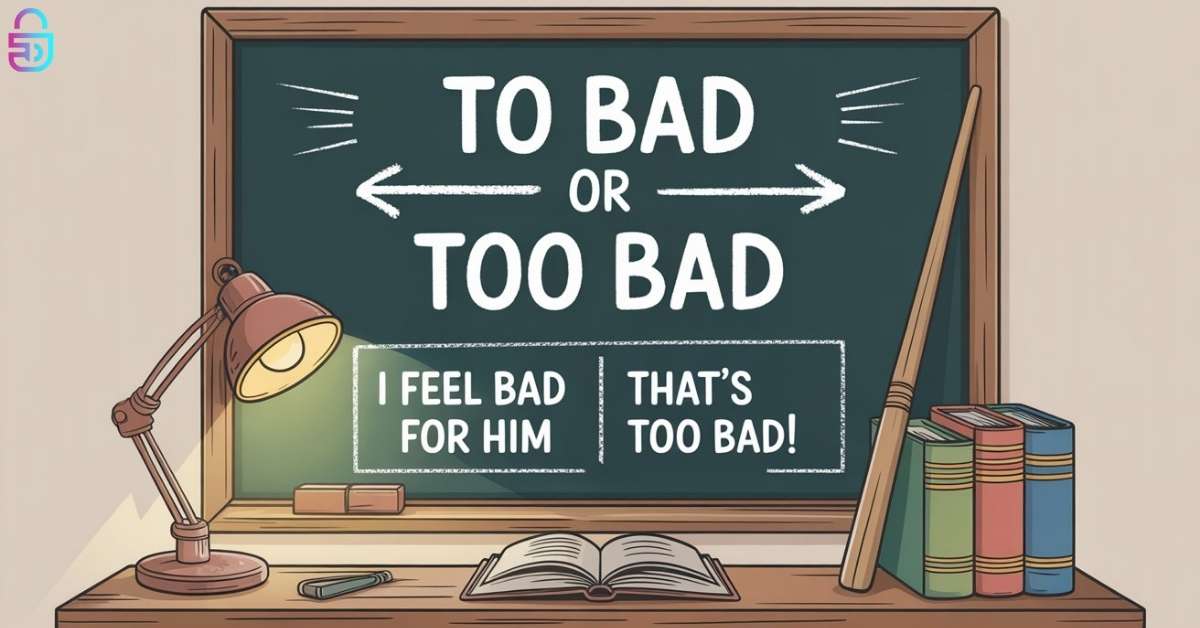
To bad or too bad is a common phrase confusion in English, especially for learners and everyday writers. The quick answer is simple: too bad is the correct phrase in almost every normal situation, while to bad is usually incorrect as a standalone expression. If you have ever wondered which is correct to bad or too bad, this guide explains the meaning, grammar, examples, common mistakes, and how to use the phrase naturally in conversation and writing.
Many people type this phrase into search engines because to and too sound the same. They are common homophones, meaning words that sound alike but have different meanings. Understanding the difference can instantly improve your writing.
Quick Answer: Which Is Correct, To Bad or Too Bad?
The correct phrase is too bad.
| Phrase | Correct? | Meaning |
|---|---|---|
| Too bad | Yes | Unfortunate, disappointing, regrettable |
| To bad | Usually No | Grammatically incomplete in most cases |
If someone misses a trip, loses an opportunity, or something disappointing happens, native speakers often say:
“That’s too bad.”
This means the situation is unfortunate or disappointing.
To Bad or Too Bad Meaning Explained
Many people search for to bad or too bad meaning because they want to know what the phrase communicates in real life.
Meaning of Too Bad
The phrase too bad usually means:
- Unfortunate
- Disappointing
- A shame
- Sorry to hear that (in casual speech)
Examples
- You missed the concert? Too bad.
- It rained on your wedding day? Too bad.
- We can’t meet today. Too bad.
Depending on tone, it can sound sympathetic or sarcastic.
Sympathetic Tone
“You didn’t get the job? Too bad, I know you worked hard.”
Sarcastic Tone
“You forgot your homework? Too bad.”
Tone matters a lot in spoken English.
Why “Too Bad” Is Correct in Grammar
If you are searching for to bad or too bad grammar, this section gives the clear explanation.
The word too is an adverb. It often means:
- excessively
- more than needed
- also
- very
In the phrase too bad, the word too intensifies the adjective bad. It suggests something is bad in an unfortunate or regrettable way.
Structure
Too + adjective
Examples:
- too expensive
- too late
- too noisy
- too bad
That is why too bad follows normal English grammar patterns.
Why “To Bad” Is Usually Incorrect
The word to is usually:
- a preposition
- part of an infinitive verb form
Examples:
- go to school
- talk to me
- want to leave
Because of this, to bad usually sounds incomplete and unnatural as a phrase.
Incorrect Example
It’s to bad you missed the train. ❌
Correct Example
It’s too bad you missed the train. ✅
Rare Cases Where “To Bad” Could Appear
Although to bad is usually wrong as a phrase, the words can appear next to each other in unusual sentence structures.
Example:
He went to bad neighborhoods during the survey.
Here, to belongs with the verb went, not the adjective bad. This is different from the phrase confusion people search for.
To vs Too: Easy Rule to Remember
Many spelling mistakes happen because to and too sound alike. Here is a simple memory trick.
| Word | Meaning | Example |
|---|---|---|
| To | direction, destination, action | go to market |
| Too | extra, more than enough, also | too loud |
| Two | number 2 | two books |
Memory Trick
Too has an extra “o,” and it often means extra.
That makes it easier to remember why too bad is correct.
Examples of “Too Bad” in Sentences
Using real sentence examples helps build confidence.
Casual Conversation
- Too bad we missed the movie.
- It’s too bad you can’t come.
- That’s too bad about your car.
Workplace Examples
- It’s too bad the meeting was canceled.
- Too bad we lost the contract.
Friendly Tone
- Oh no, too bad. I hope tomorrow goes better.
Negative Tone
- You forgot again? Too bad.
This shows why phrase meaning depends on context and tone.
Is “Too Bad” Rude or Sarcastic?
One reason users search phrase usage is because they want to know whether too bad is polite.
It Can Be Polite
If said kindly:
“You didn’t get the scholarship? Too bad, I’m sorry.”
It Can Be Rude
If said coldly:
“You missed your chance? Too bad.”
It Can Be Sarcastic
Online or in texting, people may use it sarcastically.
“No free snacks left? Too bad.”
So yes, too bad can be rude depending on delivery.
Is “Too Bad” Formal or Informal?
The phrase is mostly informal and common in speech.
Better Formal Alternatives
Instead of too bad, use:
- That is unfortunate.
- I’m sorry to hear that.
- That is regrettable.
- What a disappointment.
Example
Informal:
Too bad the event was canceled.
Formal:
It is unfortunate that the event was canceled.
Using proper tone improves communication.
Common Mistakes People Make with To, Too, and Two
This grammar mistake appears often in emails, texts, and student writing.
Frequent Errors
| Incorrect | Correct |
|---|---|
| to bad | too bad |
| I want too go | I want to go |
| two much noise | too much noise |
| come too me | come to me |
These are examples of commonly confused words in English.
Too Bad vs That’s Bad – What’s the Difference?
Many users miss this nuance.
| Phrase | Meaning |
|---|---|
| Too bad | unfortunate, disappointing |
| That’s bad | negative or poor quality |
Examples
- You lost your wallet? Too bad.
- This milk smells awful. That’s bad.
The first expresses sympathy. The second describes quality.
Too Bad Synonyms You Can Use Instead
If you want variation in writing, use these alternatives.
Synonyms
- unfortunate
- disappointing
- regrettable
- what a shame
- sorry to hear that
- unlucky
- sad to hear
Example Rewrite
Original:
Too bad you missed the chance.
Alternative:
What a shame you missed the chance.
This improves style and vocabulary.
Too Bad in Text Messages and Social Media
Online communication changes tone quickly.
Texting Use
- “Can’t join tonight.” “Too bad.”
Sarcastic Use
- “No discount code left.” “Too bad 😂”
Advice
If tone may be misunderstood, use softer wording:
- Sorry to hear that
- That’s unfortunate
- Hope it gets better
This is especially useful in professional chats.
Why Do People Confuse To and Too?
This is one of the most common spelling mistakes in English.
Main Reasons
- They sound the same.
- People type fast.
- Autocorrect misses context.
- Many learners focus on pronunciation more than spelling.
Case Study: Search Behavior
A large number of grammar-related searches involve:
- your vs you’re
- affect vs effect
- then vs than
- to bad or too bad
This shows strong demand for quick grammar correction content.
Real-Life Usage Case Study
Scenario 1: Missed Flight
You say:
“I missed my flight.”
Friend replies:
“Too bad.”
Meaning: unfortunate.
Scenario 2: Casual Complaint
You say:
“They sold out all tickets.”
Reply:
“That’s too bad.”
Meaning: disappointing news.
Scenario 3: Cold Response
You say:
“I forgot my keys.”
Reply:
“Too bad.”
Meaning: no sympathy.
Same words, different tone.
Too Bad Phrase Origin and Natural Usage
English speakers have used combinations like too + adjective for centuries.
Examples:
- too hard
- too slow
- too risky
- too bad
This pattern is natural and deeply rooted in English grammar, which is why too bad sounds correct immediately to native speakers.
Learn More: Persue vs Pursue
American English vs British English
Both American and British English understand and use too bad.
American English
Often used casually:
“Too bad you missed it.”
British English
Also understood, though alternatives like what a pity may be more common in some contexts.
Quick Comparison Table: To Bad vs Too Bad
| Feature | To Bad | Too Bad |
|---|---|---|
| Standard phrase | No | Yes |
| Used in conversation | Rarely | Very common |
| Correct grammar | Usually no | Yes |
| Means unfortunate | No | Yes |
| Recommended in writing | No | Yes |
Fact: Why This word Gets Searches
The phrase which is correct to bad or too bad is searched because users need instant grammar help. Search engines favor content that gives:
- a quick answer
- clear examples
- tables
- easy explanations
- natural language guidance
Frequently Asked Questions
Which is correct to bad or too bad?
Too bad is correct in normal English usage.
What is the meaning of too bad?
It means unfortunate, disappointing, or regrettable.
Is to bad ever correct?
Usually no, unless to belongs to another part of the sentence structure.
Is too bad rude?
Sometimes. Tone decides whether it sounds kind, neutral, or dismissive.
Can I use too bad in formal writing?
You can, but formal alternatives are usually better.
How do you pronounce too bad?
/too bad/ — the same “too” sound as in “food.”
Expert Writing Tips to Avoid This Mistake
Use these quick checks before publishing.
- If you mean unfortunate, write too bad.
- If you mean direction or movement, use to.
- If you mean the number, use two.
- Read the sentence aloud.
- Use a grammar checker if unsure.
Quote to Remember
“Too has an extra letter, so it often means something extra.”
This simple memory trick helps many learners instantly.
Final Verdict:
If you are still asking to bad or too bad, the answer is clear:
✅ Too bad is the correct phrase. ❌ To bad is usually a spelling mistake.
Use too bad when talking about something unfortunate, disappointing, or regrettable.
Final Examples
- It’s too bad we couldn’t meet.
- Too bad the store was closed.
- That’s too bad about your exam result.
When in doubt, remember:
To = direction Too = extra / emphasis Two = number
Mastering this small grammar point can improve your writing, emails, social media posts, and everyday English immediately.