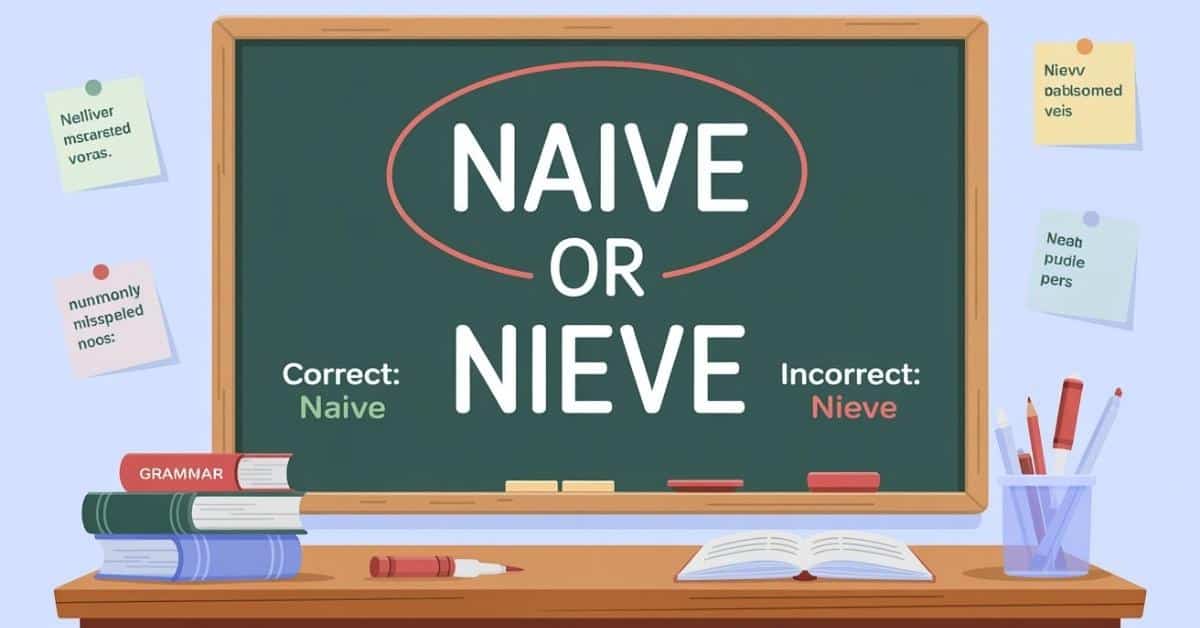
Naive or nieve — if you have ever typed this phrase into Google, you are not alone. Many people wonder, “is it naive or nieve?” because the two words sound similar when spoken aloud. The simple answer is this: “naive” is the correct English spelling, while “nieve” is usually a misspelling in English writing. However, the confusion exists for a reason, and understanding the difference can help improve your spelling, vocabulary, and writing accuracy.
In this guide, you will learn:
- how do you spell naive or nieve
- the correct naive or nieve meaning
- why people often confuse the two words
- how to pronounce naive
- examples of proper usage
- differences between naive, gullible, and ignorant
- common grammar and spelling mistakes related to the word
This article is written in a simple and easy-to-read style while covering everything you need to know about the topic.
Quick Answer: Is It Naive or Nieve?
If you are searching for the correct spelling, here is the answer immediately:
| Word | Correct in English? | Meaning |
|---|---|---|
| Naive | ✅ Yes | Lacking experience or being overly trusting |
| Nieve | ❌ Usually no | Common misspelling in English; means “snow” in Spanish |
So, if you are asking:
“How do you spell naive or nieve correctly?”
The correct English spelling is:
Naive
You may also see it written as:
Naïve
Both are correct. The version with two dots is simply the original French-influenced spelling.
What Does Naive Mean?
The word naive describes someone who is:
- inexperienced
- overly trusting
- innocent
- unsophisticated
- lacking worldly experience
A naive person often believes things too easily because they do not expect dishonesty or manipulation.
Simple Definition
Naive means lacking experience, wisdom, or judgment.
The word is usually used as an adjective.
Naive Meaning in Everyday Life
The meaning of naive can change slightly depending on context.
| Situation | Meaning of Naive |
|---|---|
| Relationships | Trusting people too easily |
| Workplace | Inexperienced in professional situations |
| Politics | Unrealistic understanding of issues |
| Finance | Believing scams too easily |
| Social situations | Innocently misunderstanding intentions |
For example:
“He was too naive to realize the email was a scam.”
This sentence suggests the person lacked experience and trusted too easily.
Is Nieve a Real Word?
This is one of the most searched questions online.
The answer is:
- “Nieve” is not the correct English spelling of naive
- However, nieve is a real Spanish word
In Spanish, nieve means:
Snow
That is why some people become confused when typing or searching the word online.
Why Do People Spell Naive as Nieve?
The spelling confusion between naive and nieve is extremely common. In fact, many English learners and native speakers accidentally type nieve because of pronunciation and vowel placement confusion.
Here are the main reasons.
1. Phonetic Confusion
When spoken quickly, naive can sound similar to:
- nieve
- neeve
- nive
This causes many people to spell the word incorrectly.
2. English Spelling Patterns
English contains many words like:
- believe
- relieve
- achieve
- retrieve
Because these words use “ie,” people naturally assume naive follows the same pattern.
But it does not.
3. Influence of Spanish
Some users searching for naive or nieve meaning may already know the Spanish word nieve, which increases confusion.
4. Typing Errors and Autocorrect
Search engines receive thousands of typo searches daily, including:
- nieve spelling mistake
- naive or nieve
- is it nieve or naive
- how do you spell naive
Google usually understands the intent and still shows results for naive.
How to Pronounce Naive
Many people know the word but are unsure about pronunciation.
Correct Pronunciation
US Pronunciation
ny-EEV
UK Pronunciation
nigh-EEV
You may also hear:
- na-EEV
- ny-EEV
All are close variations.

What’s the Difference?
You may notice two spellings:
- naive
- naïve
Both are correct in English.
The only difference is the diaeresis (two dots above the “i”).
| Spelling | Correct? | Usage |
|---|---|---|
| naive | ✅ | Modern English writing |
| naïve | ✅ | More traditional/French style |
The dots indicate that the vowels are pronounced separately.
Without the dots, English readers may mistakenly pronounce it as:
“nave”
Word Origin and History of Naive
Understanding the word origin helps explain the spelling.
The word comes from:
- French: naïf
- Latin root: nativus
Originally, the word referred to someone who was:
- natural
- innocent
- unaffected
Over time, English adopted the word as naive.
This is why the spelling appears unusual compared to standard English spelling patterns.
Is Being Naive Good or Bad?
This is an interesting question because the answer depends on context.
Being naive is not always negative.
Positive Meanings of Naive
A naive person may be:
- honest
- trusting
- optimistic
- innocent
- sincere
For example:
“Her naive optimism made everyone feel hopeful.”
In this sentence, naive has a positive emotional tone.
Negative Meanings of Naive
However, the word can also suggest:
- poor judgment
- lack of awareness
- unrealistic expectations
- vulnerability
Example:
“It was naive to invest money without checking the company.”
Naive vs Gullible
Many people confuse these two words.
Although they are similar, they are not identical.
| Word | Meaning |
|---|---|
| Naive | Inexperienced or innocent |
| Gullible | Easily fooled or deceived |
A naive person may become gullible, but not always.
Example
“She was naive because she had little life experience.”
“He was gullible enough to believe the fake advertisement.”
The second example suggests manipulation or deception.
Naive vs Ignorant
Another common comparison is naive vs ignorant.
These words are also different.
| Word | Meaning |
|---|---|
| Naive | Innocent lack of experience |
| Ignorant | Lack of knowledge or information |
A naive person may simply be sheltered or inexperienced.
An ignorant person may ignore facts or refuse to learn.
Examples of Naive in Sentences
Using examples helps improve vocabulary and grammar understanding.
Personal Life Examples
- “I was naive when I first moved to the city.”
- “Her naive trust in strangers caused problems.”
- “He looked naive but was actually very intelligent.”
Workplace Examples
- “The new employee was naive about office politics.”
- “It was naive to assume the project would finish early.”
Relationship Examples
- “She was naive to believe every promise.”
- “Young couples are often naive about financial responsibilities.”
Real-Life Case Study: How Naivety Can Affect Decisions
Consider a new investor who receives an email promising:
“Guaranteed profits in 7 days.”
Because of limited financial experience, the investor believes the promise and transfers money immediately.
This is a classic example of naive behavior.
The problem is not intelligence. The problem is:
- lack of experience,
- excessive trust,
- unrealistic expectations.
This demonstrates the real-world meaning of naive more clearly than dictionary definitions alone.
Common Misspellings Similar to Naive
English contains many confusing words.
People who search for:
- naive or nieve
- how do you spell naive or nieve
- is it naive or nieve
often struggle with other spelling mistakes too.
Here are common examples:
| Incorrect/Confusing Pair | Correct Usage |
|---|---|
| loose vs lose | lose = opposite of win |
| affect vs effect | affect = verb |
| then vs than | than = comparison |
| compliment vs complement | different meanings |
| advice vs advise | advice = noun |
How to Remember the Correct Spelling of Naive
A good memory trick can help prevent spelling confusion.
Easy Mnemonic
Remember:
“A naive person says AI before VE.”
So:
- na + ive
- not nie + ve
Another trick:
- Think of the word naïve with dots
- The unusual spelling becomes easier to remember visually
Does Naive Mean Stupid?
No. This is a major misunderstanding.
A naive person is not necessarily unintelligent.
Instead, they may simply:
- lack experience,
- trust too easily,
- have limited exposure to certain situations.
In fact, highly intelligent people can still be naive in unfamiliar environments.
For example:
- a brilliant scientist may be naive about business scams
- a successful athlete may be naive about financial fraud
Naivety is usually linked to experience, not intelligence.
Learn More: Shepard vs Shepherd
Can Naive Be a Compliment?
Sometimes, yes.
Depending on tone and context, calling someone naive may imply:
- innocence
- purity
- sincerity
- optimism
For example:
“Her naive honesty was refreshing.”
However, in professional or serious discussions, the word often sounds critical.
Naive Personality Traits
A naive personality often includes:
- strong trust in others
- optimism
- emotional openness
- innocence
- limited skepticism
These traits can be admirable but may also increase vulnerability.
Psychological Meaning of Naive
In psychology and human behavior, naivety often refers to:
- unrealistic assumptions,
- social innocence,
- lack of awareness about manipulation.
Children are naturally naive because they have limited life experience.
Adults may remain naive in specific areas if they have not encountered difficult situations before.
Frequently Asked Questions
Is it naive or nieve?
The correct English spelling is naive. “Nieve” is usually a misspelling.
How do you spell naive or nieve correctly?
You spell it:
Naive
The spelling “nieve” is incorrect in English.
What is the naive or nieve meaning?
Naive means lacking experience or being overly trusting. “Nieve” is generally not used in English vocabulary.
Is nieve a correct English word?
No. It is usually a spelling mistake in English writing.
What does nieve mean in Spanish?
In Spanish, nieve means:
Snow
Is naive positive or negative?
It can be both. Sometimes it means innocent and sincere. Other times it suggests poor judgment or unrealistic thinking.
Is naïve grammatically correct?
Yes. Both:
- naive
- naïve
are grammatically correct.
Why does naïve have dots?
The dots are called a diaeresis. They show that the vowels should be pronounced separately.
What is another word for naive?
Common synonyms include:
- innocent
- inexperienced
- trusting
- gullible
- unsophisticated
- credulous
Expert Writing Tip: Avoiding Spelling Confusion
Professional writers often reduce spelling mistakes by:
- reading aloud,
- using grammar tools,
- checking dictionary definitions,
- learning word origins,
- practicing difficult vocabulary.
This improves:
- writing accuracy,
- readability,
- credibility.
Final Thoughts
If you were confused about naive or nieve, the answer is now clear:
- Naive is the correct English spelling
- Nieve is generally a misspelling in English, although it means “snow” in Spanish
Understanding the difference helps improve:
- grammar,
- vocabulary,
- pronunciation,
- writing confidence.
Whether you are a student, blogger, ESL learner, or professional writer, learning commonly confused words like naive vs nieve can make your communication much stronger and more polished.
The next time someone asks:
“How do you spell naive or nieve?”