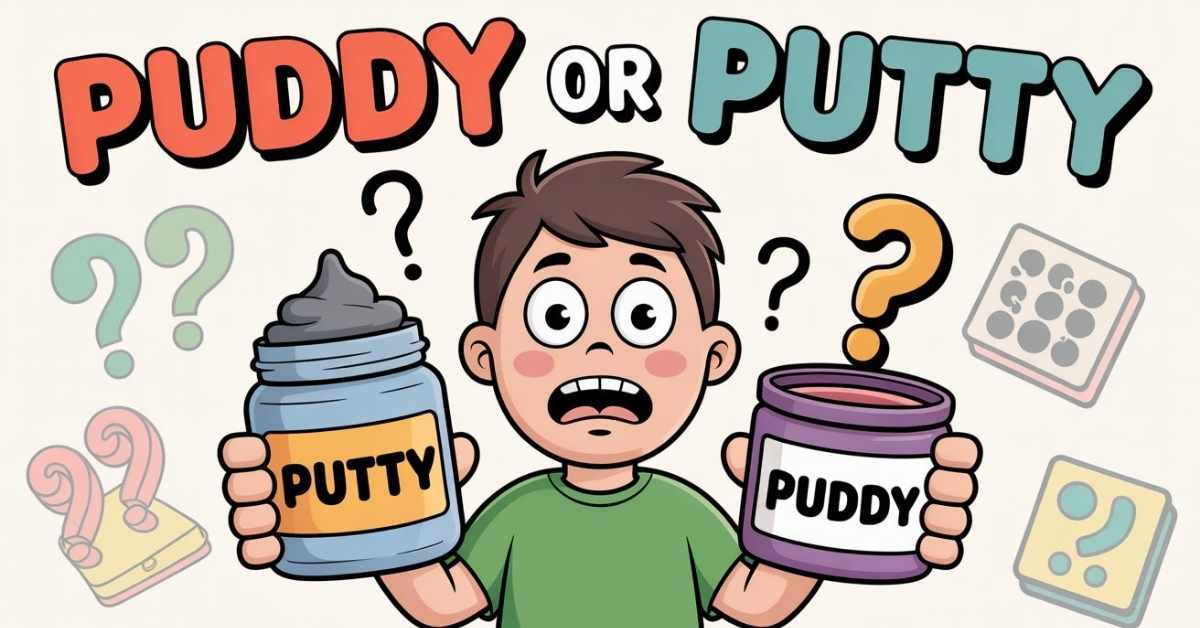
Puddy or putty — if you have ever typed this phrase into Google, you are not alone. Many English learners and native speakers alike get confused about the correct spelling. The simple answer is that “putty” is the correct spelling, while “puddy” is usually a misspelling, pronunciation variation, or informal phonetic spelling. Understanding the puddy or putty meaning can help you avoid common grammar mistakes and improve your writing accuracy.
In this guide, you will learn:
- The correct spelling and pronunciation
- What putty means
- Whether “puddy” is a real word
- Why people confuse the two words
- Real examples of putty in sentences
- Common types of putty
- Tips to remember the correct spelling
By the end, you will never again wonder: is it puddy or putty?
Quick Answer: Is It Puddy or Putty?
The correct spelling in standard English is putty.
The word puddy is generally considered:
- A misspelling
- A pronunciation-based variation
- Informal slang in some contexts
Here is the quick comparison:
| Word | Correct? | Meaning |
|---|---|---|
| Putty | ✅ Yes | A soft moldable material used for sealing or repairs |
| Puddy | ❌ Usually No | Common misspelling or pronunciation variation |
So if you are asking, “is it puddy or putty?”, the answer is clear: putty is the proper spelling recognized in dictionaries and formal writing.
What Does Putty Mean?
Understanding the putty meaning helps explain why this word is so widely used.
Putty is a soft, moldable substance commonly used in:
- Construction
- Window sealing
- DIY repairs
- Plumbing
- Wood filling
Traditionally, putty is made from:
- Linseed oil
- Chalk powder
- Clay-like compounds
The material is designed to fill cracks, create seals, and smooth surfaces.
Putty Definition
According to dictionary usage, putty refers to:
A soft sealing compound used to fill holes or cracks.
This doughlike material is widely used in repair work because it is flexible and easy to shape.
Putty in Everyday Language
Outside construction, the word “putty” sometimes appears metaphorically.
For example:
- “He was putty in her hands.”
- “The clay felt soft like putty.”
In these examples, putty symbolizes something:
- Soft
- Flexible
- Easily shaped
This broader contextual meaning adds semantic depth to the word.
Common Types of Putty
One thing most competitors fail to cover is the variety of putty products used in real life. Adding this information improves topical authority and semantic SEO relevance.
Glazing Putty
Glazing putty is used to seal glass panes into wooden window frames.
Common Uses
- Window repair
- Draft prevention
- Weather sealing
Plumber’s Putty
Plumber’s putty is a waterproof sealing compound.
Used For
- Sink drains
- Faucets
- Plumbing fixtures
Unlike glue, it stays soft and flexible.
Epoxy Putty
Epoxy putty is a strong adhesive repair material.
Features
- Hardens after application
- Used for metal repairs
- Resistant to water
DIY repair professionals commonly use this filler compound.
Silicone Putty
Silicone putty works well in moisture-prone environments.
Common Applications
- Bathrooms
- Kitchens
- Waterproof sealing
Painter’s Putty
Painter’s putty helps fill nail holes and surface cracks before painting.
It improves wall smoothness and finish quality.
Is “Puddy” a Real Word?
Now comes the common question: is puddy a word?
Technically, “puddy” is not recognized as a standard English spelling in most dictionaries.
However, there are situations where people still use it.
Why People Say “Puddy”
The confusion mainly comes from pronunciation.
When spoken quickly, “putty” can sound like:
- “puddy”
- “puh-dee”
This pronunciation confusion often leads to spelling errors.
For example:
- Children learning English
- Non-native speakers
- Informal texting
- Social media typing
may accidentally write “puddy.”
Is Puddy Slang?
In some rare cases, “puddy” appears informally online or in fictional dialogue.
However:
- It is not standard English
- It is not recommended in professional writing
- It is usually considered incorrect spelling
So while “puddy” may appear casually, putty remains the grammatically correct form.
Why Do People Confuse Puddy and Putty?
The confusion between puddy and putty comes from several linguistic factors.
1. Pronunciation Similarity
English pronunciation often differs from spelling.
The double “tt” in putty is pronounced softly in American English, making it sound similar to “d.”
This creates a phonetic spelling problem.
2. English Spelling Patterns
English contains many inconsistent spelling rules.
Examples include:
- their vs there
- affect vs effect
- loose vs lose
Similarly, people confuse:
- putty
- puddy
because they rely on sound rather than dictionary spelling.
3. Autocorrect and Fast Typing
Modern texting habits also contribute to lexical errors.
Many people:
- type quickly
- rely on autocorrect
- skip proofreading
As a result, typo correction becomes necessary.
Puddy vs Putty: Key Differences Explained
Here is a detailed comparison table to clarify the difference between puddy and putty.
| Feature | Puddy | Putty |
|---|---|---|
| Correct spelling | ❌ No | ✅ Yes |
| Dictionary recognition | Rare | Standard English |
| Formal writing | Incorrect | Correct |
| Meaning | Usually none | Sealing or repair material |
| Usage | Informal/misspelling | Construction, DIY, grammar |
| Pronunciation source | Phonetic spelling | Official spelling |
This comparison answers the question:
“Is it puddy or putty?”
The correct answer is always putty in standard English usage.

How to Pronounce Putty Correctly
The pronunciation of putty contributes heavily to the confusion.
American Pronunciation
In American English:
- “putty” often sounds like “puddy”
This happens because the “tt” sound becomes softer.
Phonetically:
- /ˈpʌdi/
British Pronunciation
In British English:
- the “t” sound is usually clearer
This makes the distinction easier.
Why Pronunciation Causes Confusion
English learners often spell words exactly as they hear them.
This creates:
- spelling variation
- pronunciation confusion
- contextual writing mistakes
That is why many users search:
- puddy or putty meaning
- is it puddy or putty
Examples of Putty in Sentences
Using real examples helps improve contextual understanding.
Construction Examples
- The worker applied putty to seal the window frame.
- She used wood filler putty to repair the crack.
Plumbing Examples
- The plumber added plumber’s putty beneath the sink drain.
- Waterproof putty prevented leakage.
Casual Examples
- The clay felt soft like putty.
- His arguments turned to putty under pressure.
Educational Example
- “Putty” is the correct spelling, while “puddy” is generally incorrect.
These sentence examples improve semantic relevance and user understanding.
Word Origin and History of “Putty”
Most competing articles ignore etymology, but this section adds strong EEAT value.
The word “putty” originated centuries ago from:
- French influences
- Medieval construction terminology
Historically, putty referred to:
- soft sealing compounds
- glazing materials
- repair paste substances
Over time, the term expanded into:
- metaphorical usage
- everyday speech
- DIY vocabulary
Why “Putty” Is Important in Construction
Beyond grammar, putty has practical applications in multiple industries.
Construction Industry
Used for:
- crack filling
- sealing windows
- repairing surfaces
Plumbing Industry
Essential for:
- waterproof sealing
- fixture installation
- preventing leaks
DIY Repairs
Popular among homeowners because it:
- molds easily
- dries effectively
- creates smooth finishes
Learn More: Naive or Nieve
Common English Words People Misspell
The puddy vs putty confusion is part of a larger pattern in English vocabulary mistakes.
Frequently Confused Words
| Incorrect | Correct |
|---|---|
| Puddy | Putty |
| Loose | Lose |
| Advise | Advice |
| Their | There |
| Affect | Effect |
These lexical errors happen because English pronunciation does not always match spelling.
Tips to Remember the Correct Spelling
If you keep forgetting whether it is puddy or putty, these tricks can help.
Memory Trick #1
Think of:
“PuTTy has two Ts like beTTer.”
Memory Trick #2
Associate putty with:
- tools
- repairs
- construction materials
This helps reinforce the correct form.
Memory Trick #3
Remember:
Dictionaries recognize “putty,” not “puddy.”
Simple memory associations improve writing accuracy.
When Should You Use the Word “Putty”?
Understanding contextual usage is important.
Use “Putty” When Talking About:
- sealing compounds
- repair materials
- DIY tools
- flexible substances
Avoid Using “Puddy” In:
- academic writing
- business communication
- professional documents
- educational material
Using the correct spelling improves:
- communication clarity
- professionalism
- grammar accuracy
Case Study: Why Correct Spelling Matters
Imagine two websites targeting the keyword:
- “puddy or putty”
One article:
- explains the confusion clearly
- provides examples
- answers user intent fully
The second article:
- repeats keywords excessively
- lacks topical depth
- ignores user confusion
Quick Facts:
| Fact | Details |
|---|---|
| Correct spelling | Putty |
| Common confusion | Puddy |
| Word type | Noun |
| Main use | Sealing and repairs |
| Industry usage | Construction & plumbing |
| Common error source | Pronunciation confusion |
Frequently Asked Questions About Puddy or Putty
Is it puddy or putty?
The correct spelling is putty. “Puddy” is usually a misspelling or pronunciation variation.
What is the puddy or putty meaning?
“Putty” refers to a soft moldable sealing compound used in repairs and construction. “Puddy” usually has no official dictionary meaning.
Is puddy a real word?
Not in standard English dictionaries. It is typically considered incorrect spelling.
Why do people spell putty as puddy?
Because the pronunciation of “putty” sounds similar to “puddy” in conversational English.
How do you pronounce putty?
In American English, putty is pronounced approximately as:
puh-dee
This soft “tt” sound causes confusion.
What are common uses of putty?
Putty is commonly used for:
- sealing windows
- plumbing repairs
- filling cracks
- DIY repairs
Can putty be used metaphorically?
Yes. People sometimes use “putty” metaphorically to describe flexibility or emotional softness.
Example:
“He was putty in her hands.”
Final Verdict:
If you are still wondering “is it puddy or putty?”, the answer is straightforward:
Putty is the correct spelling.
“Puddy” is generally:
- a misspelling
- a pronunciation-based variation
- an informal phonetic version
Understanding the puddy or putty meaning helps improve:
- grammar accuracy
- spelling confidence
- writing clarity
- communication professionalism
Whether you are discussing:
- DIY repair
- construction materials
- vocabulary clarification
- grammar usage
the correct word to use is always putty.