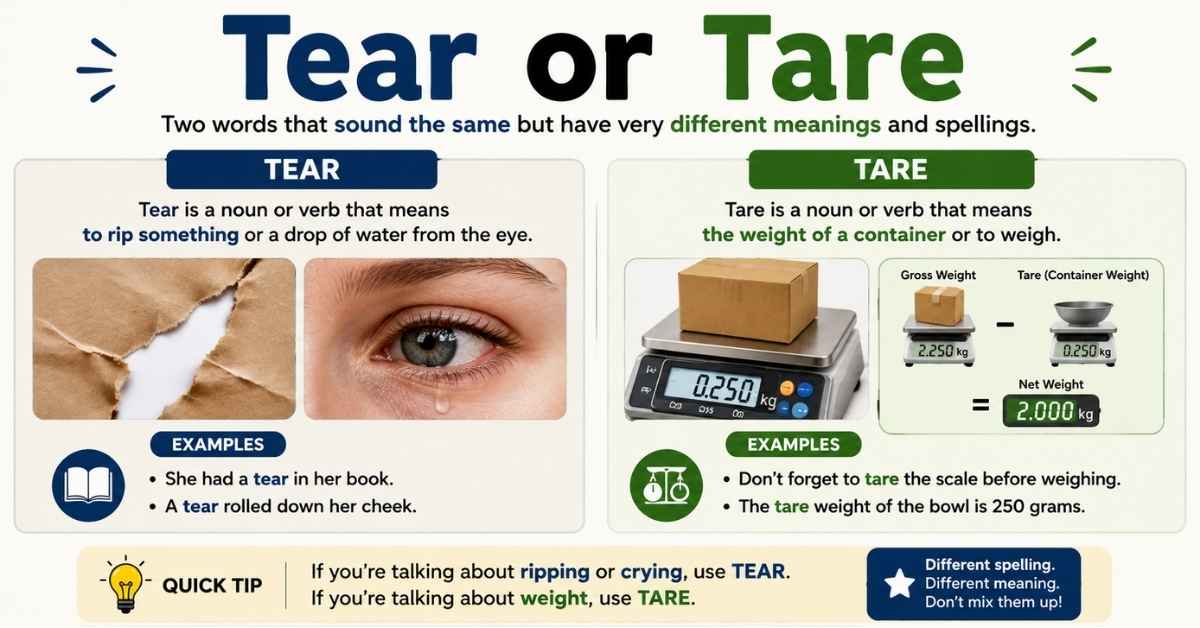
Tear or tare is a common English language confusion that many writers, students, and English learners face. Although these two words sound similar in some situations, they have completely different meanings. “Tear” usually refers to ripping something apart or the liquid that comes from your eyes, while “tare” is a measurement term used to describe the weight of an empty container. Understanding the tear or tare meaning is important if you want to avoid grammar mistakes and use the correct word in the right context.
Whether you are confused about tear vs tare, wondering about tear or tare paper, or trying to understand the phrase “on a tear or tare,” this complete guide will explain everything in simple language with examples, pronunciation tips, grammar rules, and memory tricks.
Meaning: What Do These Words Actually Mean?
The confusion between tear and tare usually happens because English contains many commonly confused words and homophones. However, these words are not interchangeable.
Meaning of “Tear”
The word tear can work as both a noun and a verb.
As a verb, it means:
- to rip
- to pull apart
- to damage something by force
Examples:
- She accidentally tore the paper.
- Be careful not to tear your shirt.
- The dog tore the fabric.
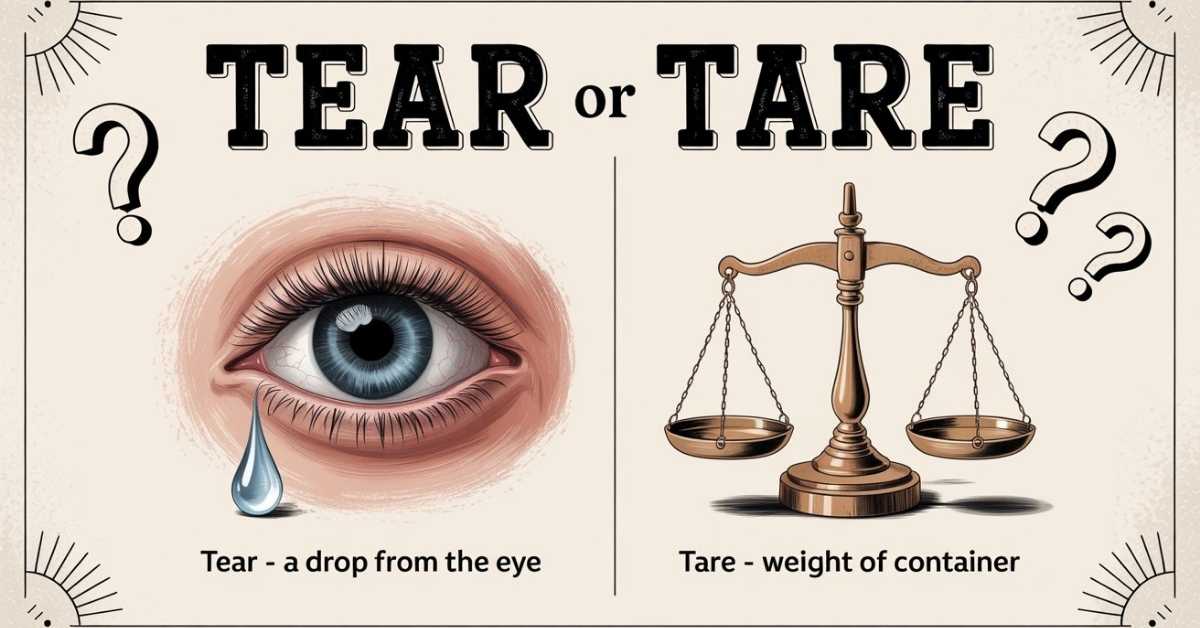
As a noun, “tear” refers to:
- a drop of liquid from the eye
Examples:
- A tear rolled down his cheek.
- Her speech brought everyone to tears.
One reason this word creates confusion is because it has two pronunciations depending on its meaning.
| Word | Pronunciation | Meaning |
|---|---|---|
| Tear | “Teer” | Liquid from eyes |
| Tear | “Tair” | Rip something apart |
This pronunciation difference often confuses English learners.
Meaning of “Tare”
The word tare is mostly used in measurement terminology and weighing systems.
It means:
the weight of an empty container that must be subtracted to find the actual weight of the contents.
This concept is commonly called tare weight.
Examples:
- The scale automatically removed the tare weight.
- Press the tare button before measuring flour.
- The container’s tare weight was 2 pounds.
You will usually hear “tare” in:
- grocery stores
- laboratories
- shipping industries
- food preparation
- digital weighing systems
Key Differences Explained:
Understanding the difference between tear vs tare becomes much easier when you compare them side by side.
| Feature | Tear | Tare |
|---|---|---|
| Meaning | Rip apart or eye liquid | Weight of empty container |
| Word Type | Noun and Verb | Noun |
| Common Usage | Grammar, emotions, damage | Weighing and measurements |
| Pronunciation | “Teer” or “Tair” | “Tair” |
| Example | Tear the paper | Remove the tare weight |
The biggest difference is context.
If you are talking about:
- ripping paper
- damaged fabric
- emotional crying
then use tear.
If you are discussing:
- scales
- measurements
- packaging weight
- net weight calculation
then use tare.
How to Use “Tear” Correctly in Sentences
The word “tear” appears much more often in everyday English vocabulary than “tare.”
Tear as a Verb
When used as a verb, “tear” means to pull something apart forcefully.
Examples
- Please do not tear the document.
- He accidentally tore the packaging.
- The child began tearing paper during art class.
This is where many people search for:
tear or tare paper
The correct phrase is:
tear paper
because “tear” refers to ripping or splitting material.
Tear as a Noun
As a noun, “tear” refers to emotional or physical tears from the eyes.
Examples
- A single tear fell from her eye.
- Tears appeared after the sad movie.
- His words brought her to tears.
This usage is pronounced differently from the ripping version.
Common Expressions Using Tear
English contains many idioms and expressions with “tear.”
Examples
- in tears
- tear apart
- tear down
- tear into
- on a tear
How to Use “Tare” Correctly in Sentences
Unlike “tear,” the word “tare” has a specialized meaning.
Tare Weight Explained
The term tare weight refers to:
the weight of an empty container before adding contents.
This is important in:
- shipping
- cooking
- laboratories
- industrial weighing
Example
If a jar weighs 1 pound and the contents weigh 4 pounds:
- Gross weight = 5 pounds
- Tare weight = 1 pound
- Net weight = 4 pounds
Taring a Scale
Modern digital scales often include a tare button.
When you press it:
- the scale resets to zero
- the container weight gets removed
- only the contents are measured
Real-Life Example
Imagine placing a bowl on a food scale.
Without tare:
- the bowl weight affects the measurement
With tare:
- only the flour or sugar is measured
This process is called:
taring a scale
Tear, Tore, and Torn: Understanding the Verb Forms
Another major grammar confusion involves:
- tear
- tore
- torn
These are all forms of the same irregular verb.
| Verb Form | Example |
|---|---|
| Tear | I tear the paper |
| Tore | I tore the paper yesterday |
| Torn | The paper has been torn |
Why This Confuses People
English learners often struggle with:
- irregular verb forms
- pronunciation changes
- past participles
Example Sentences
- She tore the letter.
- The fabric was torn.
- He might tear the page again.
On a Tear or Tare: Which Phrase Is Correct?
Many people search:
on a tear or tare
The correct expression is:
on a tear
This idiom means:
- experiencing a streak of success
- performing aggressively well
- moving rapidly through something
Examples
- The basketball player is on a tear this season.
- Our company has been on a tear lately.
- She went on a cleaning tear over the weekend.
The phrase:
“on a tare”
is incorrect in standard English grammar.
This is a valuable clarification because competitors rarely explain this idiom properly.
Tear or Tare Paper: Which Word Is Correct?
The keyword tear or tare paper creates confusion because both words sound similar in some pronunciations.
The correct phrase depends on context.
Use “Tear” When Talking About Ripping Paper
Correct Examples
- Please do not tear the paper.
- He accidentally tore the page.
- The paper was badly torn.
Here, “tear” refers to:
- ripping
- splitting
- damaging material
Use “Tare” Only in Measurement Contexts
“Tare” would only apply if paper were being weighed on a scale.
Example
- The scale calculated the paper’s tare weight.
This situation is much less common.
So in normal conversation:
tear paper is almost always correct.
Pronunciation Guide: How to Pronounce Tear and Tare
Pronunciation confusion is one reason this keyword has strong search volume.
| Word | Pronunciation | Meaning |
|---|---|---|
| Tear | “Teer” | Eye liquid |
| Tear | “Tair” | Rip apart |
| Tare | “Tair” | Weight measurement |
Notice:
- “tear” and “tare” sometimes sound identical
- context determines meaning
This creates lexical confusion for:
- English learners
- beginner writers
- non-native speakers
Common Mistakes People Make With Tear and Tare
Many grammar mistakes happen because users rely only on pronunciation.
Mistake #1: Using “Tare” Instead of “Tear”
Incorrect:
- Please tare the paper.
Correct:
- Please tear the paper.
Mistake #2: Confusing Tear Pronunciation
Many learners think:
- all forms of “tear” sound the same
But pronunciation changes depending on meaning.
Mistake #3: Confusing Tare Weight With Net Weight
Quick Definitions
- Gross weight = total weight
- Tare weight = container weight
- Net weight = actual contents
Easy Trick to Remember the Difference Between Tear and Tare
Memory tricks help users remember confusing English words more easily.
Tear
Think:
“Tear = rip or cry”
Examples:
- tear paper
- tears from eyes
Tare
Think:
“Tare = scale weight”
Examples:
- tare button
- tare weight
- weighing container
Real-Life Case Study: Grocery Store Scales
Imagine you buy salad from a grocery store.
The worker places:
- an empty container on the scale
Before adding food, they press:
the tare button
This removes the empty container weight.
Without tare:
- you would pay extra
With tare:
- only the food weight counts
This real-world example makes the meaning easier to remember.
Why the Confusion Happens
Several linguistic factors cause this confusion.
Similar Pronunciation
“Tear” and “tare” may sound alike depending on pronunciation.
Multiple Meanings
“Tear” has:
- noun usage
- verb usage
- multiple pronunciations
This creates grammar confusion.
Specialized Vocabulary
“Tare” is less common in everyday speech.
Most people only encounter it in:
- shipping
- cooking
- digital scales
- scientific measurements
Learn More: To Early or Too Early?
Quick Facts About Tear and Tare
| Fact | Explanation |
|---|---|
| Tear has two pronunciations | Depends on meaning |
| Tare relates to measurements | Used with scales and weights |
| Tear can be noun or verb | Tare is mainly a noun |
| “On a tear” is correct idiom | “On a tare” is incorrect |
| Tear paper is correct | Tare paper is rarely correct |
Expert Quote on Word Confusion
“Context is one of the most important tools in understanding commonly confused English words.”
This is especially true for:
- tear vs tare
- homophones
- pronunciation-based confusion
The surrounding sentence almost always reveals the correct meaning.
When Should You Use Tear or Tare?
A quick decision guide makes usage easier.
Use “Tear” If You Mean:
- rip
- split
- crying
- eye liquid
- damaged material
Examples
- tear paper
- tears from eyes
- tear fabric
Use “Tare” If You Mean:
- scale measurement
- empty container weight
- weighing systems
- net weight calculations
Examples
- tare weight
- tare button
- tare a scale
FAQs
Is Tare a Real Word?
Yes. “Tare” is a legitimate English word used in measurement and weighing systems.
What Does Tear Mean in Grammar?
“Tear” can function as both:
- a noun
- a verb
Its meaning changes depending on context.
Why Does Tear Have Two Pronunciations?
English pronunciation often changes based on word meaning. One pronunciation refers to crying, while the other refers to ripping.
What Is Tare Weight?
Tare weight is:
the weight of an empty container before contents are added.
Is “On a Tare” Correct?
No. The correct phrase is:
“on a tear.”
What Is the Difference Between Tear and Tare?
“Tear” relates to ripping or eye liquid, while “tare” relates to weighing and measurements.
Final Thoughts
Understanding the difference between tear or tare becomes simple once you focus on context. Although these words may sound similar, their meanings are completely different.
Use tear when talking about:
- emotional tears
- damaged material
Use tare when discussing:
- weighing scales
- packaging measurements
Remember this simple rule:
Tear = rip or cry Tare = scale weight
Once you understand the pronunciation differences, grammar rules, and contextual usage, you will avoid common mistakes and use both words confidently in everyday English.