Introduction
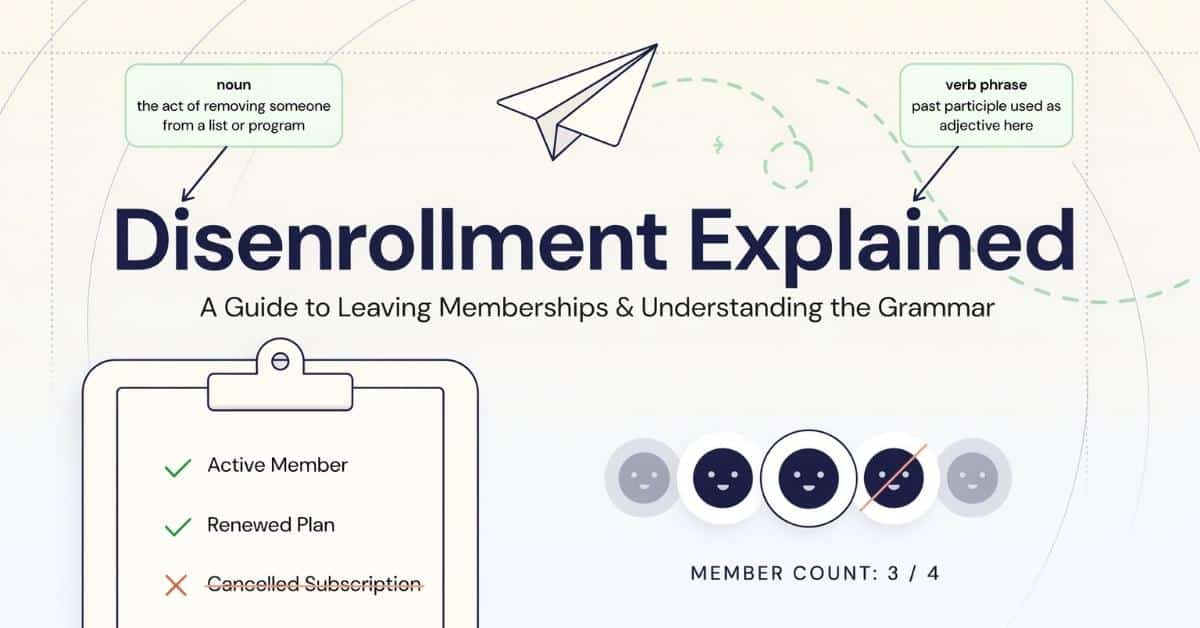
Disenrollment means the removal of a person from a program, plan, membership, or system, which can result in the loss of benefits, coverage, or access depending on the context. In simple terms, it happens when you are taken off an enrollment list, either because you chose to leave (voluntary disenrollment) or because an organization removed you (involuntary disenrollment) due to eligibility, payment, or administrative reasons.
For many people, It is not just a definition—it is a sudden real-world event that affects healthcare, education, insurance, or membership access. Understanding it clearly is important because it directly impacts your benefits, rights, and next steps.
This guide explains what its means, why it happens, what consequences it brings, and exactly what you should do next in a practical, real-world way.
What Does Disenrollment Mean?
It refers to the process where an individual is removed from an active enrollment status in a system such as insurance, healthcare programs, educational institutions, or memberships.
It is closely connected to the concepts of enrollment, eligibility, and participation status.
Disenrollment vs Enrollment
- Enrollment = You are actively part of a program
- Disenrollment = You are removed from that program
Disenrollment vs Cancellation vs Termination
- Cancellation: Usually user-initiated
- Termination: Often administrative or policy-based
- Disenrollment: Focuses specifically on status removal from an enrolled system
Key insight: Disenrollment is not just an administrative word—it signals a change in access, eligibility, or benefits status.
Why People Search for “Disenrollment” After Receiving a Notice
Most users do not search this keyword casually. They search it after receiving a disenrollment notice letter or alert.
At that moment, the emotional state is usually:
- Confusion about what happened
- Fear of losing benefits
- Urgency due to deadlines
- Uncertainty about next steps
Common immediate questions include:
- Am I losing my benefits?
- Why was I disenrolled?
- Can I appeal this decision?
- What happens next?
Types of Disenrollment
It can occur in multiple systems, each with different rules and consequences.
Healthcare
Involves removal from health-related programs or insurance plans.
Medicare
Associated with Centers for Medicare & Medicaid Services programs such as Medicare Advantage or Part D plans.
Medicaid
Occurs when eligibility or renewal requirements are not met under Medicaid.
Health Insurance Plans
Includes private insurers and employer-sponsored coverage.
Educational
- Removal from school enrollment systems
- Loss of student registration status
- Administrative withdrawal due to attendance, payment, or compliance issues
Tribal
- Removal of membership from a Native American tribe
- Often involves legal, cultural, and identity implications
- Can be highly sensitive and emotionally impactful
Membership
- Gyms, subscriptions, associations, or organizations
- Usually triggered by non-payment or rule violations
Learn More: Roll Call or Role Call
Voluntary vs Involuntary
Voluntary Disenrollment
Occurs when a person chooses to leave a program.
Common reasons:
- Better alternatives available
- Change in financial situation
- Relocation
Involuntary Disenrollment
Occurs when the organization removes the individual.
Common triggers:
- Loss of eligibility
- Missed payments
- Failure to renew
- Administrative errors
- Policy violations
Key insight: Most anxiety comes from involuntary disenrollment, not voluntary exit.
Why Disenrollment Happens?
1. Eligibility Changes
When you no longer meet requirements (income, residency, age, etc.)
2. Documentation Issues
Missing or unverified records
3. Missed Deadlines
Failure to renew on time
4. Payment Problems
Late or missing premiums
5. Administrative Errors
System mismatches or data issues
6. Policy Violations
Breaking program rules
What Happens After Disenrollment?
It has immediate and long-term consequences depending on the program.
Immediate Effects
- Loss of access to services
- Coverage interruption
- Account deactivation
Healthcare Impact
- Loss of prescriptions coverage
- Disruption in doctor access
- Need to switch providers
Financial Impact
- Unexpected out-of-pocket costs
- Emergency expenses for care
Long-Term Impact
- Eligibility gaps
- Enrollment delays
- Administrative complexity
Disenrollment in Healthcare Systems
In healthcare systems, it is especially impactful because it affects health security and financial stability.
With programs under Medicare and Medicaid, disenrollment may trigger:
- Loss of provider access
- Prescription interruptions
- Need for special enrollment periods
- Plan switching requirements
Special Enrollment Rights
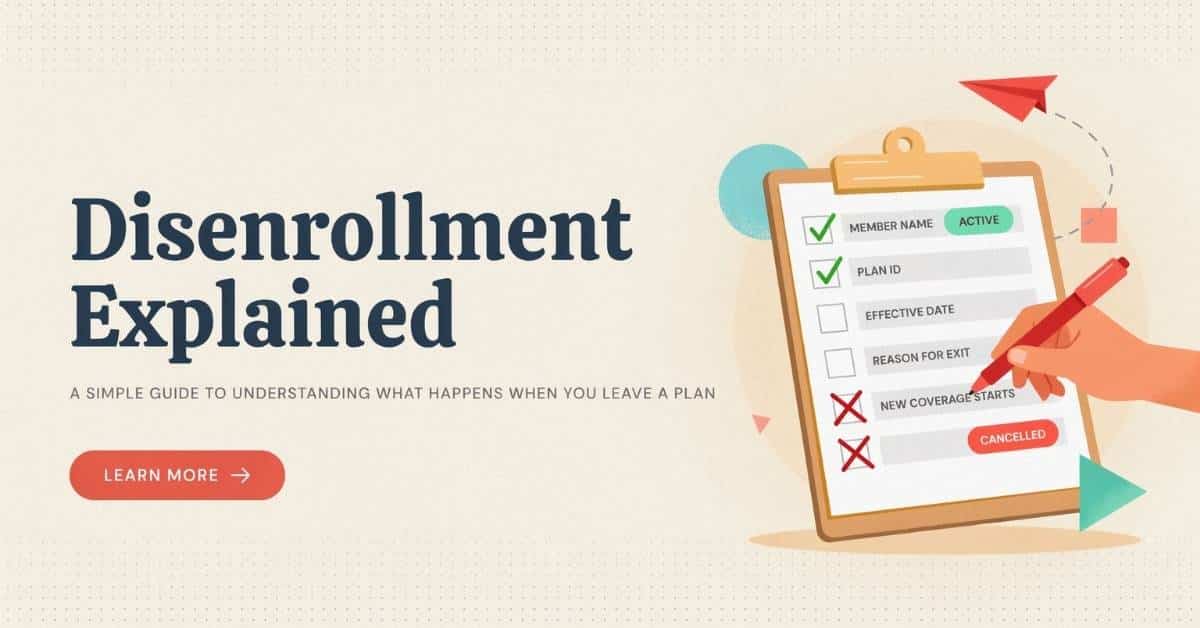
Some individuals may qualify for a Special Enrollment Period (SEP) depending on circumstances.
Can Disenrollment Be Reversed?
Yes, but only in specific cases.
When Reversal Is Possible
- Administrative error
- Missing documentation corrected
- Eligibility reinstated
- Appeal approved
When It Is Difficult
- Permanent eligibility loss
- Missed appeal deadlines
- Policy-based removal
Critical insight: Timing is everything—delayed action reduces reversal chances.
Learn More: OMS Meaning Text
How to Reenroll After Disenrollment
Reenrollment is the process of regaining access to a program or system.
1. Identify the Reason
Understand why it occurred
2. Check Eligibility Rules
Verify if you still qualify
3. Gather Required Documents
Income proof, identity, residency, etc.
4. Submit Reapplication
Follow official enrollment channels
5. Confirm Coverage Start Date
Avoid gaps in access
The 5-Step Disenrollment Response Framework
This framework helps users take immediate control:
Step 1: Confirm the Notice Details
Verify accuracy and reason
Step 2: Identify Deadlines
Check appeal and reenrollment timelines
Step 3: Understand Your Rights
Review appeal eligibility
Step 4: Explore Alternatives
Look for other plans or programs
Step 5: Take Immediate Action
Do not delay response
Common Mistakes
Many users worsen their situation by:
- Ignoring the notice
- Missing deadlines
- Assuming coverage is still active
- Not contacting support
- Waiting too long to act
Key insight: Inaction is the most costly mistake
Your Rights After Disenrollment
Depending on the system, you may have:
- Right to receive written notice
- Right to appeal the decision
- Right to request correction of records
- Right to reapply or reenroll
- Right to seek assistance or advocacy
Frequently Confused Terms
A Disenrollment vs Disqualification
- Disqualification = failure to meet criteria
- Disenrollment = removal from system status
Disenrollment vs Suspension
- Suspension = temporary pause
- Disenrollment = removal
Disenrollment vs Termination
- Termination = end of agreement
- Disenrollment = status removal from enrollment system
FAQs
What does it mean in simple terms?
It means being removed from a program, plan, or membership, resulting in loss of access or benefits.
Is it permanent?
Not always. It can sometimes be reversed or followed by reenrollment.
Can this be appealed?
Yes, in many healthcare and insurance systems.
What happens after disenrollment?
You may lose access to benefits, coverage, or services depending on the program.
Why would someone be disenrolled?
Common reasons include eligibility loss, missed payments, or administrative issues.
Can I reenroll after disenrollment?
Yes, if you still meet eligibility requirements or during enrollment periods.
Key Takeaways
- Disenrollment = removal from a program or system
- It can be voluntary or involuntary
- The biggest risks involve healthcare and insurance coverage gaps
- Most issues happen due to eligibility, payments, or administrative errors
- Fast action is critical to protect benefits and rights
- Reenrollment or appeals may be possible depending on timing and rules