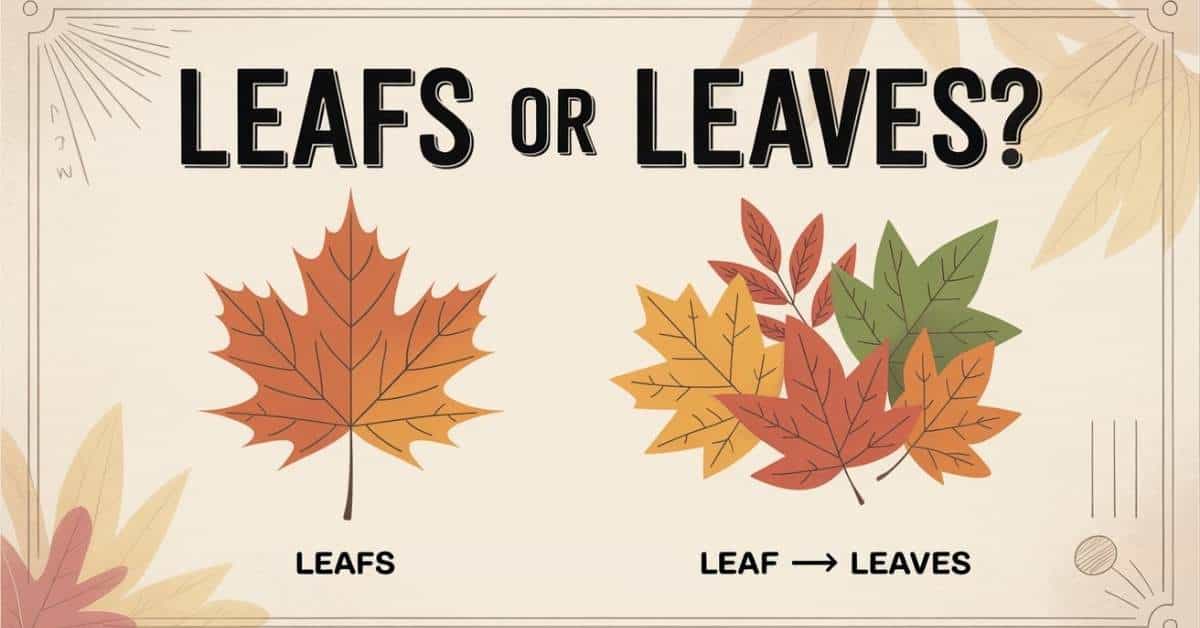
Leafs or leaves — the correct plural of leaf is leaves. If you are talking about more than one leaf on a tree or plant, the right word is leaves, not leafs. The word leafs is generally incorrect in standard English, except in specific cases like proper names (for example, the Toronto Maple Leafs) or the verb form “leafs through a book.”
This confusion is extremely common among students, English learners, and even native speakers because English has irregular plural rules. But once you understand the pattern, you’ll never make this mistake again.
The Quick Answer (Most Important Rule)
If you are in a hurry, remember this:
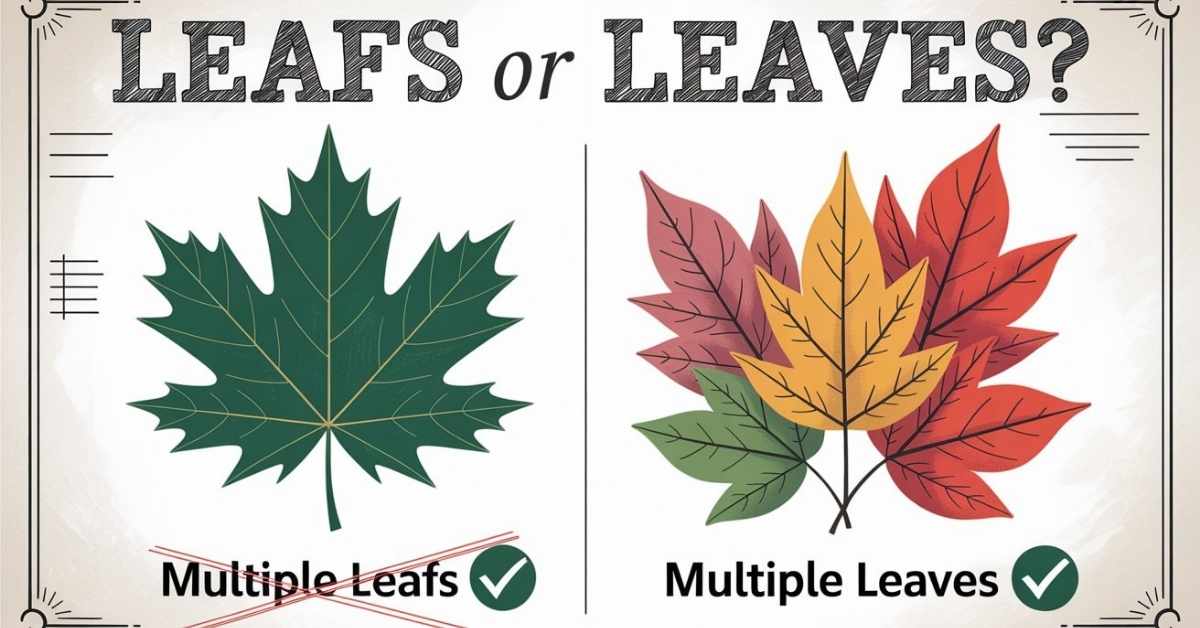
Leaf → Leaves (correct plural in almost all cases) Leafs → Only used in special cases (names or verb usage)
Examples:
- ✔ The leaves are falling from the trees.
- ✔ She turned the leaves of the notebook.
- ❌ The tree has many leafs. (incorrect)
Why “Leaves” Is the Correct Plural of Leaf
The word leaf follows a well-known English pattern called irregular pluralization.
Instead of simply adding “s,” English sometimes changes the word structure:
The F → VES Pattern
Words ending in “f” or “fe” often change in the plural form:
- leaf → leaves
- knife → knives
- wolf → wolves
- shelf → shelves
- life → lives
- loaf → loaves
This pattern developed from older forms of English and pronunciation changes over time.
Even dictionaries confirm this usage, including Oxford English Dictionary, and Cambridge Dictionary.
Why English Doesn’t Always Follow a Simple Rule
English is not fully logical when it comes to plurals.
Some words follow rules:
- cat → cats
- book → books
But others change form completely:
- leaf → leaves
- mouse → mice
- child → children
This happens because English evolved from multiple language systems, including Old English and Germanic roots.
So instead of one rule, English has patterns + exceptions.
When “Leafs” Is Actually Correct
Even though leafs is usually wrong, there are a few exceptions:
1. As a Verb
“Leaf” can also be a verb meaning to flip pages:
- She leafs through the magazine quickly.
- He leafs through the documents before signing.
In this case, “leafs” is correct because it is a verb conjugation.
2. Proper Names (Most Important Exception)
Proper nouns do not follow grammar rules.
The most famous example:
- Toronto Maple Leafs (hockey team name)
Even though grammatically it should be “Leaves,” the team kept “Leafs” as part of its brand identity.
This is why many people get confused in real-world usage.
Why It Is “Toronto Maple Leafs” and Not “Maple Leaves”
This is one of the most searched follow-up questions.
The reason is simple:
- It is a proper noun
- It is a historical team name
- Sports teams often modify grammar intentionally for branding
So even though it looks incorrect grammatically, it is official and accepted as a name, not a grammar rule.
Common Mistakes People Make
Many users accidentally misuse this word because of overgeneralization.
Incorrect Usage:
- ❌ The tree has many leafs.
- ❌ Autumn leafs are beautiful.
- ❌ Fallen leafs cover the ground.
Correct Usage:
- ✔ The tree has many leaves.
- ✔ Autumn leaves are beautiful.
- ✔ Fallen leaves cover the ground.
This mistake is especially common among English learners and students.
Why People Get Confused About Leafs vs Leaves
There are three main psychological reasons:
1. Overgeneralization
People assume all plurals simply add “-s.”
2. Visual Confusion
“Leafs” looks correct because it follows normal spelling patterns.
3. Lack of Grammar Awareness
Many learners are not familiar with irregular plural rules.
A Simple Rule You Can Always Remember
Here is the easiest way to never make a mistake again:
If you’re talking about trees, plants, or nature → use leaves If you’re talking about a hockey team → use Leafs If you’re talking about action (flipping pages) → use leafs
Words That Follow the Same Pattern (F → VES Rule)
Understanding similar words helps reinforce memory:
- leaf → leaves
- wolf → wolves
- knife → knives
- shelf → shelves
- wife → wives
- life → lives
This is a strong NLP semantic pattern in English grammar.
Real-World Usage Examples
Academic Writing:
- The leaves of the plant were studied under a microscope.
Business Writing:
- Falling leaves caused seasonal maintenance issues.
Everyday Conversation:
- The leaves are turning yellow this autumn.
Journalism:
- Heavy rain washed away the fallen leaves.
Learn More: Shiney or Shiny
Usage Frequency Insight
In modern English usage:
- leaves → extremely common (standard plural)
- leafs → rare (mostly proper nouns or verb usage)
This is confirmed by corpus-based analysis in dictionaries like Cambridge Dictionary.
What Style Guides and Experts Say
Authoritative grammar sources consistently agree:
- Oxford English Dictionary: lists “leaves” as standard plural
- Cambridge Dictionary: supports “leaves” in all standard contexts
These sources reinforce that leafs is not standard English in grammar usage.
If English Is Not Your First Language
Here is the simplest rule:
“Leaf” always becomes leaves when plural in normal writing.
Memory Trick:
Think of:
- one leaf → many leaves (nature grows, not just adds “s”)
ESL Common Mistake:
- ❌ I saw many leafs on the ground.
- ✔ I saw many leaves on the ground.
This correction alone improves writing accuracy instantly.
Commonly Confused Plural Words (Helpful for Learning)
To strengthen understanding:
- wolf → wolves
- knife → knives
- loaf → loaves
- shelf → shelves
- calf → calves
These are part of the same grammatical system.
Frequently Asked Questions
Is “leafs” a real word?
Yes, but only in limited contexts like verbs or proper names.
Why is the plural of leaf “leaves”?
Because English uses an irregular pluralization pattern (f → ves).
Is “leaves” always correct?
Yes, in all standard grammar contexts referring to plant foliage.
Why does “leaf” become “leaves”?
Due to historical pronunciation shifts in English evolution.
Is “leafs” wrong in school?
Yes, unless referring to a proper noun like Toronto Maple Leafs.
Why is it Toronto Maple Leafs?
Because it is a brand name and does not follow grammar rules.
Does Grammarly accept “leafs”?
Usually it flags it as incorrect in standard contexts.
Final Summary
If you remember only one thing:
Leafs or leaves? → The correct plural is ALWAYS “leaves” in standard English.
Use leaves for plants, trees, nature, and everyday writing. Use leafs only in special cases like proper names or verb usage.
This small distinction will make your writing more accurate, more professional, and more confident instantly.