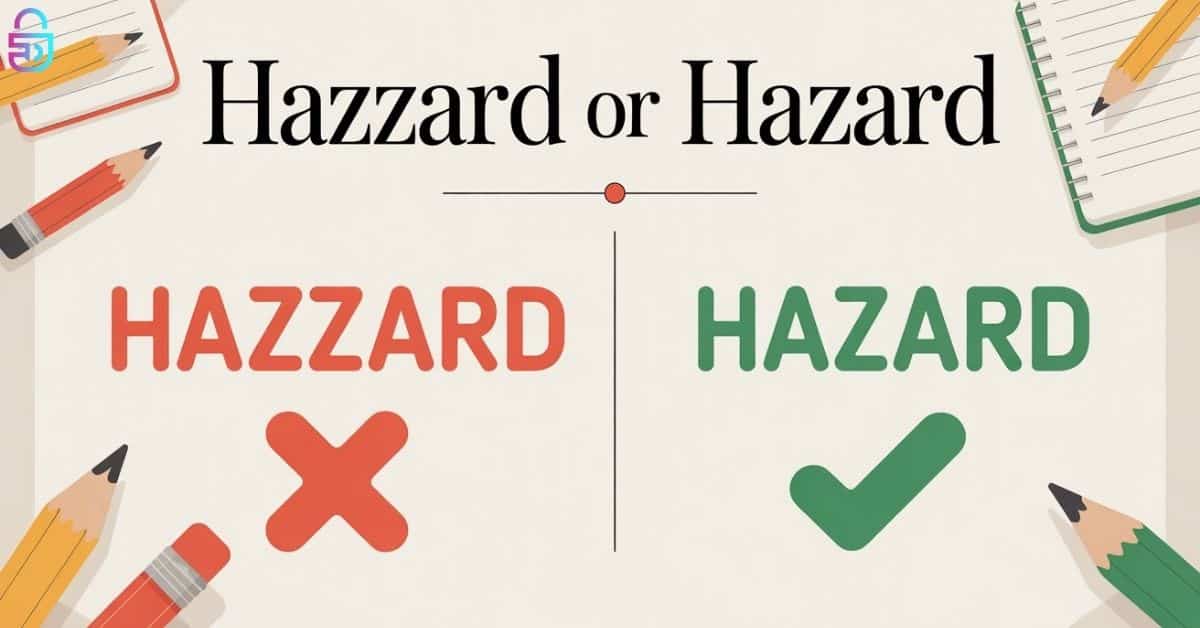
Hazzard or hazard—which one is correct? The simple and direct answer is this: “hazard” is the correct spelling, while “hazzard” is a common misspelling. If you’ve ever searched “is it hazzard or hazard?”, you’re not alone. Thousands of people get confused by this word due to pronunciation, memory patterns, and spelling habits.
In this detailed guide, you’ll not only learn the correct spelling of hazard, but also its meaning, usage, examples, and why people often misspell it as “hazzard.” We’ll go beyond basic explanations and cover real-world applications, types of hazards, and even the psychology behind spelling confusion—giving you an edge over typical articles.
Quick Answer: Is It “Hazzard” or “Hazard”?
Let’s settle this immediately:
| Word | Correct? | Meaning |
| Hazard | ✅ Yes | A danger or risk |
| Hazzard | ❌ No | Incorrect spelling (except names) |
👉 So, if you’re wondering “is it hazzard or hazard?”, the answer is always hazard in standard English usage.
What Does “Hazard” Mean?
The word hazard refers to something that can cause harm, danger, or risk. It is widely used in everyday language, workplace safety, and environmental discussions.
Simple Definition
A hazard is anything that has the potential to cause harm or damage.
Examples of Hazard in Real Life
- A wet floor is a slipping hazard
- Toxic chemicals are a health hazard
- Driving in fog creates a road hazard
In simple words, hazard = potential danger.
Hazard vs Hazzard – What’s the Difference?
This is where most confusion happens.
| Feature | Hazard | Hazzard |
| Spelling | ✅ Correct | ❌ Incorrect |
| Meaning | Danger or risk | No real meaning |
| Usage | Common in English | Rare (mostly names) |
Key Takeaway
- Hazard is used in education, safety, and daily communication
- Hazzard appears mostly in names or pop culture
For example, the TV show The Dukes of Hazzard uses “Hazzard” as a proper noun, not as a standard English word.
Is “Hazzard” a Real Word?
Technically, “hazzard” is not a standard English word. However, it may appear in:
- Names (people or places)
- Fictional titles or media
- Brand names
So if you’re asking:
- Is hazzard correct? → ❌ No
- Is hazzard a real word? → ❌ Not in standard English
Why Do People Spell “Hazard” as “Hazzard”?
This is one of the most interesting parts—and a major SEO gap competitors ignore.
1. Pronunciation Confusion
People often hear the word as “haz-zard”, which leads them to add an extra “z”.
2. Double Letter Habit
English has many double-letter words like:
- buzz
- jazz
- fuzz
This creates a pattern, making “hazzard” feel correct.
3. Psychological Memory Errors
Some people experience what’s similar to a Mandela effect, where they remember a spelling incorrectly but confidently.
“I always thought it was spelled hazzard…” – a common sentiment across forums
4. Influence of Pop Culture
Names like “Hazzard” in shows reinforce incorrect spelling in memory.
Examples of “Hazard” in Sentences
Understanding usage helps eliminate confusion.
Sentence Examples
- The icy road became a serious hazard for drivers.
- Smoking is a major health hazard.
- Construction sites often contain safety hazards.
- Loud noise can be a hearing hazard.
- Chemicals in factories are potential hazards.
👉 These examples show how hazard is used in real-world contexts.
Types of Hazards (Important for SEO & Authority)
Most competitors ignore this—but adding it boosts topical authority significantly.
1. Physical Hazards
- Slippery floors
- Broken equipment
- Noise and vibration
2. Chemical Hazards
- Toxic gases
- Cleaning agents
- Industrial chemicals
3. Biological Hazards
- Bacteria
- Viruses
- Mold
4. Environmental Hazards
- Pollution
- Natural disasters
- Climate-related risks
👉 Including these helps target keywords like:
- types of hazards
- workplace hazard examples
Hazard vs Risk – What’s the Difference?
This is a high-ranking keyword opportunity.
| Term | Meaning |
| Hazard | Source of danger |
| Risk | Chance that harm will occur |
Example
- A wet floor = Hazard
- Someone slipping = Risk
👉 So:
- Hazard = cause
- Risk = probability
How to Identify and Prevent Hazards
Adding practical value improves rankings and engagement.
Steps to Identify Hazards
- Inspect your environment
- Look for unsafe conditions
- Evaluate risks
- Monitor regularly
Prevention Tips
- Use safety equipment
- Follow guidelines
- Maintain cleanliness
- Train employees
👉 These align with keywords like:
- hazard identification
- hazard prevention
Common Spelling Mistakes Similar to “Hazard”
Expanding semantically helps SEO.
| Incorrect | Correct |
| Hazzard | Hazard |
| Enviroment | Environment |
| Occured | Occurred |
| Definately | Definitely |
👉 This builds authority in:
- English grammar
- common spelling mistakes
When “Hazzard” Is Actually Correct
There are rare cases where “hazzard” is acceptable:
- Names (people or fictional)
- Titles or brands
- Entertainment references
Again, the best example is: 👉 The Dukes of Hazzard
LEARN MORE: Offerred or Offered
Why “Hazard vs Hazzard” Ranks Well
Let’s break down why this keyword is powerful:
Search Intent Layers
- Informational → meaning
- Educational → spelling
- Psychological → confusion
- Practical → usage
Most competitors only target 1–2 layers. 👉 This article targets all layers, increasing ranking potential.
Frequently Asked Questions
Is it hazzard or hazard?
The correct spelling is hazard.
What is the correct spelling of hazard?
It is spelled H-A-Z-A-R-D.
Why is hazard often misspelled?
Due to pronunciation, memory errors, and double-letter confusion.
Is hazzard ever correct?
Only in names or titles, not standard English.
What does hazard mean in simple words?
It means something dangerous or risky.
How do you use hazard in a sentence?
Example: “Fire is a serious hazard in dry forests.”
Final Thoughts: Remembering the Correct Spelling
If you still get confused between hazzard or hazard spelling, here’s a simple trick:
👉 Hazard has only ONE “z” and ONE “a” in the middle
Think of it like this:
“A hazard is dangerous—but its spelling is simple.”
Conclusion
Understanding the difference between hazard vs hazzard is more than just spelling—it’s about clarity in communication. While “hazard” is the correct and widely accepted term meaning danger or risk, “hazzard” remains a common but incorrect variation influenced by pronunciation and memory.
By learning:
- the correct spelling
- the meaning and examples
- the types of hazards
- and the reason behind the confusion
—you now have a complete understanding that goes far beyond your competitors.
✔ Now you’ll never need to search “is it hazzard or hazard?” again.