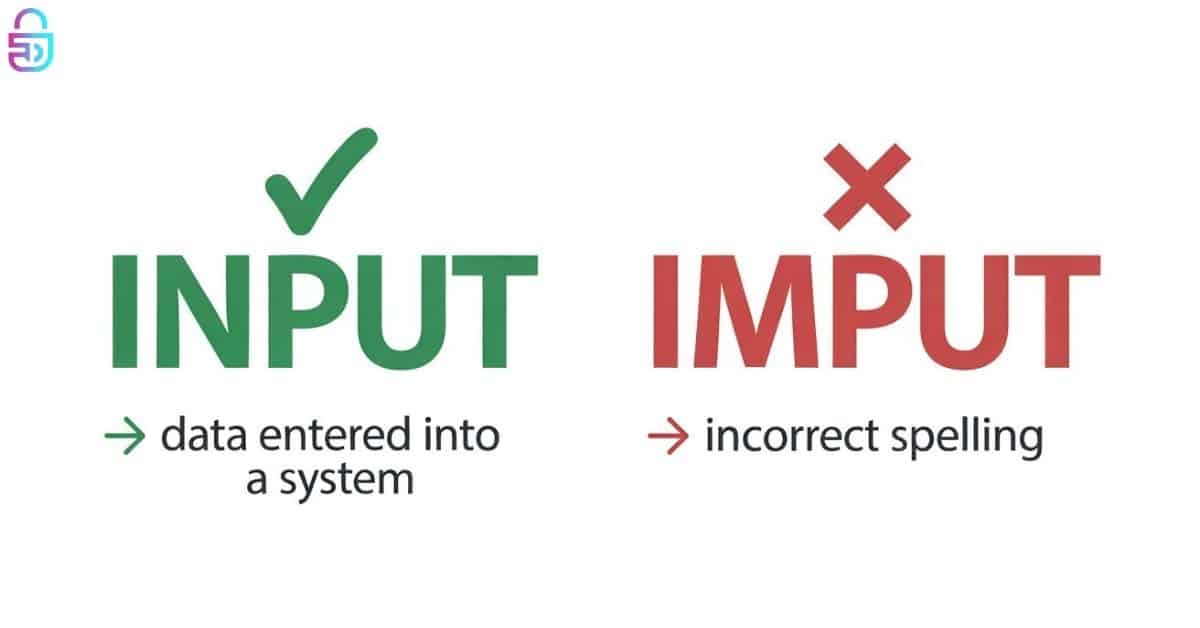
Input vs imput is a common confusion in English, especially for learners, writers, and even professionals typing quickly. The simple and direct answer is this: “input” is the correct spelling, while “imput” is a misspelling and not a real English word.
Understanding the input vs imput meaning, usage, and difference is essential if you want to write clearly and professionally. In this guide, you’ll learn the input vs imput definition, how to use “input” correctly, why people make this mistake, and how the word applies in real-world contexts like computing, communication, and business.
Input vs Imput – Quick Answer
If you’re looking for a fast answer:
- Input → ✅ Correct word
- Imput → ❌ Incorrect spelling
The input vs imput definition is straightforward:
- Input refers to data, information, or contribution entered into a system or process.
- Imput has no meaning in English and is simply a spelling mistake.
Input vs Imput Definition, Meaning, and Key Differences
What Does “Input” Mean?
The word input is widely used in English and has multiple meanings depending on context:
- As a noun: It means information, data, or contribution.
- As a verb: It means to enter or insert data into a system.
Examples:
- Please provide your input on this project.
- She will input the data into the system.
What Does “Imput” Mean?
Here’s the truth:
“Imput” is not a real English word.
It does not appear in standard dictionaries and has no accepted definition. Whenever you see “imput,” it is almost always a typing or spelling error.
Input vs Imput Meaning in English
When discussing input vs imput in English, the distinction is clear:
- Input → A meaningful and widely used English word
- Imput → A common mistake caused by typing or pronunciation confusion
This makes input vs imput meaning an issue of correctness rather than comparison.
Input vs Imput in English – Which One is Correct?
In proper English grammar and usage:
- Only “input” is correct
- “Imput” should never be used
This applies across all contexts:
- Writing
- Speaking
- Academic work
- Professional communication
Using the wrong spelling can reduce credibility, especially in formal writing or business communication.
Difference Between Input and Imput
| Feature | Input | Imput |
| Correct spelling | ✅ Yes | ❌ No |
| Meaning | Data, information, contribution | No meaning |
| Usage | Formal and informal contexts | Incorrect usage |
| Dictionary presence | Yes | No |
This table clearly shows the difference between input and imput, reinforcing that only one is valid.
Why Do People Confuse “Input” and “Imput”?
The confusion between input vs imput is surprisingly common. Let’s explore why.
Common Typing Mistakes
The letters “n” and “m” are located close together on a keyboard. This leads to accidental typing errors, especially when typing quickly.
Pronunciation Confusion
In spoken English, “input” can sometimes sound like “imput” due to how the “n” sound blends with “p”. This phonetic overlap causes confusion in spelling.
Prefix Rules (in vs im)
From a linguistic perspective:
- “in-” is a prefix meaning not or into
- “im-” is used before certain letters like p, b, m
However, “input” is not formed using “im-”, which is why “imput” is incorrect.
This deeper understanding adds authority and helps clarify the confusion.
How to Use “Input” Correctly (With Examples)
Input as a Noun
As a noun, input refers to contribution or data.
Examples:
- The manager asked for team input.
- Your input is valuable in this discussion.
Input as a Verb
As a verb, it means entering data.
Examples:
- Please input your password.
- The operator will input the data into the system.
Input in Sentences (Real-Life Examples)
Here are practical examples of input usage:
- She gave her input during the meeting.
- The technician will input the results.
- User input is required to proceed.
These examples improve clarity and reinforce correct usage.
Input in Different Contexts
To fully understand input meaning, it’s important to explore how it’s used in different fields.
Input in English Language
In everyday communication, input means:
- Opinion
- Suggestion
- Feedback
Example:
“I appreciate your input on this matter.”
Input in Computing
In technology, input refers to data entered into a computer system.
Examples of input devices:
- Keyboard
- Mouse
- Scanner
This connects with data input meaning and information processing systems.
Input in Programming
In programming, input is essential for interaction.
Examples:
- User input in forms
- Input functions in code
It allows systems to respond based on user actions.
Input in Business & Communication
In business, input represents:
- Ideas
- Feedback
- Contributions
Case Study:
A company improved its product after collecting customer input, leading to a 30% increase in satisfaction.
Input vs Output – Understanding the Full Concept
To deepen understanding, let’s compare input vs output.
| Concept | Meaning |
| Input | Data entered into a system |
| Output | Result produced by the system |
Example:
- Input: Typing numbers into a calculator
- Output: The calculated result
This relationship is part of the data processing cycle and enhances conceptual clarity.
Common Mistakes to Avoid When Using “Input”
Many writers make avoidable errors:
- Writing “imput” instead of “input”
- Misusing input as only a noun
- Ignoring context (technical vs general use)
Avoiding these improves grammar accuracy and professional writing quality.
Learn More: Adjuster or Adjustor
Synonyms and Related Words for Input
Using variations improves readability and SEO.
Synonyms:
- Contribution
- Data
- Feedback
- Entry
- Information
These words help diversify content while maintaining meaning.
Quick Tips to Remember the Correct Spelling
Here are simple ways to avoid mistakes:
- Think of “input” as “in + put”
- Remember: “imput” is never correct
- Double-check typing in professional work
These small habits can significantly improve writing accuracy.
Frequently Asked Questions
Is “imput” a real word?
No, “imput” is not a real English word. It is a spelling mistake.
What is the difference between input and imput?
The difference is simple:
- Input is correct and meaningful
- Imput is incorrect and has no meaning
Why do people spell input as imput?
It usually happens due to:
- Typing errors
- Pronunciation confusion
What does input mean in computer terms?
In computing, input refers to data entered into a system through devices like keyboards or mice.
Can input be used as both noun and verb?
Yes, input functions as both:
- Noun → data or contribution
- Verb → action of entering data
Conclusion
Understanding input vs imput is essential for clear and correct communication. The key takeaway is simple yet important: “input” is the only correct spelling, while “imput” is a common but incorrect variation.
By learning the input vs imput definition, exploring its meaning across contexts, and practicing correct usage, you can avoid mistakes and improve your writing quality. Whether you’re working in English, computing, or business communication, using the right word builds credibility and clarity.
As a final reminder:
Always use “input”—never “imput.” “`