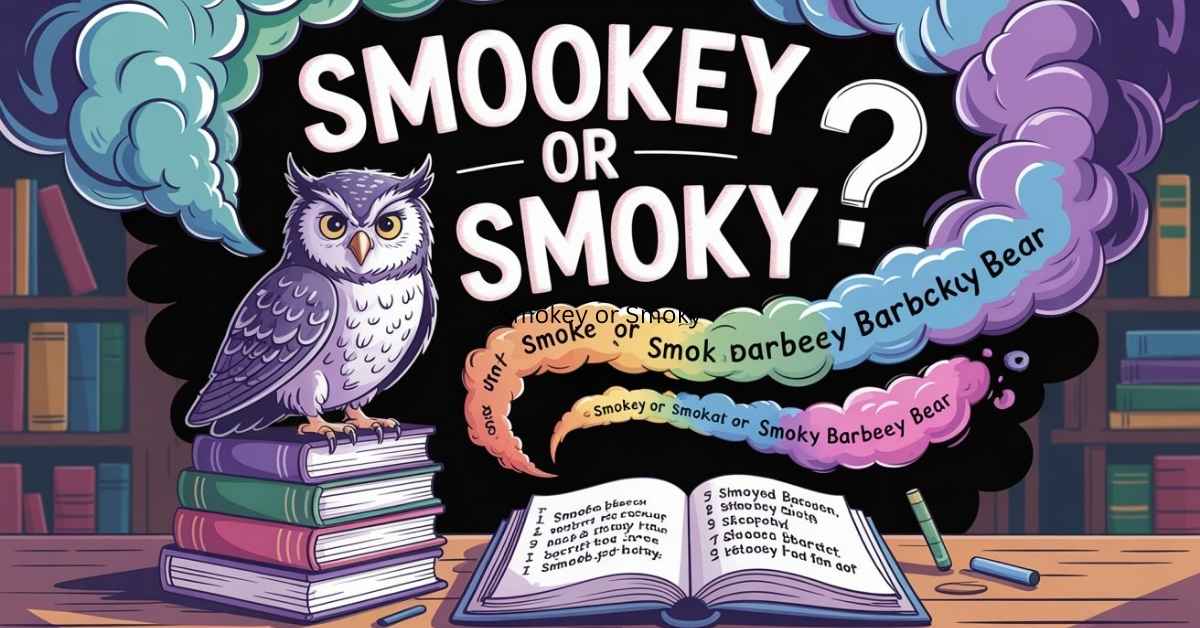
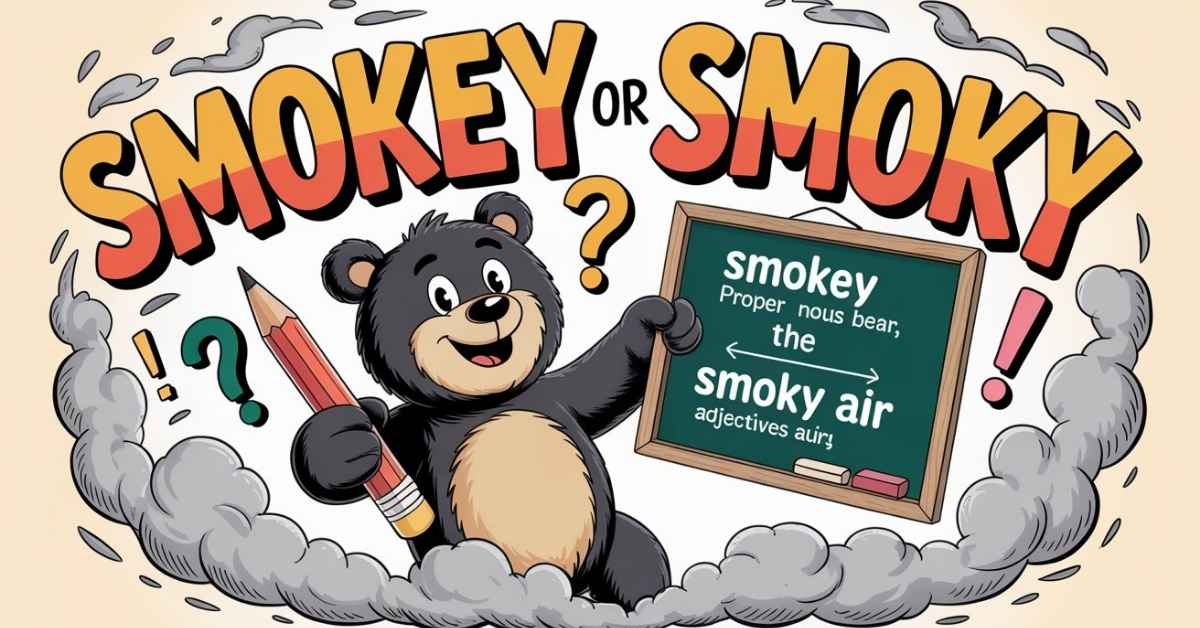
Smokey or smoky? In most situations, smoky is the correct spelling. If you’re describing a smoky flavor, smoky aroma, smoky smell, smoky atmosphere, or smoky eyes, the standard spelling is smoky. The spelling Smokey is usually reserved for proper names, nicknames, brands, and famous figures such as Smokey Bear and Smokey Robinson.
Many people search for smoky vs smokey because they’ve seen both spellings and aren’t sure which one belongs in professional writing. The good news is that the rule is simpler than it appears: if you’re talking about something related to smoke, use smoky. If you’re referring to a name or title, use Smokey.
Smoky vs. Smokey at a Glance
| Feature | Smoky | Smokey |
|---|---|---|
| Standard modern spelling | Yes | Rare |
| Describes smoke-related qualities | Yes | Usually no |
| Used in professional writing | Yes | Rare |
| Common in dictionaries | Yes | Limited usage |
| Appears in proper names | Sometimes | Frequently |
| Recommended for most writers | Yes | No |
The 5-Second Rule
- Describing smoke, flavor, smell, or appearance? → Smoky
- Referring to a person, character, nickname, or title? → Smokey
Why Do People Confuse Smokey and Smoky?
The confusion exists because both spellings appear in English. Many readers encounter names like Smokey Bear or Smokey Robinson, which makes the spelling with an “e” seem familiar.
English also contains many words ending in “-ey,” so smokey often looks visually correct at first glance. However, when used as an adjective describing something that resembles smoke, smoky has become the dominant and preferred spelling in modern English.
Another reason for the confusion is that people often see the word in different contexts. A traveler may read about the Great Smoky Mountains, while a music fan may read about Smokey Robinson. Both spellings exist, but they serve different purposes.
What Do Dictionaries Say?
Major dictionaries consistently recognize smoky as the standard adjective meaning:
- Filled with smoke
- Having the smell of smoke
- Having a smoke-like flavor
- Appearing hazy because of smoke
Language authorities such as Merriam-Webster, Cambridge Dictionary, and the Oxford English Dictionary all support the widespread use of smoky in everyday writing.
The spelling smokey may appear as a variant or in specific names, but it is not the preferred choice when describing flavors, aromas, appearances, or environments.
Dictionary Consensus in Plain English
If you’re writing:
- smoky barbecue sauce
- smoky whiskey
- smoky aroma
- smoky room
- smoky sky
then smoky is the spelling most dictionaries, editors, and publishers expect.
When Smoky Is the Correct Choice
Describing Flavor
Food writing is one of the most common places where this spelling question appears.
Correct examples include:
- smoky barbecue sauce
- smoky cheese
- smoky bacon
- smoky whiskey
- smoky coffee
If you’re writing a menu, product description, recipe, restaurant review, or food blog, smoky flavor is the accepted form.
Describing Smell
Use smoky when referring to scents or aromas.
Examples:
- smoky aroma
- smoky scent
- smoky fragrance
- smoky kitchen after grilling
Describing Appearance
The word is also commonly used to describe visual characteristics.
Examples:
- smoky haze
- smoky atmosphere
- smoky sky
- smoky room
- smoky mountains in the distance
Beauty and Fashion
The beauty industry frequently uses the term smoky eyes.
Examples:
- smoky eye makeup
- smoky eyeshadow look
- dramatic smoky eyes
The spelling smokey eyes occasionally appears online, but smoky eyes remains the preferred form in professional beauty content.
When Smokey Is Correct
Proper Names and Nicknames
This is where Smokey truly belongs.
Examples include:
- Smokey Bear
- Smokey Robinson
- Smokey and the Bandit
- personal nicknames such as “Smokey”
When a spelling forms part of a person’s name, brand, title, or character, it should remain exactly as written.
Why Proper Nouns Follow Different Rules
Names do not always follow standard spelling conventions. Once a name becomes established, its spelling remains fixed regardless of grammar rules.
That’s why Smokey Bear uses an “e” while a smoky forest does not.
Common Mistakes Writers Make
Many writers accidentally use smokey in situations where smoky is expected.
Incorrect
- smokey flavor
- smokey aroma
- smokey whiskey
- smokey eyes
- smokey atmosphere
Correct
- smoky flavor
- smoky aroma
- smoky whiskey
- smoky eyes
- smoky atmosphere
These mistakes frequently appear in blog posts, social media captions, restaurant menus, and marketing copy.
Which Spelling Do Professional Editors Prefer?
Professional editors overwhelmingly prefer smoky when the word functions as an adjective.
In journalism, business writing, academic writing, and content marketing, consistency matters. Editors generally align with dictionary standards and style recommendations, which favor smoky.
If you’re writing:
- articles
- blog posts
- product descriptions
- newsletters
- reports
- business documents
you’ll almost always want smoky.
Is Smokey Ever Considered Wrong?
Not necessarily.
The issue is context.
Acceptable Uses
- Smokey Bear
- Smokey Robinson
- personal nicknames
- certain brand names
Problematic Uses
- smokey flavor
- smokey aroma
- smokey smell
- smokey appearance
In these cases, many readers and editors will view the spelling as incorrect or less professional.
Smoky vs. Smokey in American and British English
Unlike some spelling differences such as “gray vs grey” or “canceled vs cancelled,” there is no major American-versus-British divide here.
Both American English and British English generally favor smoky when describing smoke-related qualities.
This makes the rule easier for international writers because the preferred spelling remains consistent across regions.
Learn More: Meaning of Soft Love The Symposium
Which Spelling Is More Common Today?
In modern publishing, smoky is significantly more common.
You’ll find it in:
- newspapers
- magazines
- books
- websites
- academic publications
- marketing materials
The spelling Smokey remains visible largely because of famous names, characters, and titles that have preserved it over time.
As a result, most readers expect to see smoky in everyday writing.
Smoky vs. Smokey Online Content
Content creators often ask which version they should use.
The answer is straightforward:
Use Smoky for Main Content
Examples:
- smoky flavor
- smoky aroma
- smoky whiskey
- smoky eyes
- smoky scent
Mention Smokey When Relevant
Include Smokey only when discussing:
- Smokey Bear
- Smokey Robinson
- proper nouns
- spelling comparisons
Search engines understand the relationship between the two spellings, but smoky remains the stronger choice for most content topics.
Real-World Examples Across Different Industries
Food and Beverage
“The sauce has a rich, smoky flavor with hints of oak.”
Travel Writing
“The morning fog created a smoky appearance around the Great Smoky Mountains.”
Beauty Content
“A smoky eye look adds depth and drama.”
Marketing Copy
“This candle features a warm, smoky aroma inspired by a crackling fireplace.”
Creative Writing
“A smoky haze drifted across the valley as the sun disappeared.”
Frequently Asked Questions
Is smoky or smokey correct?
For most writing situations, smoky is correct.
Is smokey a word?
Yes, but it is primarily used in names, titles, and certain proper nouns.
Why is Smokey Bear spelled with an “e”?
Because it is a proper name, and proper names follow their established spelling.
Can I write smokey flavor?
It is generally better to write smoky flavor.
Which spelling should I use in professional writing?
Use smoky unless you’re referring to a specific name.
Is smoky used in both American and British English?
Yes. It is widely accepted in both varieties of English.
Which spelling is more common?
Smoky is far more common in modern published writing.
Final Verdict: Smokey or Smoky?
If you’re describing a flavor, smell, appearance, atmosphere, haze, scent, or anything related to smoke, smoky is the correct and preferred spelling. It is the version used in professional writing, publishing, journalism, marketing, and everyday communication.
Reserve Smokey for proper names, titles, nicknames, and famous examples such as Smokey Bear and Smokey Robinson.
When in doubt, remember the simplest rule: descriptions use smoky, names use Smokey.