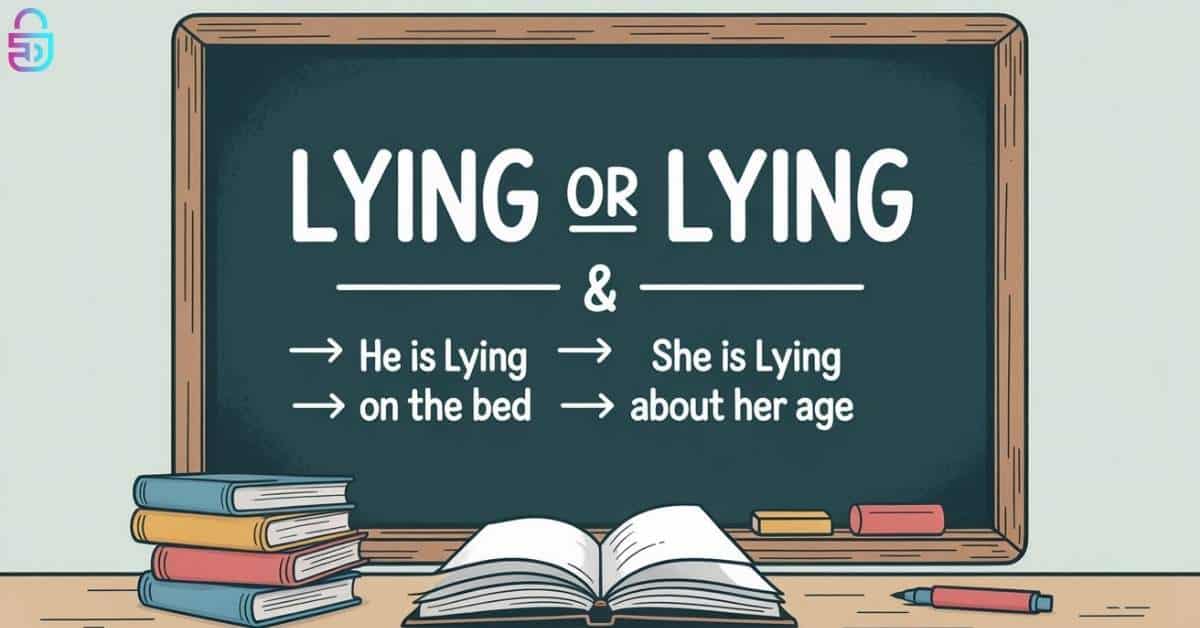
Lieing or lying — the correct spelling is “lying.” The word “lieing” is considered incorrect in standard English grammar. When the verb “lie” changes into its present participle form, the “ie” changes to “y” before adding “-ing.” That is why “lie” becomes “lying,” not “lieing.”
Many English learners and even native speakers become confused about the spelling of lieing or lying because English spelling rules are not always obvious. If you have ever wondered “lieing or lying which is correct” or searched for the correct phrase in daily writing, this guide will explain everything in simple language.
In this complete grammar guide, you will learn:
- Why lying is correct
- Why lieing is incorrect
- The grammar rule behind the spelling
- The difference between lying, laying, and lieing
- Examples of correct sentence usage
- Why people often misspell the word
- How to remember the spelling easily
Is It Lieing or Lying?
The correct spelling is lying.
The word lieing is not considered correct in modern English grammar or standard dictionary usage.
Here is the quick answer:
| Incorrect Spelling | Correct Spelling |
|---|---|
| Lieing | Lying |
Correct Examples
- She is lying on the bed.
- He was lying about his age.
- I am lying on the couch.
Incorrect Examples
- She is lieing on the bed.
- He was lieing to his parents.
If you are confused between lying vs lieing, always remember that English grammar changes verbs ending in “ie” before adding “-ing.”
Why Is “Lying” the Correct Spelling?
The reason is based on an important English grammar rule.
When a verb ends in “ie,” the “ie” changes to “y” before adding “-ing.”
Here is the grammar pattern:
| Base Verb | Correct -Ing Form |
|---|---|
| Lie | Lying |
| Die | Dying |
| Tie | Tying |
This spelling transformation helps English words become easier to pronounce and read.
So instead of:
- lie + ing = lieing ❌
English grammar changes it to:
- lie → lying ✅
This is called a spelling transformation rule in English verb conjugation.
Grammar Rule for Verbs Ending in “IE”
One of the most common spelling rules in English grammar involves verbs ending with “ie.”
The rule is simple:
If a verb ends in “ie,” change the “ie” to “y” before adding “ing.”
Here are more examples:
| Verb | Incorrect Form | Correct Form |
|---|---|---|
| Lie | Lieing | Lying |
| Die | Dieing | Dying |
| Tie | Tieing | Tying |
| Vie | Vieing | Vying |
This rule applies to many common English verbs and is important for:
- grammar accuracy
- sentence construction
- spelling consistency
- English writing skills
Understanding this grammar pattern can improve your overall English vocabulary and help you avoid common spelling mistakes.
Lieing or Lying Which Is Correct in English Grammar?
If you are asking “lieing or lying which is correct,” the answer is straightforward:
“Lying” is grammatically correct.
The word “lieing” is considered a misspelling in standard English.
Many grammar checkers, dictionaries, and language-learning platforms recognize only “lying” as the proper spelling.
This confusion usually happens because people try to spell the word exactly as it sounds. Since the base word is “lie,” many assume adding “-ing” creates “lieing.”
However, English grammar uses a spelling adjustment rule.
That is why:
- lie → lying
- die → dying
- tie → tying
This rule improves readability and pronunciation in written English.
Spelling of Lieing or Lying Explained Simply
The spelling of lieing or lying becomes easier when you break the word into steps.
Step-by-Step Explanation
- Start with the base verb: lie
- Remove the “ie”
- Replace it with “y”
- Add “-ing”
Result:
- lie → lying
This transformation is part of standard English spelling conventions.
Many students, ESL learners, and beginner writers struggle with these spelling patterns because English contains several irregular word forms.
Still, this particular rule is consistent and easy to remember once learned.
Lieing or Lying in Bed — Which Phrase Is Correct?
The correct phrase is:
“Lying in bed”
The phrase “lieing in bed” is grammatically incorrect.
Correct Usage Examples
- I was lying in bed watching television.
- She enjoys lying in bed on rainy mornings.
- The cat is lying in bed beside him.
Incorrect Usage
- I was lieing in bed.
- She is lieing on the sofa.
This is one of the most searched long-tail grammar questions because people commonly use the phrase in daily conversation.
The confusion often happens because the word “lying” has two meanings:
- Reclining or resting
- Speaking falsely
Examples of Both Meanings
| Meaning | Example Sentence |
|---|---|
| Reclining | He is lying on the couch. |
| Speaking falsely | She was lying to her teacher. |
Despite the different meanings, the spelling remains the same.
Difference Between Lying, Laying, and Lieing
Many people confuse these three words because they sound similar.
Here is a simple comparison table.
| Word | Meaning | Correct Usage |
|---|---|---|
| Lying | Reclining or speaking falsely | Correct |
| Laying | Putting something down | Correct |
| Lieing | Misspelling of lying | Incorrect |
What Does “Lying” Mean?
The word lying comes from the verb “lie.”
It can mean:
- resting in a horizontal position
- not telling the truth
Example Sentences
- He is lying on the floor.
- They were lying about the incident.
What Does “Laying” Mean?
The word laying comes from the verb “lay.”
It means placing something somewhere.
Example Sentences
- She is laying the books on the table.
- The bird is laying eggs.
A simple trick:
- Lie does not need an object.
- Lay usually needs an object.
Examples of “Lying” in Sentences
Understanding sentence examples is one of the best ways to master grammar.
Here are different ways to use lying correctly.
Lying as Reclining
- The dog is lying near the fireplace.
- I spent the afternoon lying on the beach.
- They were lying in bed discussing their plans.
Lying as Dishonesty
- He admitted he was lying.
- She kept lying to avoid trouble.
- The witness was lying during the interview.
Present Participle Usage
- Lying quietly helped him relax.
- The papers were lying on the desk.
These examples demonstrate proper grammatical usage, sentence structure, and natural English writing.
Why Do People Spell “Lying” as “Lieing”?
There are several reasons people make this spelling mistake.
1. Pronunciation Confusion
People often spell words based on sound. Since the base verb is “lie,” many naturally assume:
- lie + ing = lieing
But English spelling does not always work this way.
2. Lack of Grammar Knowledge
Some writers are unfamiliar with:
- present participles
- verb conjugation
- spelling transformation rules
Without understanding these grammar concepts, misspellings become common.
3. English Has Irregular Patterns
English contains many unusual spelling rules, which can confuse learners.
For example:
- make → making
- run → running
- lie → lying
Each follows a different pattern.
4. Typing Habits and Autocorrect
Sometimes spelling mistakes happen because:
- people type quickly
- autocorrect misses the error
- writers rely on pronunciation
This is why grammar checking tools are useful for improving writing clarity.
Is “Lieing” Ever Correct?
In modern standard English, “lieing” is generally considered incorrect.
Major dictionaries, grammar guides, and educational platforms recognize “lying” as the proper form.
However, you may occasionally see “lieing”:
- in informal online writing
- in spelling mistakes
- in old or nonstandard texts
Still, if you want grammatically correct English, always use:
lying
Common Words Similar to “Lying”
The grammar rule for lying also applies to several other verbs.
| Base Word | Correct Form |
|---|---|
| Die | Dying |
| Tie | Tying |
| Vie | Vying |
This pattern helps maintain smooth pronunciation and consistent spelling in English grammar.
Learning similar word transformations improves:
- spelling accuracy
- vocabulary development
- writing improvement
- grammar understanding
Quick Grammar Tips to Remember the Correct Spelling
Remembering the correct spelling of lying becomes easy with a few simple tricks.
Grammar Trick #1
If a verb ends in “ie,” change it to “y” before adding “-ing.”
Grammar Trick #2
Think of:
- die → dying
- tie → tying
- lie → lying
Since you already know dying and tying are correct, it becomes easier to remember lying.
Grammar Trick #3
Avoid spelling based only on pronunciation.
English spelling rules often change letters to improve readability and pronunciation.
Learn More: Swifty or Swiftie
Common Mistakes Related to “Lying”
Many writers make similar grammar mistakes involving these words.
Common Errors
- lieing instead of lying
- laying instead of lying
- confusing lie and lay
- incorrect present participles
Here are examples:
| Incorrect Sentence | Correct Sentence |
|---|---|
| She is lieing down. | She is lying down. |
| He was laying on the couch. | He was lying on the couch. |
| They are lieing in bed. | They are lying in bed. |
These small grammar corrections can greatly improve writing professionalism and clarity.
Why This Grammar Rule Matters in Writing
Correct grammar improves:
- readability
- professionalism
- communication
- academic credibility
Even a small spelling error like “lieing” can affect:
- blog quality
- assignments
- business writing
- search engine trust
- user-friendly content
That is why understanding proper English spelling matters in digital writing.
A Simple Case Study: Why Grammar Accuracy Improves Readability
Consider these two sentences:
Incorrect
She was lieing in bed all morning.
Correct
She was lying in bed all morning.
The second sentence immediately looks more professional and natural.
Readers subconsciously trust grammatically correct writing more because it improves:
- user experience
- reading flow
- writing clarity
This is especially important for:
- bloggers
- students
- business professionals
Expert Grammar Quote
“Good grammar is credibility, especially online.” — Professional Writing Principle
Simple grammar improvements can make content look more trustworthy and authoritative.
Frequently Asked Questions
Is it lieing or lying?
The correct spelling is lying. The word lieing is incorrect in standard English grammar.
Why is lying spelled without “ie”?
English grammar changes verbs ending in “ie” into “y” before adding “-ing.”
Example:
- lie → lying
Is lieing a real word?
No. Lieing is generally considered a misspelling of lying.
What is the grammar rule for lying?
If a verb ends in “ie,” replace the “ie” with “y” before adding “-ing.”
Is it lying in bed or lieing in bed?
The correct phrase is:
lying in bed
What is the difference between lying and laying?
- Lying means reclining or resting.
- Laying means placing something down.
Why does lie become lying?
English spelling rules modify the ending for easier pronunciation and spelling consistency.
Is lying a verb?
Yes. Lying is the present participle form of the verb “lie.”
How do you use lying in a sentence?
Example:
The child was lying on the carpet reading a book.
Conclusion
Understanding the difference between lieing or lying is easier once you know the grammar rule. The correct spelling is always “lying,” while “lieing” is considered incorrect in standard English.
The confusion happens because English spelling patterns can seem inconsistent, but the rule here is simple:
Change “ie” to “y” before adding “-ing.”
That is why:
- lie → lying
- die → dying
- tie → tying
Whether you are writing casually, studying English grammar or simply checking the spelling of lieing or lying, remembering this rule will help you avoid one of the most common English spelling mistakes.
The next time someone asks “lieing or lying which is correct,” you will know the answer immediately:
“Lying” is the correct spelling.