
The correct greeting is “Happy New Year.” If you’re wondering whether to write Happy New Year or Happy New Year’s, you’re not alone. Every holiday season, millions of people search for the correct New Year greeting before sending greeting cards, business emails, text messages, and social media posts. The good news is simple: TheHappy New Year is the grammatically correct form when you’re wishing someone well. While other is a common mistake, understanding why it happens can help you avoid it confidently in both personal and professional communication.
Whether you’re writing a holiday greeting card, posting on LinkedIn, sending a client email, or texting friends and family, this guide explains the grammar rules, apostrophe usage, real-world examples, and common mistakes behind this frequently searched phrase.
Quick Answer: Which Is Correct?
Before diving deeper, here’s the answer most people are looking for:
| Phrase | Correct? | Usage |
|---|---|---|
| Happy New Year | ✅ Yes | Standard greeting |
| Happy New Years | ❌ No | Generally incorrect |
| Happy New Year’s | ❌ No | Incorrect as a greeting |
| New Year’s Eve | ✅ Yes | Holiday name |
| New Year’s Day | ✅ Yes | Holiday name |
| New Year’s Resolution | ✅ Yes | Possessive phrase |
Why So Many People Search This ?
This question appears every December and January because people want reassurance before sending holiday messages.
Imagine you’re about to send:
- A greeting card to relatives
- A business email to clients
- A LinkedIn post to colleagues
- A social media caption
- A text message to friends
The concern isn’t really about grammar alone. Most people are actually asking:
- Will I look unprofessional?
- Will native English speakers notice?
- Am I making an embarrassing mistake?
- What do businesses and publishers use?
The search intent behind this keyword is largely about confidence and validation, not just punctuation.
What Sounds Correct Word
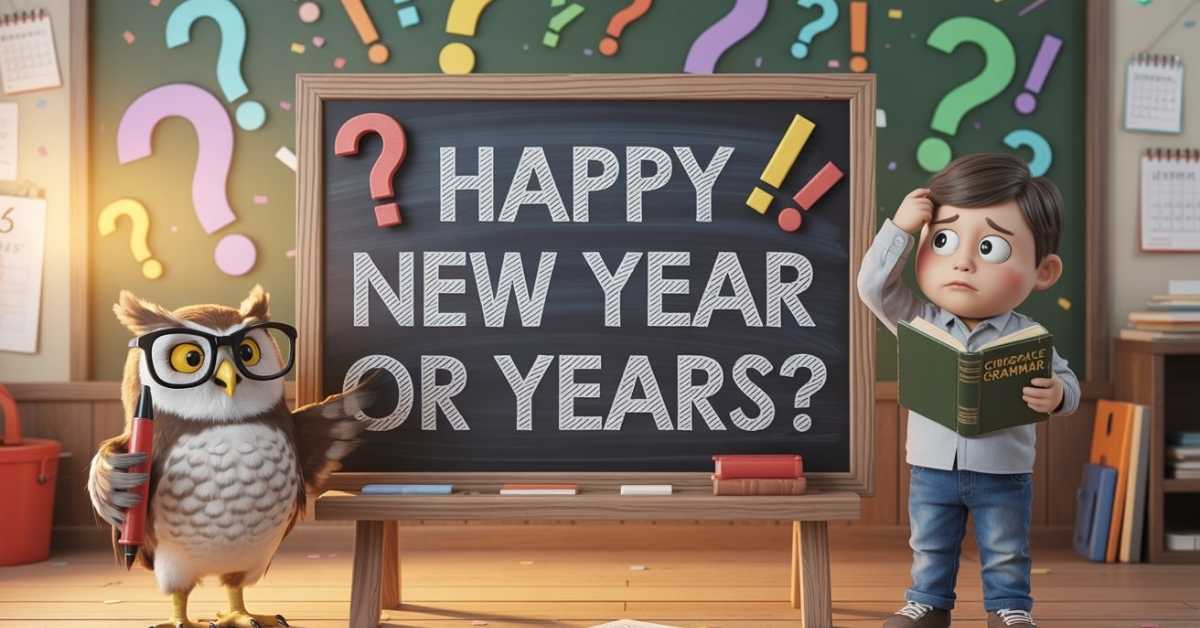
The right one is theHappy New Years
One reason this mistake is so common is that spoken English often differs from written English.
When people say:
Happy New Year!
The final sounds can blend together in fast speech. This makes some listeners assume they’re hearing:
Happy New Years!
In addition, many holiday-related expressions contain plural words:
- Best Wishes
- Season’s Greetings
Because people are accustomed to these phrases, adding an “s” to “Year” feels natural even though it’s grammatically incorrect.
Understanding the Grammar Behind
When you wish someone a Happy New Year, you’re expressing a hope that the upcoming year will bring happiness, success, health, and prosperity.
The word year functions as a singular noun because you’re referring to one specific calendar year.
Examples:
✅ Wishing you a Happy New Year.
Notice that the greeting focuses on a single upcoming year rather than multiple years.
Because of this, Happy New Years creates a grammatical mismatch.
Why “Happy New Years” Is Incorrect
This phrase uses a plural noun without a logical reason.
It would be similar to saying:
❌ Happy Birthdays
❌ Merry Christmases
These expressions sound unusual because the greeting is intended for one specific occasion.
While people may occasionally say Happy New Years in casual conversation, it is not considered the standard form in professional writing, publishing, education, or business communication.
When “New Year’s” With an Apostrophe Is Correct
Many people confuse with phrases that require an apostrophe.
The apostrophe appears when something belongs to or is associated with the New Year.
Examples include:
- New Year’s Eve
- New Year’s Day
- New Year’s celebration
- New Year’s party
- New Year’s traditions
- New Year’s resolutions
In these examples, the apostrophe indicates possession or association.
Think of it as shorthand for:
- Eve of the New Year
- Day of the New Year
- Resolutions for the New Year
This is why the apostrophe is correct in these situations.
Which Is Usually Wrong
A common variation is:
❌ Happy New Year’s
This version confuses the greeting with possessive phrases.
While New Year’s Eve and New Year’s Day are correct, the standalone greeting should remain:
✅ Happy New Year
The greeting itself doesn’t require a possessive noun.
What Native English Speakers Actually Write
If you examine greeting cards, business emails, newspapers, websites, and social media posts, you’ll overwhelmingly find:
✅ Happy New Year
Professional writers, editors, publishers, and communication specialists consistently use this version.
Examples include:
Greeting Cards
- Happy New Year! Wishing you health and happiness.
- May the New Year bring joy and success.
Business Emails
- Wishing you a Happy New Year and continued success.
- Thank you for your partnership. Happy New Year.
Text Messages
- Wishing you happiness and good health this year.
- Happy New Year! Can’t wait to see what this year brings.
What Businesses and Professional Writers Use
Professional communication follows established editorial standards.
Whether you’re reading:
- Corporate websites
- Press releases
- Marketing campaigns
- News publications
- Educational institutions
You’ll almost always encounter:
Happy New Year
Businesses avoid nonstandard grammar because language affects credibility and trust.
For professionals, using the correct holiday greeting demonstrates attention to detail and effective communication skills.
Learn More: Among or Amongst
Spoken English vs Written English
One of the biggest reasons for confusion is the difference between speech and writing.
In Spoken English
People often speak quickly.
Words blend together.
Regional accents can alter pronunciation.
As a result, listeners may hear:
“Happy New Years”
even when the speaker intended:
“Happy New Year”
In Written English
Grammar conventions become more important.
Readers expect standardized language.
This is why formal writing consistently favors:
✅ Happy New Year
rather than:
❌ New Years
Understanding this distinction helps explain why the mistake persists year after year.
Common New Year Greeting Mistakes
Mistake #1: New Years
Incorrect because the greeting refers to one year.
Mistake #2: New Year’s
Incorrect as a standalone greeting.
Mistake #3: Incorrect Capitalization
Generally acceptable:
- Happy New Year
However, greeting cards and titles often capitalize all major words.
Mistake #4: Mixing Greetings With Holiday Names
Correct:
- New Year’s Eve
- New Year’s Day
Incorrect:
- Happy New Year’s
- Happy New Years
A Simple Rule You’ll Never Forget
If you’re wishing someone well:
✅ Use Happy New Year
If you’re referring to an event, celebration, or tradition associated with the New Year:
✅ Use New Year’s
Examples:
- New Year’s Eve
- New Year’s Day
- New Year’s party
- New Year’s resolutions
This simple distinction eliminates nearly all confusion.
Why This Mistake Continues Every Year
Language psychology plays a major role.
People often rely on patterns rather than grammar rules.
Because many holiday expressions use plural nouns or possessive constructions, the brain naturally assumes similar structures should apply to New Year greetings.
The combination of:
- Informal speech
- Social media usage
- Habitual repetition
- Misheard pronunciation
helps keep the confusion alive.
Even educated native speakers occasionally pause to double-check before writing a holiday greeting.
Frequently Asked Questions
Is it Happy New Year or Happy New Years?
Happy New Year is correct.
Is Happy New Years ever acceptable?
It may appear in casual speech, but it is generally considered incorrect in standard written English.
Why do people say Happy New Years?
Because spoken English often makes the phrase sound plural, leading to confusion.
Should there be an apostrophe in Happy New Year?
No. The greeting does not require an apostrophe.
Is Happy New Year’s correct?
No. The apostrophe is appropriate in phrases such as New Year’s Eve and New Year’s Day, not in the greeting itself.
How do businesses write New Year greetings?
Businesses almost always use Happy New Year.
What do grammar experts recommend?
Grammar experts, style guides, publishers, and professional editors recommend Happy New Year as the standard greeting.
Final Verdict
If you’ve been wondering whether to write which, the answer is straightforward: Happy New Year is the correct greeting.
Use it for greeting cards, business emails, text messages, social media captions, and professional communication. Reserve New Year’s for phrases such as New Year’s Eve, New Year’s Day, and New Year’s resolutions.
The easiest rule to remember is this:
Wish someone well? Use “Happy New Year.”
Talking about something connected to the New Year? Use “New Year’s.”
Follow that rule, and you’ll never have to second-guess your New Year greeting again.