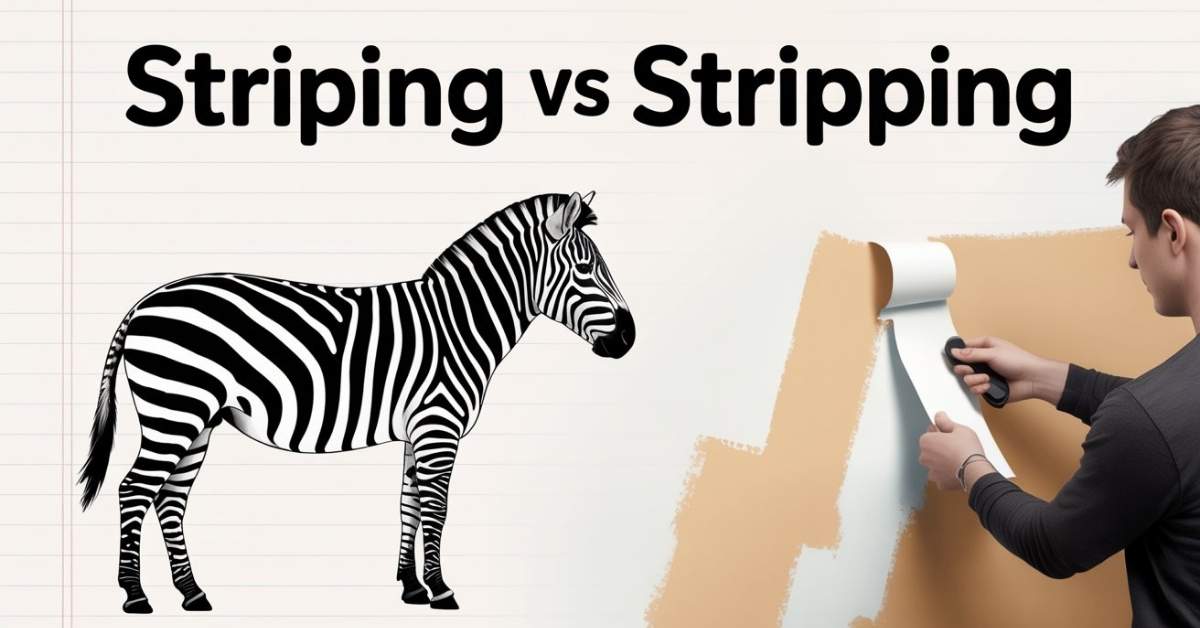
Striping vs stripping is a common spelling and usage confusion in English, especially because the two words look and sound similar but mean very different things. The simple answer is this: striping means adding stripes, lines, or markings, while stripping means removing something, such as paint, insulation, or layers. Understanding striping vs stripping meaning helps you choose the correct word in writing, technical work, and everyday communication.
Many people hesitate when typing these words because both come from similar root words—stripe and strip—yet they follow different spelling patterns. Whether you’re writing about road striping, paint stripping, wire stripping, or simply trying to improve your grammar, knowing the difference can prevent embarrassing mistakes and improve clarity.
In this guide, you’ll learn exactly what each word means, why one has one “p” while the other has two, how to use them correctly in sentences, and simple tricks to remember the difference forever.
Quick Answer: Striping vs Stripping Meaning at a Glance
If you need a fast answer, here it is:
| Word | Meaning | Easy Memory Tip | Example |
|---|---|---|---|
| Striping | Adding stripes, lines, or markings | Stripe = add lines | The workers are striping the parking lot. |
| Stripping | Removing something | Strip away = remove | She is stripping old paint from the wall. |
The key difference is simple:
Striping = adding Stripping = removing
That one distinction solves most confusion.
What Does “Striping” Mean?
The word striping comes from the verb stripe, which means to add stripes, bands, or linear markings to something.
In most contexts, striping refers to creating visible lines or patterns on a surface. These stripes may be decorative, functional, or organizational.
Striping Definition in English
Striping means:
The act of adding stripes, lines, or markings to an object or surface.
It is the present participle form of stripe.
Unlike stripping, the base word stripe ends with a silent e, so when adding -ing, the e is dropped:
stripe → striping
This is a standard English spelling rule.
Common Uses of Striping
Road Striping
One of the most common real-world examples is road striping. Traffic departments apply painted lines to roads to organize lanes and improve safety.
Examples include:
- Lane dividers
- Pedestrian crosswalks
- Parking lot striping
- Highway shoulder markings
Without proper traffic striping, roads would be far more dangerous.
Sports Field Striping
Sports grounds often use field striping to mark boundaries and zones.
Examples:
- Football field striping
- Soccer field markings
- Baseball diamond lines
- Tennis court striping
Precision matters because these stripes affect gameplay and officiating.
Decorative Striping
Decorative striping appears in:
- Interior wall designs
- Furniture accents
- Automotive paint jobs
- Clothing and fabrics
A striped pattern can add personality and visual appeal.
Zebra Striping in Design and Data
In digital design, zebra striping means alternating row colors in tables to improve readability.
Example:
| Name | Department |
|---|---|
| Alex | Sales |
| Maria | HR |
| David | Finance |
This simple formatting technique helps users scan data more easily.
RAID and Data Striping
In technology, disk striping or RAID striping spreads data across multiple storage drives to improve performance.
This technical use of striping has nothing to do with visible lines—it refers to distributing data in “stripes” across hardware.
Example Sentences Using “Striping”
Here are correct examples:
- The crew is striping the highway after resurfacing.
- She is striping the wall with blue and white paint.
- The software uses zebra striping to organize data tables.
- Engineers rely on RAID striping for faster data access.
What Does “Stripping” Mean?
The word stripping comes from the verb strip, which means to remove, peel off, or take away something.
Unlike striping, stripping often involves elimination or removal.
Stripping Definition in English
Stripping means:
The act of removing a covering, layer, or material from something.
Examples include removing paint, insulation, bark, or even digital formatting.
Why Does “Stripping” Have Two P’s?
This is where many people get confused.
The base verb is strip, which ends in a short vowel followed by a consonant. English grammar often doubles the final consonant before adding -ing.
strip → stripping
This is called the double consonant rule.
Examples:
- run → running
- stop → stopping
- strip → stripping
That extra p is grammatically correct.
Common Uses of Stripping
Paint Stripping
One of the most familiar examples.
People often strip paint from furniture, walls, or doors before refinishing.
Example:
She spent the weekend stripping old paint from an antique table.
Wallpaper Stripping
Home renovation often involves stripping wallpaper before repainting walls.
Floor Stripping
Commercial cleaners may strip wax or coatings from floors before applying a fresh finish.
Wire Stripping
Electricians regularly perform wire stripping to remove insulation from electrical wires.
This allows proper electrical connections.
Data or Text Stripping
In technology, data stripping can refer to removing unwanted characters, code, or formatting from digital content.
Example Sentences Using “Stripping”
- He is stripping old varnish from the cabinet.
- The technician is stripping wires for installation.
- They are stripping wallpaper from the bedroom walls.
- The software is stripping unnecessary HTML tags.
Key Differences Explained
The easiest way to compare them is side by side.
Comparison Table
| Feature | Striping | Stripping |
|---|---|---|
| Root word | Stripe | Strip |
| Main meaning | Adding lines or patterns | Removing something |
| Action type | Addition | Removal |
| Common industries | Roads, sports, design, data storage | Painting, construction, electrical work |
| Grammar pattern | Drop silent “e” | Double final consonant |
| Example | Road striping | Paint stripping |
Adding vs Removing: The Simplest Memory Trick
Remember this:
Striping adds stripes. Stripping strips away.
If something is being added, use striping.
If something is being removed, use stripping.
This quick mental shortcut solves most confusion instantly.
Why Is It “Striping” but “Stripping”?
This question appears often because the spelling difference feels inconsistent.
It actually follows standard English grammar rules.
The Double Consonant Rule
If a word ends in:
- one vowel
- followed by one consonant
…the consonant is often doubled before adding -ing.
Example:
- sit → sitting
- cut → cutting
- strip → stripping
Silent “E” Rule
If a verb ends in silent e, drop the e before adding -ing.
Example:
- stripe → striping
- make → making
- drive → driving
That’s why striping keeps one p, while stripping gets two.
Striped vs Stripped: Another Common Confusion
Many people also confuse striped and stripped.
They follow the same logic.
Striped Meaning
Striped means something has stripes.
Examples:
- A striped shirt
- A striped zebra
- Striped wallpaper
Stripped Meaning
Stripped means something has been removed or taken away.
Examples:
- Stripped paint
- Stripped wire
- A stripped screw
Quick Comparison
| Word | Meaning |
|---|---|
| Striped | Has stripes |
| Stripped | Had something removed |
Common Mistakes People Make
A frequent mistake is choosing the word based only on pronunciation.
Examples of incorrect usage:
Incorrect: The city is stripping new lane markings. Correct: The city is striping new lane markings.
Incorrect: He is striping old wallpaper. Correct: He is stripping old wallpaper.
Context matters.
Always ask:
Am I adding something or removing something?
Striping vs Stripping in Different Industries
Understanding industry context can make word choice easier.
Construction and Painting
Workers may perform both actions in one project.
They might:
- strip old paint
- then stripe new safety markings
Example:
The crew finished stripping the old coating before striping the warehouse floor.
Technology
In computing:
- RAID striping improves data performance
- Data stripping removes unwanted code
Even technical fields use both words differently.
Electrical Work
Electricians often perform wire stripping.
This means removing insulation—not adding anything.
Learn More: Protesters or Protestors
How to Remember the Difference
Easy Memory Trick
Think:
Stripe = line Strip = remove
Therefore:
Striping = adding lines Stripping = removing material
Mnemonic Phrase
Striping paints. Stripping peels.
This simple phrase helps many writers remember.
Striping vs Stripping Meaning in Professional Writing
Using the wrong word can create confusion in:
- Technical manuals
- Business reports
- Construction documents
- Safety instructions
Imagine writing:
Begin stripping the parking lot.
That sounds like you’re removing something.
But if you meant painting lane lines, the correct word is:
Begin striping the parking lot.
Precise word choice improves writing clarity and professionalism.
Are Striping and Stripping Ever Interchangeable?
Generally, no.
These words describe opposite actions.
Although they sound alike, they should not be swapped.
Using them interchangeably can change the meaning completely.
Quick Example Sentences
Correct Use of Striping
- Workers are striping the road.
- She is striping the wall with gold paint.
- The team completed parking lot striping.
Correct Use of Stripping
- He is stripping old paint.
- The electrician is stripping the wire.
- They are stripping wallpaper.
Frequently Asked Questions
What is the difference between striping and stripping?
Striping means adding stripes or markings. Stripping means removing something.
Is striping a real word?
Yes. Striping is the correct present participle of stripe.
Why does stripping have two p’s?
Because strip follows the double consonant rule before adding -ing.
Which is correct: striping or stripping?
Both are correct, but they mean different things.
Can striping and stripping be used interchangeably?
No. One means adding, the other means removing.
Final Thoughts
Understanding striping vs stripping meaning is easier once you focus on the core difference.
Striping = adding stripes, lines, or patterns. Stripping = removing paint, layers, or materials.
That one distinction can help you avoid grammar mistakes, improve professional writing, and communicate more clearly.
Whenever you feel unsure, ask yourself:
Am I putting something on—or taking something off?
If you’re adding, use striping. If you’re removing, use stripping.