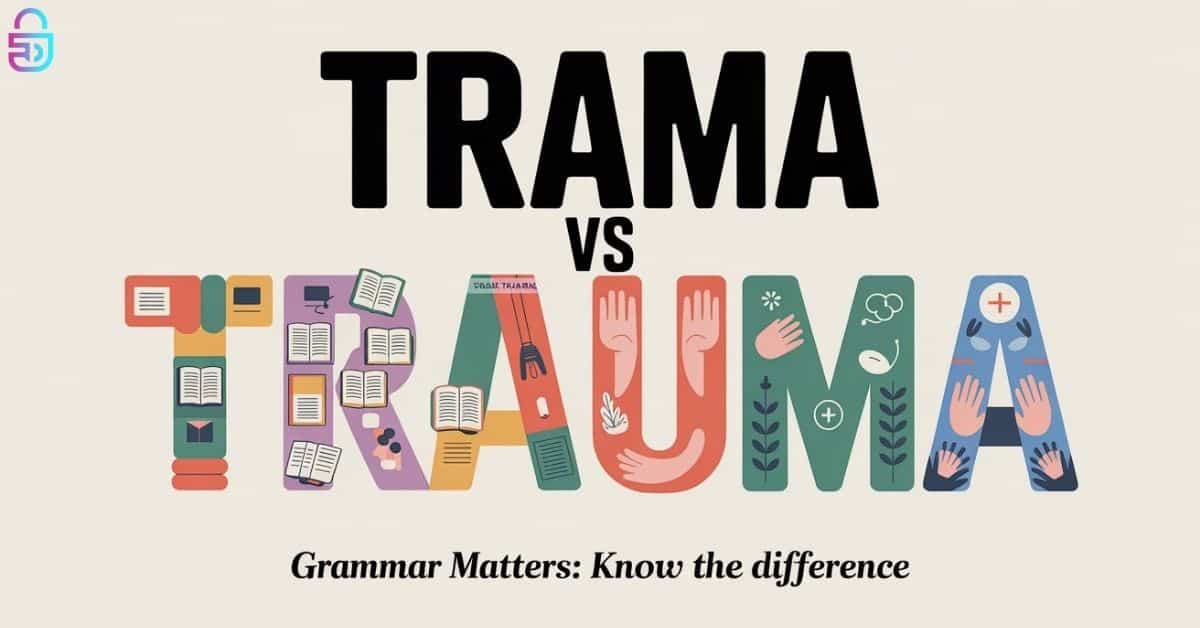
Trama vs trauma is a common spelling confusion that many people search online when trying to understand the correct English word. The simple answer is that “trauma” is the correct spelling in English, while “trama” is usually a misspelling. However, the word “trama” does exist in languages like Spanish and Italian, where it can mean plot, storyline, weave, or structure.
This small spelling difference creates a lot of confusion for English learners, writers, students, and even native speakers. Since the words look similar, many users accidentally type “trama” instead of “trauma” in search engines, emails, academic writing, and conversations.
In this guide, you’ll learn:
- The exact difference between trama vs trauma
- The correct spelling and pronunciation
- The meaning of trauma in psychology and medicine
- Why people commonly misspell trauma
- How “trama” is used in other languages
- Examples, FAQs, and grammar tips
By the end, you’ll clearly understand when to use trauma, why trama is usually incorrect in English, and how to avoid this common spelling mistake.
Quick Comparison: Trama vs Trauma
| Word | Meaning | Correct in English? | Common Usage |
|---|---|---|---|
| Trauma | Emotional, physical, or psychological injury | Yes | Medical, psychology, emotional discussions |
| Trama | Usually a misspelling in English | No | May appear in Spanish or Italian |
Quick Fact
“Trauma” is the correct English word. “Trama” is generally considered a typo in English writing.
What Does Trauma Mean?
The word trauma refers to a deeply distressing or disturbing experience that affects a person emotionally, mentally, or physically. In medical and psychological contexts, trauma can result from accidents, violence, abuse, disasters, injuries, or emotionally painful events.
Possible entity: Post-traumatic stress disorder
Types of Trauma
1. Emotional Trauma
Emotional trauma happens after stressful or painful experiences such as:
- Losing a loved one
- Divorce
- Bullying
- Emotional abuse
- Childhood neglect
People experiencing emotional trauma may feel:
- anxiety
- fear
- sadness
- emotional distress
- panic attacks
2. Physical Trauma
Physical trauma refers to bodily injuries caused by:
- car accidents
- falls
- sports injuries
- surgery
- violence
Doctors often use the word trauma in emergency medicine to describe severe injuries.
3. Psychological Trauma
Psychological trauma affects mental health and emotional stability. It can impact a person’s:
- behavior
- relationships
- emotional response
- coping mechanisms
Severe psychological trauma may contribute to:
- depression
- stress disorders
- PTSD
- emotional suffering
Is “Trama” a Real Word?
This is one of the most searched questions related to trama vs trauma.
The answer depends on the language.
In English
“Trama” is not considered the standard English spelling. In most English contexts, it is simply a typo or spelling mistake of “trauma.”
For example:
❌ Incorrect:
She experienced deep trama after the accident.
✅ Correct:
She experienced deep trauma after the accident.
In Spanish and Italian
The word “trama” is real in several languages.
Spanish Meaning of Trama
In Spanish, “trama” can mean:
- plot
- storyline
- weaving structure
- sequence of events
Example:
La trama de la película fue excelente. (“The movie’s plot was excellent.”)
Italian Meaning of Trama
In Italian, “trama” also refers to:
- story plot
- narrative structure
- fabric weave
This multilingual usage is one reason search engines sometimes struggle to interpret the exact intent behind “trama vs trauma.”
Why Do People Confuse Trama and Trauma?
The confusion between these two words happens for several reasons.
1. Similar Pronunciation
The words look and sound somewhat similar during fast speech, especially for English learners.
- Trauma → “TRAW-muh”
- Trama → Often typed accidentally without the “u”
This leads to pronunciation confusion and spelling errors.
2. Fast Typing Mistakes
Many people accidentally skip vowels while typing quickly. Since “trauma” contains an extra “u,” users often type:
- trama
- truma
- truama
- tramua
These are common typo variations.
3. Autocorrect and Mobile Keyboards
Mobile typing increases spelling confusion. Autocorrect systems sometimes fail to detect the intended word immediately.
4. English Learning Challenges
Non-native speakers often struggle with:
- silent vowels
- unusual spelling patterns
- pronunciation differences
That’s why “trauma” becomes one of the more commonly misspelled vocabulary words.
How to Spell Trauma Correctly
The correct spelling is:
T-R-A-U-M-A
Pronunciation Guide
American English
TRAW-muh
British English
TRAW-muh
The “u” is important and should never be removed.
Easy Memory Trick
Think of the word:
“Trauma has a U because painful experiences affect YOU.”
This simple trick helps many students remember the correct spelling.
How to Pronounce Trauma
Many spelling mistakes happen because users are unsure how to pronounce the word correctly.
Phonetic Pronunciation
/ˈtrɔːmə/
Syllable Breakdown
Trau-ma
The first part sounds like:
- draw
- law
- saw
The second syllable is soft:
- muh
Examples of Trauma in Sentences
Understanding sentence usage makes vocabulary learning easier.
Emotional Trauma Examples
- The child experienced emotional trauma after the family conflict.
- Years of bullying caused deep psychological trauma.
- Therapy helped her recover from traumatic experiences.
Physical Trauma Examples
- The patient suffered severe trauma during the accident.
- Emergency doctors treated multiple physical injuries and trauma cases.
- Sports trauma can sometimes require surgery.
Psychology Examples
- Childhood trauma may affect emotional development.
- Trauma therapy helps individuals process painful memories.
- Mental health professionals study trauma and emotional distress carefully.
Trauma in Psychology and Mental Health
In psychology, trauma describes experiences that overwhelm a person emotionally or mentally.
Common Causes of Psychological Trauma
| Cause | Possible Emotional Effect |
|---|---|
| Abuse | Fear and anxiety |
| Violence | PTSD symptoms |
| Accidents | Emotional shock |
| Loss of loved ones | Depression |
| Natural disasters | Stress disorders |
Signs of Emotional Trauma
Some common symptoms include:
- panic attacks
- anxiety
- nightmares
- emotional numbness
- fear
- stress
- emotional pain
- mood swings
Not everyone experiences trauma the same way. Emotional responses differ from person to person.
Trauma and PTSD
Severe trauma can sometimes contribute to:
- Post-traumatic stress disorder
- emotional suffering
- behavioral health challenges
Possible entity: Post-traumatic stress disorder
PTSD may include:
- flashbacks
- avoidance behavior
- emotional distress
- hypervigilance
Trama Meaning in Spanish and Italian
This section is often missing from competitor articles.
Spanish Usage
In Spanish literature and storytelling, “trama” means:
- plot
- sequence of events
- storyline
Example:
La trama del libro fue emocionante. (The plot of the book was exciting.)
Italian Usage
In Italian, “trama” may refer to:
- narrative structure
- woven fabric pattern
- story development
This is why “trama” is technically a real word — just not the correct English spelling for “trauma.”
Trauma vs Trama: Key Differences Explained
Here’s a clearer side-by-side comparison.
| Feature | Trauma | Trama |
|---|---|---|
| Correct English spelling | Yes | Usually No |
| Related to psychology | Yes | No |
| Used in medicine | Yes | No |
| Exists in Spanish/Italian | No | Yes |
| Common typo? | No | Yes |
| Meaning | Injury or distress | Plot/storyline in some languages |
Common Misspellings Similar to Trauma
People frequently make spelling mistakes with trauma.
Common Variations
- trama
- truma
- truama
- tramua
These usually happen because:
- English spelling can be confusing
- vowels are skipped during typing
- pronunciation differs from spelling
Trauma Synonyms and Related Words
Using synonyms improves both vocabulary and semantic understanding.
Common Synonyms
| Word | Meaning |
|---|---|
| Distress | Emotional suffering |
| Shock | Sudden emotional impact |
| Injury | Physical damage |
| Pain | Emotional or physical discomfort |
| Suffering | Deep emotional hardship |
Related Mental Health Terms
- anxiety
- stress
- emotional pain
- psychotherapy
- healing
- coping mechanisms
- behavioral therapy
- emotional wellness
These semantic entities strengthen topical relevance around trauma-related searches.
Why Google Corrects “Trama” to “Trauma”
Search engines are designed to identify:
- spelling errors
- typing patterns
- user intent
- semantic relationships
That’s why Google often shows:
“Did you mean: trauma?”
Google understands that most users searching “trama” are actually looking for:
- trauma definition
- trauma meaning
- trauma spelling
This automatic correction improves search accuracy and user experience.
Learn More: Bellies or Bellys
Word Origin and Etymology of Trauma
The word “trauma” comes from the Greek word:
τραῦμα (traûma)
Meaning:
- wound
- injury
Originally, it referred mostly to physical injuries. Over time, psychology expanded the meaning to include:
- emotional pain
- psychological injury
- traumatic experiences
Today, trauma is widely used in:
- medicine
- psychology
- mental health discussions
- therapy
- counseling
Commonly Confused English Words
The confusion around trama vs trauma is similar to many other English spelling mistakes.
Frequently Confused Words
| Incorrect Pair | Correct Difference |
|---|---|
| loose vs lose | adjective vs verb |
| affect vs effect | verb vs noun |
| breath vs breathe | noun vs verb |
| then vs than | time vs comparison |
| your vs you’re | possessive vs contraction |
Understanding these differences improves English vocabulary and grammar skills.
Mini Case Study: How a Small Typo Changes Meaning
Imagine a student writing:
“The soldier suffered trama after the war.”
Although readers may understand the intended meaning, the spelling mistake reduces:
- writing credibility
- academic quality
- professionalism
Correct version:
“The soldier suffered trauma after the war.”
This example shows why proper spelling matters in:
- blogging
- academic writing
- professional communication
Expert Quote on Trauma
“Trauma is not only what happens to us, but also what happens inside us as a result of overwhelming experiences.”
This quote highlights why trauma is such an important concept in mental health and emotional healing discussions.
Frequently Asked Questions
Is trama a real English word?
No. In English, “trama” is generally considered a misspelling of “trauma.”
Is trauma spelled with a “u”?
Yes. The correct spelling is:
trauma
The “u” is essential.
What does trauma mean in psychology?
In psychology, trauma refers to emotional or mental distress caused by painful or overwhelming experiences.
Why do people type trama instead of trauma?
Most people:
- type too quickly
- forget the “u”
- confuse pronunciation
- make common spelling errors
Is trama Spanish?
Yes. In Spanish, “trama” can mean:
- plot
- storyline
- narrative structure
What are examples of trauma?
Examples include:
- accidents
- abuse
- violence
- emotional neglect
- natural disasters
- serious injuries
How do you pronounce trauma?
Trauma is pronounced:
TRAW-muh
What is emotional trauma?
Emotional trauma refers to psychological pain caused by distressing experiences.
Conclusion
Understanding trama vs trauma is important for clear communication, proper spelling, and accurate writing. In English, “trauma” is the correct spelling, used to describe emotional, psychological, or physical injury. The word “trama” is usually a typo, although it has legitimate meanings in languages like Spanish and Italian.
Because the words look similar, many people confuse them online, especially when typing quickly or learning English vocabulary. However, remembering the extra “u” in trauma can help you avoid this common spelling mistake.
Whether you’re writing an academic paper, blog post, social media caption, or professional document, using the correct spelling improves readability, credibility. Most importantly, understanding the meaning of trauma also helps build awareness around emotional health, psychological injury, and mental wellness.