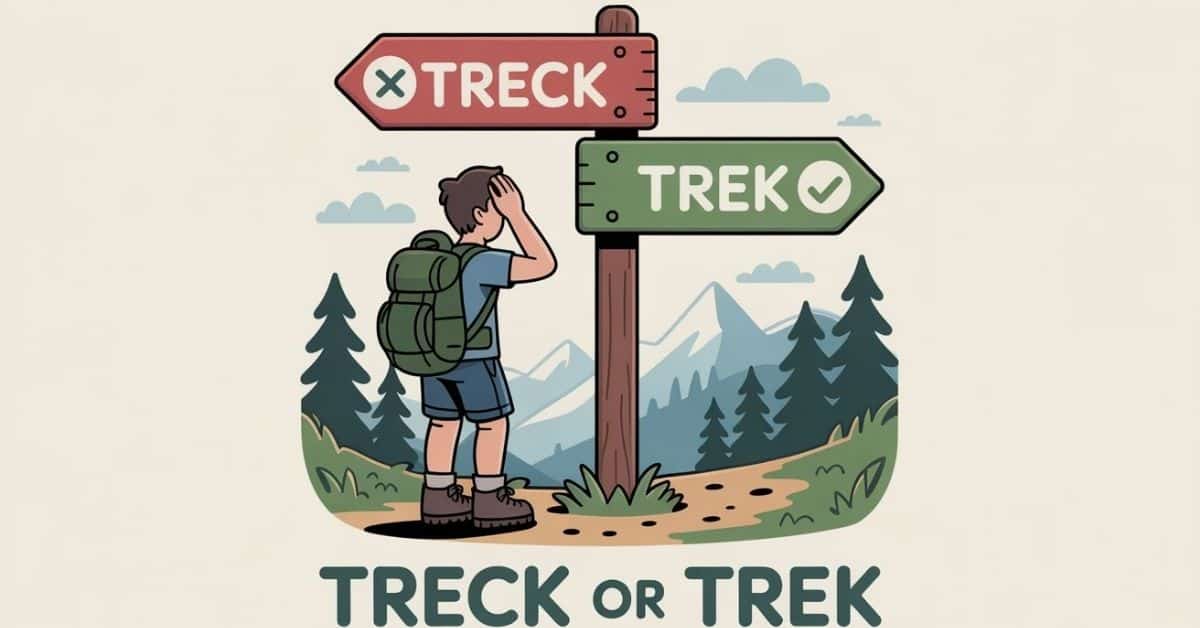
Treck or trek — the correct spelling is “trek.” The word “treck” is incorrect in standard English and is considered a common spelling mistake.
A trek refers to a long, difficult journey, often on foot, especially in natural or mountainous environments. The confusion between trek and treck happens because English spelling patterns often make people expect words with a short vowel sound to end in “-ck.”
But in this case, the correct and widely accepted spelling is always: trek.
What Does “Trek” Mean?
The word trek is both a noun and a verb, and its meaning depends on context.
As a Noun (Journey or Expedition)
A trek means:
- a long and challenging journey
- a hike in nature or mountains
- travel through difficult terrain
Example:
- We went on a trek through the Himalayas.
As a Verb (Action of Traveling)
To trek means:
- to travel on foot for a long distance
- to make a difficult journey
Example:
- They trekked across the desert for three days.
Is “Treck” a Real Word?
In standard English usage, “treck” is NOT correct.
It is:
- a misspelling
- a typing error
- a phonetic assumption
Trusted language authorities:
- Merriam-Webster
- Oxford English Dictionary
- Cambridge Dictionary
- Collins Dictionary
All confirm the correct spelling as TREK, not treck.
Why Do People Confuse “Trek” and “Treck”?
This is where things get interesting — the confusion is actually psychological and linguistic, not random.
1. English Spelling Patterns Mislead the Brain
English has many words ending in “-ck” after short vowel sounds:
- track
- trick
- back
- check
- stick
So when people hear “trek,” their brain expects:
“treck”
This is a pattern recognition error, not ignorance.
2. Sound-Based Spelling (Phonetic Guessing)
The word trek is pronounced:
/trek/ (rhymes with check, neck, deck)
Because of this sound, many assume:
- “ck” must be added for correctness
But English is inconsistent, and this is one of those exceptions.
3. Fast Typing + Autocorrect Failure
Modern users often:
- type quickly
- rely on memory instead of spelling rules
- rarely see the word written formally
This leads to frequent use of “treck” in social media and informal writing.
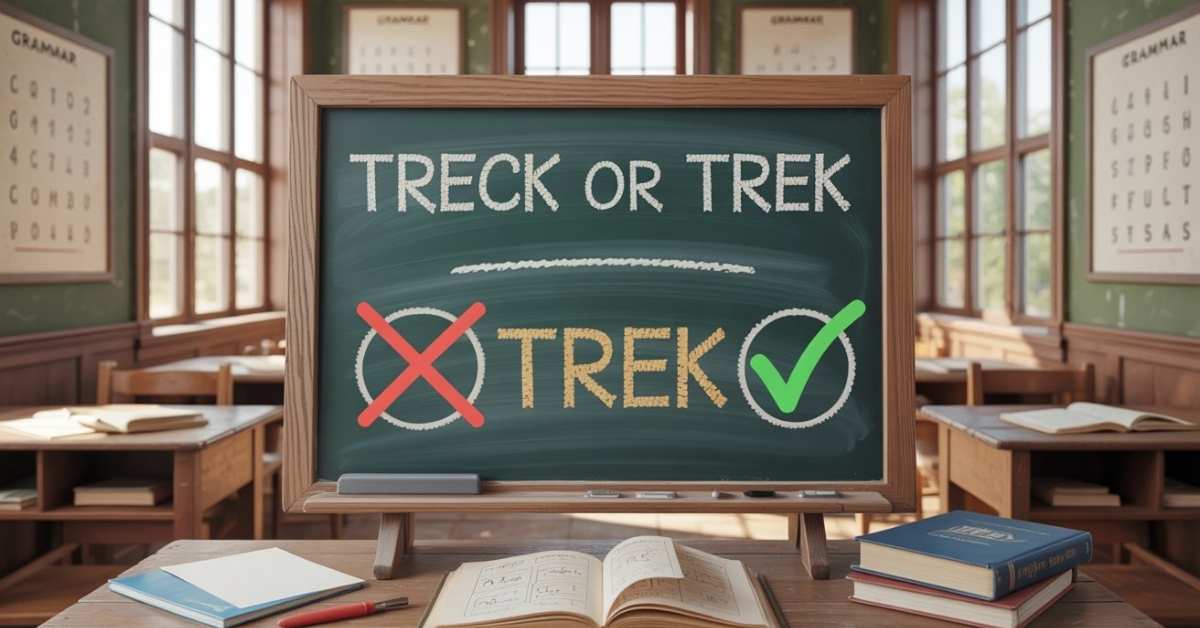
Trek vs Treck: Clear Comparison
| Feature | Trek | Treck |
|---|---|---|
| Correct spelling | ✅ Yes | ❌ No |
| Found in dictionaries | ✅ Yes | ❌ No |
| Used in professional writing | ✅ Yes | ❌ No |
| Accepted in education | ✅ Yes | ❌ No |
| SEO-friendly | ✅ Yes | ❌ No |
Why “Trek” Is the Only Correct Form
Historical Linguistic Origin
The word trek comes from:
- Dutch language
- Afrikaans influence (South African Dutch)
Originally, it referred to:
- migration journeys
- wagon travel
- long difficult movement across land
This origin explains why the spelling does not follow modern English “-ck” rules.
Related Words and Forms
Understanding related forms helps solidify correct usage:
- trek (base noun/verb)
- trekked (past tense)
- trekking (continuous form)
- trekker (person who treks)
✔ All correct forms keep the base spelling “trek”
Learn More: Burned vs Burnt
Real-World Usage Examples
Travel & Adventure
- The group completed a trek across the Andes.
- We are planning a mountain trek next summer.
Blogging / Content Writing
- Her travel blog documented a solo trek through Nepal.
Everyday Conversation
- They trekked for hours to reach the village.
Why Spelling “Treck” Can Hurt Credibility
Even though it seems minor, spelling matters in perception.
In professional contexts:
- resumes
- blogs
- academic writing
- business communication
Using “treck” may create an impression of:
- lack of attention to detail
- weak writing accuracy
- low credibility
This is especially important in SEO content, where trust signals matter.
The Psychology Behind the Mistake (Important Insight)
The mistake is not random — it comes from how the brain processes language.
Cognitive Pattern:
- Brain detects sound similarity (“trek” ≈ “check”)
- Applies familiar rule (“ck” endings are common)
- Produces incorrect spelling (“treck”)
This is called a spelling normalization error.
It is extremely common among:
- English learners
- fast typists
- casual writers
Trek in Popular Culture
The word gained global recognition through:
- “Star Trek” (science fiction franchise)
- adventure tourism branding
- trekking and hiking industries
These associations strengthened the correct spelling TREK in global usage.
British vs American English Usage
There is no difference:
- UK English → trek
- US English → trek
✔ Both use the same spelling ❌ “Treck” is not accepted in either variant
Common Mistakes People Make
Incorrect:
- treck
- trecking
- trecked
Correct:
- trek
- trekking
- trekked
How to Remember the Correct Spelling
Simple Memory Trick
Think of:
“Trek = travel, trip, trail”
All are short, simple words without -ck endings
Pattern Rule Trick
If the word relates to:
- journey
- travel
- movement
It usually avoids heavy consonant endings like “-ck”
Pronunciation Guide
Trek is pronounced:
/trek/
It rhymes with:
- check
- neck
- deck
Even though it sounds like “ck” words, the spelling stays simple with just -k.
Frequently Asked Questions
Is “treck” ever correct?
No. It is always considered a spelling error.
Why do people write treck instead of trek?
Because English spelling patterns make “ck” feel natural after short vowel sounds.
Is trek a noun or verb?
It can be both.
What is trekking?
“Trekking” is the continuous form of trek, meaning long-distance hiking or travel.
Is trek formal or informal?
It is acceptable in both formal and informal writing.
Final Summary
The correct spelling is TREK, not treck.
The confusion exists because English spelling rules are inconsistent, and many similar words end in “-ck,” which leads people to incorrectly assume “treck” is right.
However, dictionaries, linguistic history, and real-world usage all confirm:
Trek = correct spelling Treck = common mistake
If you want your writing to look professional, credible, and accurate, always use:
✔ trek ✔ trekking ✔ trekked
and avoid “treck” entirely.