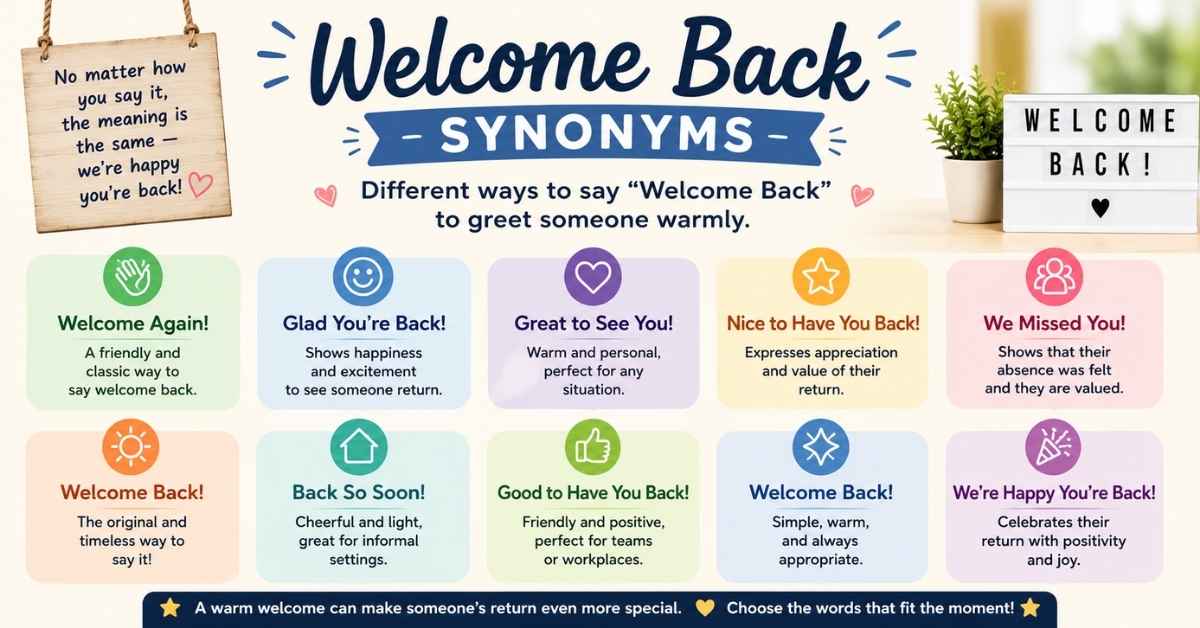
Finding the right welcome back synonym can make your greeting feel more genuine, professional, or heartfelt depending on the situation. While “welcome back” is the most common expression for greeting someone after they return, there are dozens of natural alternatives such as “glad you’re back,” “great to see you again,” “it’s wonderful to have you back,” and “good to have you back.” The best choice depends on your relationship with the person, the reason for their return, and the tone you want to convey.
Whether you’re welcoming an employee back after vacation, greeting a student after school holidays, responding to a returning customer, or simply catching up with a friend, choosing the right words helps people feel valued, appreciated, and included. In this guide, you’ll discover professional, casual, heartfelt, and creative alternatives, practical examples, email templates, and expert tips to help you sound natural in every situation.
What Does “Welcome Back” Really Mean?
The phrase “welcome back” is more than a simple greeting. It acknowledges that someone has returned after being away and expresses happiness that they are present again. Although the expression is short, it carries a message of acceptance, appreciation, belonging, and warmth.
People commonly use it when someone returns after:
- A vacation
- Sick leave
- Maternity or parental leave
- School holidays
- Business travel
- Military service
- Long-term travel
- Career breaks
- Retirement
- Remote work
- Any extended absence
In everyday English, “welcome back” is appropriate in both personal and professional conversations. However, there are many situations where another expression sounds more natural, thoughtful, or suitable for the occasion.
Why Choosing the Right Alternative Matters
Not every greeting fits every situation. The words you choose influence how your message is received.
For example:
- A manager welcoming an employee back after maternity leave should use a supportive and respectful tone.
- A teacher greeting students after summer break may prefer a cheerful and encouraging message.
- A friend returning from vacation can be welcomed with a casual, playful expression.
- A business greeting returning customers often benefits from a warm yet professional tone.
Using the right phrase demonstrates good communication skills, emotional intelligence, and an understanding of workplace or social etiquette.
Quick Answer: Best Welcome Back Synonyms
If you’re looking for another way to say “welcome back,” here are some of the most natural alternatives.
| Welcome Back Synonym | Tone | Best For |
|---|---|---|
| Glad you’re back | Friendly | Friends, coworkers |
| Great to see you again | Warm | Personal and professional conversations |
| Good to have you back | Neutral | Everyday communication |
| It’s wonderful to have you back | Professional | Workplace and formal greetings |
| Happy you’re back | Casual | Family and friends |
| We’ve missed you | Heartfelt | Loved ones and close teams |
| Nice to see you again | Friendly | Most situations |
| Welcome home | Emotional | Returning home |
| It’s great having you with us again | Professional | Employees and clients |
| Delighted to see you again | Formal | Speeches and ceremonies |
These alternatives all express the same core idea while offering different levels of formality, warmth, and enthusiasm.
How to Choose the Right Welcome Back Synonym
Many people search for a synonym but forget that the context matters more than the words themselves. Native English speakers naturally adjust their greeting depending on who they’re speaking to and why the person has returned.
Instead of memorizing a single phrase, consider three important factors.
Consider Your Relationship
Ask yourself who you’re welcoming back.
Family
Warm expressions work best.
Examples include:
- We’ve missed you.
- It’s so good to have you back.
- Welcome home.
Friends
Casual greetings sound natural.
For example:
- Glad you’re back!
- Great seeing you again!
- Look who’s back!
Coworkers
Professional but friendly language is ideal.
Examples:
- Great to have you back.
- Hope you had a wonderful break.
- It’s good to see you again.
Clients and Customers
Businesses should balance friendliness with professionalism.
For example:
- We’re delighted to welcome you back.
- Thank you for returning.
- It’s wonderful to have you with us again.
Match the Right Tone
Choosing the right tone helps your message feel sincere.
Professional
Best for:
- Workplace communication
- HR announcements
- Client emails
- Business meetings
Examples:
- We’re pleased to welcome you back.
- It’s a pleasure to have you back.
- We’re happy you’ve returned.
Friendly
Perfect for:
- Coworkers
- Friends
- Community groups
Examples:
- Glad you’re back!
- Great seeing you again!
- Good to have you back!
Heartfelt
Ideal after emotional or significant absences.
Examples:
- We’ve really missed you.
- It’s wonderful to see you again.
- You were truly missed.
Humorous
Suitable only with people who appreciate jokes.
Examples:
- Look who finally came back!
- The legend returns!
- About time!
Humor should never be used when someone is returning after illness, bereavement, or another sensitive situation.
Think About Why They Were Away
The reason someone was absent should influence your wording.
Someone returning from:
- Vacation deserves an upbeat greeting.
- Medical leave deserves compassion.
- Maternity or parental leave deserves warmth and support.
- Military deployment deserves gratitude and respect.
- Career breaks deserve encouragement.
- School holidays call for enthusiasm.
- Long-term travel may inspire curiosity and excitement.
Tailoring your greeting to the occasion makes it feel much more authentic.
Professional Ways to Say “Welcome Back”
Professional communication often requires language that is warm without being overly casual. Whether you’re welcoming an employee, colleague, executive, customer, or business partner, these alternatives maintain a respectful tone while creating a positive impression.
1. Great to Have You Back
Best for: Workplace conversations
This phrase is one of the most versatile professional alternatives. It sounds welcoming while remaining natural.
Example
“Great to have you back. We hope you had a refreshing break and look forward to working with you again.”
2. We’re Pleased to Welcome You Back
Best for: HR emails, official announcements, client communication
This expression adds a formal touch and works particularly well in written communication.
Example
“We’re pleased to welcome you back and wish you continued success with the team.”
3. It’s Wonderful to Have You Back
Best for: Returning employees, valued customers, long-term colleagues
The phrase communicates appreciation without sounding overly emotional.
Example
“It’s wonderful to have you back. Your contributions have been greatly missed.”
4. It’s Good to See You Again
Best for: Meetings, conferences, networking events
This greeting feels conversational while remaining appropriate in professional environments.
Example
“It’s good to see you again. I hope everything has been going well.”
5. Welcome Back to the Team
Best for: Employees returning from leave
Managers frequently use this expression because it reinforces a sense of belonging.
Example
“Welcome back to the team. Everyone is excited to work with you again.”
6. We’re Happy You’re Back
Although slightly less formal, this phrase creates an approachable workplace atmosphere.
Example
“We’re happy you’re back and can’t wait to hear about your trip.”
7. It’s a Pleasure to Have You Back
This greeting works well in client-facing businesses, hospitality, healthcare, education, and professional services.
Example
“It’s a pleasure to have you back. Please let us know if there’s anything we can do to assist you.”
8. Delighted to See You Again
This phrase is ideal for speeches, ceremonies, conferences, and executive meetings where a polished tone is appropriate.
Example
“We’re delighted to see you again and appreciate your continued partnership.”
9. Thank You for Rejoining Us
Instead of focusing only on the return, this expression also acknowledges the person’s commitment.
Example
“Thank you for rejoining us. Your expertise continues to make a valuable difference.”
10. We’re Looking Forward to Working With You Again
This alternative shifts the focus from the absence to future collaboration, making it especially effective in professional settings.
Example
“We’re looking forward to working with you again and achieving great results together.”
Expert Tip: Choose Sincerity Over Complexity
Many people assume that using uncommon vocabulary makes their greeting sound more impressive. In reality, native English speakers usually prefer clear, sincere language over overly elaborate expressions.
For example, “Great to have you back” often feels more genuine than a highly formal alternative because it sounds natural and conversational. The most effective welcome back synonym is the one that fits the relationship, respects the reason for the person’s return, and communicates authentic appreciation.
Casual Alternatives to Say “Welcome Back”
Not every situation calls for a formal greeting. When you’re talking to friends, family members, classmates, neighbors, or close coworkers, casual expressions often sound more genuine. These alternatives are commonly used by native English speakers because they feel warm, natural, and conversational.
The key is to choose a phrase that matches your relationship with the person.
1. Glad You’re Back
One of the most popular welcome back synonyms, this phrase is simple, sincere, and works in almost any casual setting.
Best for: Friends, coworkers, classmates
Example:
“Glad you’re back! The office wasn’t the same without you.”
2. Great to See You Again
This expression is friendly and positive without sounding overly emotional.
Best for: Friends, neighbors, acquaintances
Example:
“Great to see you again! I hope you had an amazing trip.”
3. Good to Have You Back
A versatile greeting that’s suitable for both personal and workplace conversations.
Example:
“Good to have you back. Everyone missed your energy.”
4. Nice to See You Again
If you want something polite yet relaxed, this phrase is an excellent choice.
Example:
“Nice to see you again. How was your vacation?”
5. Happy You’re Back
Short, cheerful, and heartfelt.
Example:
“Happy you’re back! Let’s catch up soon.”
6. We’ve Missed You
This greeting instantly makes someone feel appreciated.
Example:
“We’ve missed you around here. It’s great to see you again.”
7. Look Who’s Back!
Playful and energetic, this phrase is perfect for people you’re close to.
Example:
“Look who’s back! It’s been way too long.”
8. Finally, You’re Back!
Use this only with someone who enjoys lighthearted humor.
Example:
“Finally, you’re back! We’ve been waiting for you.”
9. Welcome Home
Although not always a direct synonym, this phrase is perfect when someone returns home after traveling, studying abroad, military service, or living elsewhere.
Example:
“Welcome home! We couldn’t wait to see you.”
10. It’s So Good to See You
Warm and heartfelt without being overly formal.
Example:
“It’s so good to see you. We hope you’re doing well.”
Heartfelt Ways to Welcome Someone Back
Some situations require more than a simple greeting. When someone returns after a difficult experience, your words should express empathy, kindness, and genuine care.
Whether they’re returning after illness, surgery, maternity leave, bereavement, burnout, or a long personal journey, thoughtful language can make them feel supported.
Here are some meaningful alternatives.
“We’ve Really Missed You”
This phrase communicates sincere appreciation.
Example:
“We’ve really missed you, and we’re so happy you’re back.”
“It Feels Great to Have You Back”
Ideal for both personal and workplace relationships.
Example:
“It feels great to have you back with us again.”
“You Were Truly Missed”
Perfect after an extended absence.
Example:
“You were truly missed, and we’re grateful to see you again.”
“It’s Wonderful to See You Again”
A warm greeting suitable for almost every emotional situation.
“We’re So Happy You’re Here Again”
This expression emphasizes inclusion and belonging.
“Your Presence Makes a Difference”
Excellent for welcoming back valued employees, volunteers, teachers, or team members.
“It’s Not the Same Without You”
A heartfelt way to remind someone they’re appreciated.
Expert Advice
When welcoming someone back after illness or a personal challenge:
- Acknowledge their return without focusing excessively on the reason they were away.
- Let them decide how much they’d like to share.
- Keep your greeting encouraging rather than overly emotional.
- Respect privacy while expressing genuine happiness.
Thoughtful communication often leaves a stronger impression than elaborate wording.
Learn More: Worse Case or Worst Case
Funny Ways to Say “Welcome Back”
Humor can make reunions memorable—as long as it fits the relationship and the situation.
These playful alternatives work best among close friends, siblings, teammates, or coworkers who appreciate a joke.
Popular Funny Alternatives
- Look who finally decided to come back!
- The legend returns!
- Guess who’s back!
- About time!
- The reunion is complete.
- Our favorite person is back.
- The party can finally begin.
- The missing piece has returned.
- Welcome back—we almost forgot what you looked like!
- Did you remember the way back?
When to Avoid Humor
Avoid humorous greetings when someone is returning after:
- Medical leave
- Bereavement
- Mental health leave
- Family emergencies
- Personal hardship
In these situations, empathy always outweighs entertainment.
Business Email Alternatives to “Welcome Back”
Professional emails require language that’s welcoming while maintaining the right level of formality.
Here are practical templates you can adapt.
Employee Returning From Vacation
Welcome back! We hope you had a relaxing and enjoyable break. Everyone is looking forward to working with you again. If you need any updates or support as you settle back in, we’re here to help.
Employee Returning From Maternity or Parental Leave
Welcome back! We’re delighted to have you with us again. We hope your transition back to work is smooth, and we’re here to support you every step of the way.
Returning Client
Welcome back! Thank you for choosing us again. We truly appreciate your continued trust and look forward to serving you.
Team Announcement
Please join us in welcoming Sarah back to the team. We’re excited to have her expertise and positive energy with us once again.
Customer Service Greeting
Welcome back! It’s always a pleasure to assist returning customers. Let us know how we can help today.
Welcome Back Messages for Employees
Employees returning after time away often appreciate messages that recognize both their contribution and their well-being.
After Vacation
“Welcome back! We hope you had time to recharge. We’re excited to have your ideas and energy back on the team.”
After Sick Leave
“Welcome back. We hope you’re feeling much better. Take your time settling in, and let us know if you need any support.”
After Maternity or Parental Leave
“Welcome back! We know this is an exciting transition, and we’re happy to have you with us again. Everyone is looking forward to working alongside you.”
After a Sabbatical
“Welcome back. We can’t wait to hear about your experiences and work together on the exciting opportunities ahead.”
After Remote Assignment
“Welcome back to the office! It’s wonderful seeing everyone together again.”
Welcome Back Messages for Students
Teachers play an important role in creating a positive classroom environment. A thoughtful welcome helps students feel motivated from the very first day.
After Summer Break
“Welcome back, everyone! I hope you had a fun and relaxing holiday. Let’s make this school year our best one yet.”
After Winter Holidays
“It’s wonderful to see all of you again. I hope you’re refreshed and ready for another exciting term.”
Returning to College
“Welcome back! A new semester brings new opportunities to learn, grow, and achieve your goals.”
Online Classes
“Welcome back to class! We’re excited to continue learning together.”
Customer Service and Hospitality Alternatives
Businesses often overlook how important a thoughtful greeting can be. A warm welcome strengthens customer relationships and encourages loyalty.
Retail
“Welcome back! We’re glad to see you again.”
Hotel
“Welcome back. It’s always a pleasure having you stay with us.”
Gym
“Welcome back! Let’s help you get back into your fitness routine.”
Medical Clinic
“Welcome back. We hope you’ve been doing well since your last visit.”
Restaurant
“Welcome back! It’s wonderful to have you dining with us again.”
Welcome Back After Special Life Events
Every return has its own emotional context. Choosing the right words demonstrates empathy and emotional intelligence.
After Vacation
Focus on enthusiasm.
Example
“Welcome back! We hope your trip was relaxing and unforgettable.”
After Illness
Focus on care.
Example
“It’s wonderful to have you back. We hope you’re feeling stronger every day.”
After Surgery
Keep your message encouraging.
Example
“Welcome back. Take things one step at a time—we’re happy to see you again.”
After Bereavement Leave
Express compassion without asking intrusive questions.
Example
“Welcome back. We’ve been thinking of you, and we’re here if you need anything.”
After Maternity or Parental Leave
Celebrate the return while acknowledging the transition.
Example
“Welcome back! We hope this new chapter is filled with wonderful memories, and we’re excited to have you back with us.”
After Military Deployment
Show appreciation and respect.
Example
“Welcome back, and thank you for your service. We’re grateful to have you home.”
After Studying Abroad
Celebrate the experience.
Example
“Welcome back! We can’t wait to hear about everything you experienced during your journey.”
After Retirement or Returning to Work
Encourage optimism.
Example
“Welcome back! Your knowledge and experience continue to inspire everyone around you.”
Communication Tip: Focus on the Person, Not Just the Phrase
The best welcome back synonym isn’t necessarily the most sophisticated one—it’s the one that reflects the person’s experience and your relationship with them.
A simple “Glad you’re back” can feel far more meaningful than an elaborate expression if it’s delivered with sincerity. By considering the occasion, tone, and emotional context, you’ll create greetings that feel authentic, memorable, and appreciated.
“Welcome Back” vs. Similar Expressions
Many people use greetings interchangeably, but each phrase carries a slightly different meaning. Understanding these differences helps you choose the most appropriate expression for every situation.
| Phrase | Formality | Best Used For | Overall Tone |
|---|---|---|---|
| Welcome Back | Neutral | Almost every situation | Warm and welcoming |
| Glad You’re Back | Casual | Friends, coworkers | Friendly |
| Great to See You Again | Neutral | Personal and professional | Positive |
| Nice to See You Again | Casual | Everyday conversations | Polite |
| Good to Have You Back | Neutral | Workplace and family | Appreciative |
| We’ve Missed You | Emotional | Family, friends, close teams | Heartfelt |
| Welcome Home | Emotional | Returning home | Loving |
| It’s Wonderful to Have You Back | Professional | Business and formal events | Respectful |
| Happy You’re Back | Informal | Friends and family | Cheerful |
| Delighted to See You Again | Formal | Speeches, ceremonies, executive meetings | Elegant |
Which One Should You Choose?
Use these quick recommendations:
- For work: Great to have you back or It’s wonderful to have you back.
- For friends: Glad you’re back or Great to see you again.
- For family: We’ve missed you or Welcome home.
- For customers: Welcome back! It’s great to have you with us again.
- For students: Welcome back, everyone!
Choosing the right greeting depends on the relationship, reason for returning, and the tone you want to convey.
Common Mistakes When Welcoming Someone Back
Even a kind message can feel awkward if it’s poorly phrased. Here are some common mistakes to avoid.
1. Being Too Formal in Casual Situations
Using phrases such as “We are delighted to formally welcome you back” with a close friend sounds unnatural.
Instead, say:
“Glad you’re back!”
2. Being Too Casual in Professional Settings
Expressions like:
- “Yo, you’re back!”
- “Finally!”
may be inappropriate in workplaces or client communication.
Choose professional alternatives that still feel warm.
3. Ignoring the Reason for the Person’s Absence
Someone returning after surgery, bereavement, or parental leave deserves a more thoughtful greeting than someone returning from a weekend trip.
Always consider the context before choosing your words.
4. Using Humor at the Wrong Time
Funny greetings can strengthen friendships but may unintentionally offend someone returning after a difficult experience.
When in doubt, keep your message supportive and respectful.
5. Making the Greeting About Yourself
Instead of saying:
“The office has been so boring without you.”
consider:
“We’re really happy to have you back.”
This keeps the focus on the returning person rather than your own experience.
6. Overcomplicating Your Message
Many people believe longer greetings sound more meaningful.
In reality, simple, sincere language is often the most memorable.
Native Speaker Tips for Sounding More Natural
Native English speakers rarely search for complicated vocabulary. They prefer greetings that feel conversational.
Here are a few habits you’ll notice.
Keep It Simple
Short expressions often sound the most genuine.
Examples include:
- Glad you’re back.
- Good to see you again.
- Great having you back.
Match the Situation
Professional meetings require different language than family gatherings.
Think about:
- Who you’re speaking to
- Why they were away
- How formal the setting is
Add a Personal Touch
Instead of stopping at “Welcome back,” continue with a thoughtful sentence.
For example:
“Welcome back! We all missed your positive attitude around the office.”
or
“Glad you’re back! Tell us all about your trip.”
Small personal details make your greeting feel authentic.
Speak Naturally
Avoid trying to impress people with unfamiliar vocabulary.
The goal is connection, not complexity.
Copy-and-Paste Welcome Back Messages
Sometimes you need a ready-to-use message. Here are practical examples for different situations.
a Friend
Welcome back! It feels great to see you again. We missed having you around and can’t wait to hear all about your adventures.
For a Family Member
Welcome home! We’ve all been looking forward to seeing you again. It just wasn’t the same without you.
a Coworker
Welcome back! We hope you had a relaxing break and are feeling refreshed. It’s great to have you back with the team.
an Employee
Welcome back! Your contributions are truly valued, and we’re excited to work with you again. If you need anything as you settle back in, don’t hesitate to ask.
The Student
Welcome back! A new term brings exciting opportunities to learn, grow, and make wonderful memories together.
Teacher
Welcome back! Your dedication and enthusiasm inspire students every day. Wishing you another successful school year.
For a Returning Customer
Welcome back! We truly appreciate your continued support and look forward to serving you again.
Social Media
Welcome back! We’ve missed you, and we’re so excited to have you here again. ❤️
For a Text Message
Glad you’re back! Hope everything went well. Let’s catch up soon!
For a Greeting Card
Welcome back! Wishing you happiness, success, and many wonderful moments as you begin this next chapter.
Frequently Asked Questions
What is another word for “welcome back”?
Some of the best alternatives include glad you’re back, great to see you again, good to have you back, it’s wonderful to have you back, we’ve missed you, and nice to see you again. The ideal choice depends on your relationship with the person and the situation.
What is the most professional welcome back synonym?
Professional alternatives include:
- Great to have you back
- We’re pleased to welcome you back
- It’s a pleasure to have you back
- We’re delighted to have you with us again
These phrases are appropriate for workplaces, business emails, meetings, and customer communication.
Is “welcome back” formal or informal?
“Welcome back” is generally considered neutral. It works in both formal and informal situations, making it one of the most versatile greetings in English.
How do you welcome someone back after vacation?
A warm message works best.
For example:
“Welcome back! We hope you had a wonderful vacation and returned feeling refreshed.”
How do you welcome an employee returning from leave?
Express appreciation while offering support.
Example:
“Welcome back! We’re happy to have you with us again and look forward to working together. Let us know if there’s anything you need during your transition.”
What do teachers say to students returning after holidays?
Teachers often use encouraging greetings such as:
“Welcome back, everyone! I hope you had a fantastic break. Let’s make this semester a great one together.”
What can I write instead of “welcome back” in an email?
Professional options include:
- Great to have you back
- Happy to have you with us again
- We’re pleased to welcome you back
- It’s wonderful to see you again
Is “Glad you’re back” appropriate in the workplace?
Yes. It’s suitable for colleagues and teammates in most workplaces, especially those with a friendly culture. For formal communication, “Great to have you back” may be a better choice.
What’s the difference between “Welcome back” and “Good to see you again”?
“Welcome back” emphasizes that someone has returned after an absence, while “Good to see you again” simply expresses happiness at seeing someone, even if they were not away for an extended period.
Which phrase sounds the most sincere?
There isn’t one perfect answer. However, “We’ve missed you,” “Glad you’re back,” and “It’s wonderful to have you back” are widely viewed as warm, genuine, and meaningful when used in the right context.
Quick Reference Cheat Sheet
Need a fast recommendation? Use this table to find the best welcome back synonym for any situation.
| Situation | Best Phrase |
|---|---|
| Workplace | Great to have you back |
| Business Email | We’re pleased to welcome you back |
| Friends | Glad you’re back |
| Family | We’ve missed you |
| Students | Welcome back, everyone |
| Teacher | It’s wonderful to see you again |
| Customer | Welcome back! We’re delighted to see you again. |
| Vacation | Hope you had a great trip. Welcome back! |
| Sick Leave | It’s wonderful to have you back. |
| Maternity Leave | We’re so happy you’re back. |
| Long Absence | It’s great having you with us again. |
| Military Service | Welcome home, and thank you for your service. |
| Retirement Return | Welcome back! Your experience has been missed. |
Final Thoughts
Choosing the right welcome back synonym is about much more than replacing a phrase. The best greeting reflects your relationship, the reason for the person’s return, and the tone you want to create. While “welcome back” remains a timeless expression, alternatives like “glad you’re back,” “great to see you again,” “good to have you back,” and “we’ve missed you” can make your message feel more personal and memorable.
Whether you’re welcoming back a friend, family member, coworker, employee, student, client, or customer, focus on being genuine, thoughtful, and context-aware. A sincere greeting—even if it’s only a few words—can strengthen relationships, build trust, and leave a lasting positive impression.
By using the examples, templates, and practical guidance in this article, you’ll always know exactly what to say instead of “welcome back” and how to choose the perfect phrase for every occasion.