Introduction
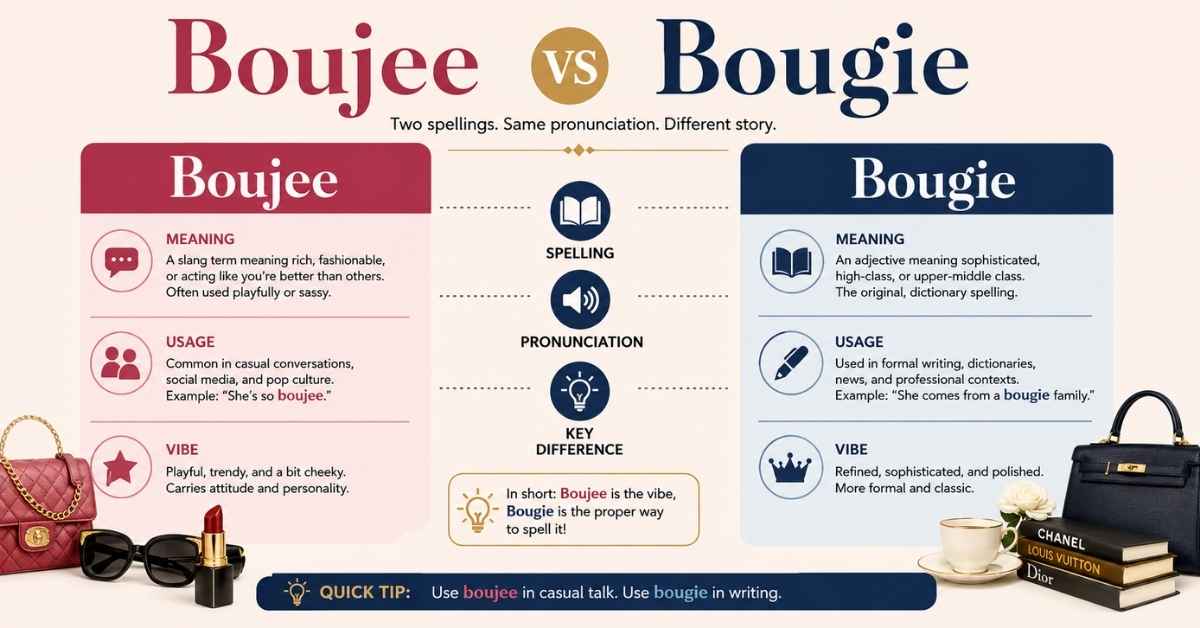
Boujee vs bougie is a comparison many people search for because the two words look similar, sound almost identical, and are often used interchangeably on TikTok, Instagram, X, and in everyday conversations. The short answer is this: “bougie” is the original slang term derived from the French word bourgeois, while “boujee” is a modern spelling popularized by hip-hop and internet culture that often carries a more playful or trendy vibe. Although their meanings overlap, the tone, cultural context, and usage can differ depending on the situation.
If you’ve ever wondered whether it’s correct to call someone bougie or boujee, you’re not alone. Many people hesitate because they don’t want to misuse the term, sound outdated, or misunderstand its cultural roots. The confusion grew even more after the hit song “Bad and Boujee” brought the alternate spelling into mainstream pop culture.
In this guide, you’ll learn what bougie and boujee mean, how they’re different, where they came from, when to use each one, and why context matters more than spelling. Along the way, you’ll also discover practical examples, pronunciation tips, common mistakes, and the cultural evolution of these popular slang words.
Boujee vs Bougie at a Glance
If you’re looking for the quickest answer, this comparison table highlights the key differences.
| Feature | Bougie | Boujee |
|---|---|---|
| Meaning | Someone or something associated with luxury, expensive tastes, or acting upper-class | Modern slang describing a stylish, luxurious, or high-end lifestyle, often with a playful tone |
| Origin | Derived from the French word bourgeois | A modern variation of bougie, popularized through hip-hop and social media |
| Pronunciation | BOO-zhee | BOO-zhee |
| Tone | Can be neutral, humorous, or mildly critical | Usually playful, trendy, or complimentary |
| Common Usage | Everyday conversations, lifestyle discussions, fashion, food, and behavior | Social media, music, memes, captions, and pop culture |
| Positive or Negative? | Depends on context | Usually more positive, but context still matters |
| Popularity | Older and more established | Newer and strongly associated with internet slang |
| Best Used For | Describing refined tastes, expensive habits, or pretentious behavior | Describing modern luxury, stylish aesthetics, or glamorous lifestyles |
Quick Takeaway: In most casual conversations, bougie and boujee are understood similarly. However, bougie is the traditional slang term, while boujee has become a modern pop-culture variation influenced by music and social media.
What Does “Bougie” Mean?
The word bougie is a shortened slang version of the French word bourgeois, originally referring to the middle or upper-middle class. Over time, its meaning shifted in everyday English and African American Vernacular English (AAVE) to describe someone who enjoys—or appears to enjoy—luxurious, upscale, or expensive things.
Today, calling someone bougie doesn’t necessarily mean they’re wealthy. Instead, it often refers to a person with high-end tastes, refined preferences, or a love for luxury experiences.
For example, someone who insists on artisan coffee, boutique hotels, designer handbags, or gourmet dining might jokingly be called bougie.
Modern Definition of Bougie
In modern slang, bougie usually describes someone who:
- Enjoys luxury or premium experiences
- Has expensive tastes
- Prefers designer brands
- Likes upscale restaurants or travel
- Appreciates stylish aesthetics
- Sometimes acts more sophisticated than necessary
The word isn’t always negative. In fact, many people proudly describe themselves as a little bougie, especially when talking about their favorite coffee shop, skincare routine, or travel habits.
How the Meaning Has Changed Over Time
Historically, bourgeois referred to a social class rather than a personality type. As the word evolved into bougie, it gradually became associated with lifestyle, fashion, status symbols, and personal taste rather than social class alone.
Today, saying someone is bougie often means they enjoy life’s finer things, whether or not they can actually afford them.
For example:
- Someone who buys premium candles instead of ordinary ones.
- A friend who only drinks specialty coffee.
- A traveler who prefers luxury resorts over budget accommodations.
- Someone who spends extra money on designer sneakers or handbags.
In these situations, bougie often expresses personality more than financial status.
Is “Bougie” Positive or Negative?
One reason people search for “boujee vs bougie” is because they’re unsure whether bougie is a compliment or an insult.
The answer depends entirely on tone and context.
When It’s Positive
Many people use bougie affectionately.
Examples include:
- “She’s so bougie when it comes to skincare.”
- “He’s bougie about his coffee, but I respect it.”
- “We’re feeling bougie today, so let’s book the rooftop restaurant.”
In these examples, the word suggests good taste, style, or enjoying life’s luxuries without sounding offensive.
When It’s Negative
Sometimes bougie implies that someone is:
- Pretentious
- Materialistic
- Trying too hard to appear wealthy
- Looking down on others
- Obsessed with status symbols
For example:
“He suddenly became bougie after buying one designer jacket.”
Here, the speaker is gently criticizing someone’s attitude rather than complimenting them.
Everyday Situations Where People Use “Bougie”
One reason bougie remains popular is its flexibility. It can describe people, places, products, or experiences.
Fashion
“Her wardrobe is so bougie—everything is designer.”
Food
“This brunch place is ridiculously bougie, but the food is amazing.”
Travel
“They booked a bougie beachfront resort for the weekend.”
Home Decor
“Your apartment looks incredibly bougie with those marble countertops.”
Lifestyle
“I’ve become a little bougie since I discovered luxury candles.”
These examples show how naturally the word fits into modern English.
Why “Bougie” Is Still Popular
The popularity of bougie comes from its ability to express status, aspiration, humor, and personality all at once.
Instead of saying:
- luxurious
- sophisticated
- high-end
- upscale
- expensive
people often choose bougie because it sounds more conversational and relatable.
It has become a staple of internet slang, social media captions, TikTok trends, and everyday texting, making it one of the most recognizable lifestyle slang terms today.
What Does “Boujee” Mean?
At first glance, boujee looks like nothing more than a different spelling of bougie. However, its rise in popularity reflects how language evolves through music, internet culture, and social media.
Today, boujee generally refers to someone or something associated with luxury, style, confidence, and glamorous living. While the meaning overlaps heavily with bougie, boujee often feels more modern, playful, and trend-driven.
Many younger speakers associate boujee with:
- Luxury fashion
- Designer brands
- Beautiful vacations
- Premium beauty products
- Aesthetic lifestyles
- Influencer culture
- Viral TikTok trends
Instead of sounding critical, boujee often celebrates these qualities.
Modern Slang Definition of Boujee
In today’s internet slang, boujee usually describes someone who:
- Loves luxury experiences
- Enjoys fashionable lifestyles
- Appreciates premium products
- Has stylish taste
- Embraces glamorous aesthetics
- Shares luxury moments on social media
For many people, calling someone boujee is similar to saying they have expensive taste with confidence and style.
How “Boujee” Differs from “Bougie”
Although many people use the terms interchangeably, boujee generally carries a lighter and more playful personality.
For example:
“That vacation looked so boujee.”
The speaker is usually admiring the luxurious lifestyle.
Compare that with:
“He’s become really bougie lately.”
This sentence could either be a compliment or mild criticism, depending on tone.
This subtle emotional difference explains why many content creators, influencers, and younger audiences naturally gravitate toward boujee in captions and conversations.
Is “Boujee” a Real Word?
This is one of the most frequently asked questions online.
The answer is yes—but with an important distinction.
While boujee isn’t the traditional spelling derived from bourgeois, it has become a widely recognized slang variation through popular culture. Today, millions of people use it in conversations, memes, hashtags, music, and social media posts.
Like many internet slang terms, its widespread use has made it instantly recognizable, even though it originated as a nonstandard spelling.
When Does “Boujee” Sound Like a Compliment?
Unlike bougie, boujee often carries a more upbeat and aspirational tone.
People commonly use it to compliment:
- Fashion sense
- Luxury vacations
- Beautiful homes
- Stylish restaurants
- Trendy cafés
- Elegant outfits
- High-end beauty routines
- Premium lifestyles
Examples include:
- “Your birthday party looked so boujee!”
- “She’s living her best boujee life.”
- “That rooftop dinner was seriously boujee.”
In these cases, the word conveys admiration rather than criticism.
Why Younger Generations Prefer “Boujee”
Platforms like TikTok, Instagram, Snapchat, and YouTube have transformed boujee into more than just slang—it’s now part of a broader luxury aesthetic and online identity.
For many Gen Z and younger Millennials, boujee represents:
- Confidence
- Self-expression
- Stylish living
- Luxury experiences
- Trend awareness
- Pop culture influence
This modern association explains why boujee frequently appears in captions, lifestyle videos, fashion content, beauty tutorials, and travel posts, making it one of the internet’s most recognizable expressions of aspirational living.
Boujee vs Bougie: The Real Difference Explained
Now that you understand the individual meanings, it’s time to answer the question most people actually came here for: What is the real difference between boujee and bougie?
The truth is that there isn’t a strict dictionary rule separating the two words. Their meanings overlap significantly, and in everyday conversations, many people use them interchangeably. However, there are important differences in origin, cultural evolution, tone, and modern usage that can help you choose the right word with confidence.
Think of it this way:
- Bougie is the older, traditional slang term rooted in the French word bourgeois.
- Boujee is the modern internet and pop-culture variation that became especially popular through hip-hop, social media, and influencer culture.
Understanding these nuances helps you sound more natural and avoid common misunderstandings.
Origin: Where the Words Came From
The biggest difference begins with their history.
Bougie
The word bougie traces its roots to the French word bourgeois, which originally referred to the middle or upper-middle class. Over time, the term evolved in English and African American Vernacular English (AAVE) to describe someone with expensive tastes, refined preferences, or a desire for an upscale lifestyle.
Its meaning gradually shifted away from social class and toward behavior, personality, and lifestyle choices.
Boujee
The spelling boujee is much newer.
Rather than being a separate word with a different origin, it developed as a creative spelling variation of bougie. It gained widespread popularity through hip-hop lyrics, internet slang, memes, and social media, where expressive spellings often become part of online culture.
Today, many people recognize boujee immediately—even if they don’t know its historical connection to bourgeois.
Tone: They Don’t Always Feel the Same
One subtle difference lies in how the words sound emotionally.
Bougie often feels:
- Sophisticated
- Slightly sarcastic
- Sometimes judgmental
- Occasionally humorous
- Context-dependent
For example:
“He’s gotten a little bougie since buying that luxury SUV.”
Depending on the speaker’s tone, this could be playful teasing or mild criticism.
Boujee usually feels:
- Fun
- Trendy
- Stylish
- Confident
- Complimentary
- Social-media friendly
For example:
“Your vacation photos look so boujee.”
Here, the word expresses admiration rather than judgment.
Lifestyle vs. Personality
Another helpful way to think about the difference is what each word typically emphasizes.
Bougie often describes a person’s behavior or attitude.
Examples:
- Someone who only shops at luxury stores.
- A friend who insists on premium coffee.
- A coworker who refuses budget hotels.
Boujee often describes an aesthetic or experience.
Examples:
- A luxury hotel
- A rooftop restaurant
- Designer fashion
- An elegant wedding
- A glamorous vacation
- A beautifully decorated apartment
While both words can describe people or things, boujee often paints a picture of a luxurious lifestyle, whereas bougie frequently comments on someone’s preferences or personality.
Modern Usage: Which Word Do People Use More?
In today’s conversations, both words remain popular—but they’re often used by different audiences.
You’ll commonly see bougie in:
- Everyday conversations
- Lifestyle blogs
- Fashion discussions
- Food reviews
- Home décor content
- Personal conversations
Meanwhile, boujee dominates:
- TikTok captions
- Instagram posts
- Beauty content
- Travel reels
- Influencer marketing
- Luxury lifestyle videos
- Meme culture
This doesn’t mean one is “correct” and the other is “wrong.” Instead, each reflects a slightly different cultural context.
Can You Use Them Interchangeably?
In many casual situations, yes.
For example:
“That brunch spot is so bougie.”
and
“That brunch spot is so boujee.”
Most native English speakers will understand exactly what you mean.
However, subtle differences still exist.
If you’re discussing the historical meaning, language origins, or cultural evolution, bougie is usually the more accurate choice.
If you’re describing a modern luxury aesthetic, trendy fashion, or glamorous social media lifestyle, boujee often sounds more natural.
Quick Decision Guide
Choose bougie when talking about:
- Expensive tastes
- Pretentious behavior
- Upscale preferences
- Lifestyle choices
- Traditional slang
- Cultural history
Choose boujee when talking about:
- Trendy fashion
- Luxury aesthetics
- Influencer culture
- Vacation photos
- Social media captions
- Modern slang
- Stylish experiences
Simple Rule: If you’re describing behavior, bougie usually fits better. If you’re describing aesthetic luxury or modern online culture, boujee often feels more natural.
The Story Behind Both Words: From Bourgeois to Boujee
Language constantly evolves, and bougie and boujee are perfect examples of how words change through culture, music, and everyday conversations.
Understanding this evolution makes the difference between the two terms much easier to remember.
Step 1: Bourgeois
Everything begins with the French word bourgeois.
Historically, bourgeois referred to members of the middle or upper-middle class, particularly people associated with wealth, business, and social status.
Over time, English speakers began using the word more broadly to describe people who valued comfort, respectability, or material success.
Learn More: Welcome Back Synonym
Step 2: Bougie
As language became more conversational, bourgeois gradually shortened into bougie.
The new version was easier to pronounce and fit naturally into everyday speech.
Instead of describing social class, it began describing:
- Expensive tastes
- Luxury preferences
- Fancy habits
- Upscale lifestyles
- Designer fashion
- Gourmet food
- Premium travel
This semantic shift made bougie a personality descriptor rather than a class label.
Step 3: Boujee
The next transformation happened through music, internet culture, and social media.
Creative spellings are common in slang because they add personality and make words feel fresh.
As younger generations embraced expressive language online, boujee emerged as a stylish alternative spelling.
Rather than replacing bougie, it expanded the word’s cultural reach.
A Simple Timeline
Bourgeois
↓
Traditional French social class
↓
Bougie
↓
Modern slang for refined or expensive tastes
↓
Boujee
↓
Contemporary internet slang associated with luxury aesthetics, confidence, and pop culture
Why “Bad and Boujee” Changed Everything
One of the biggest reasons people search “boujee vs bougie” today is because of the enormous cultural impact of the song “Bad and Boujee.”
Before the song became a global hit, many English speakers had never encountered the spelling boujee.
After its release, the term spread rapidly across:
- TikTok
- YouTube
- Memes
- Fashion blogs
- Lifestyle content
- Everyday conversations
Millions of people adopted the spelling because it felt modern, expressive, and instantly recognizable.
As a result, many assumed boujee and bougie were completely different words.
In reality, they remain closely connected, with boujee functioning as a contemporary variation that reflects how slang naturally evolves through music and digital culture.
Is Bougie an Insult?
This depends entirely on who says it, how they say it, and the situation.
Sometimes it’s playful.
Friends often joke with each other.
“You’re so bougie—you won’t drink regular coffee anymore.”
The speaker is teasing, not insulting.
Sometimes it’s admiration.
Someone might say:
“I love your bougie apartment.”
Here, bougie praises someone’s refined style.
Sometimes it’s criticism.
The word can also imply:
- Pretentiousness
- Snobbery
- Materialism
- Looking down on others
- Trying too hard to appear wealthy
For example:
“He became really bougie after getting promoted.”
The meaning depends on the speaker’s tone and relationship with the listener.
How to Avoid Misunderstandings
Before using bougie, ask yourself:
- Am I complimenting someone’s taste?
- Am I joking with a close friend?
- Could this sound judgmental?
- Would another word like stylish, elegant, or luxurious be clearer?
Considering the context helps you avoid unintended offense.
Is Boujee a Compliment?
In many modern conversations, yes.
Unlike bougie, which can sometimes sound critical, boujee usually celebrates luxury, confidence, and style.
People often use it to compliment:
- Fashion choices
- Interior design
- Vacations
- Restaurants
- Beauty routines
- Designer accessories
- Lifestyle content
- Wedding celebrations
Examples include:
“Your outfit is so boujee!”
“That spa looks incredibly boujee.”
“She’s living her best boujee life.”
In these examples, boujee conveys admiration, aspiration, and a sense of enjoying life’s finer experiences.
How People Actually Use These Words Today
Language changes with culture, and today’s usage reflects that evolution.
In Text Messages
Friends often use the words casually:
- “You’re so bougie 😂”
- “That dinner looked boujee!”
- “Stop acting bougie.”
On TikTok
Creators frequently describe:
- Luxury skincare
- Expensive coffee
- Designer outfits
- Vacation destinations
- Home makeovers
with captions such as:
“Come with me for a boujee morning routine.”
On Instagram
You’ll often see captions like:
- “Living my boujee era.”
- “Boujee brunch vibes.”
- “Feeling boujee today.”
These phrases focus more on aesthetic appeal than literal wealth.
In Everyday Conversations
People naturally use the words when talking about:
- Food
- Fashion
- Cars
- Hotels
- Travel
- Beauty
- Shopping
- Home décor
For example:
“This café is a little bougie, but it’s worth every penny.”
or
“That rooftop restaurant feels so boujee.”
In Professional Settings
Although both terms are widely understood, they’re still informal slang.
In business communication, professional writing, or academic contexts, it’s generally better to use alternatives such as:
- luxurious
- upscale
- premium
- refined
- high-end
- sophisticated
This ensures your message remains appropriate for the audience while preserving clarity.
Common Situations Where People Get It Wrong
One reason “boujee vs bougie” continues to trend in search results is that many people unknowingly misuse the terms. The confusion isn’t just about spelling—it’s about context, tone, and cultural meaning.
Let’s clear up the most common mistakes.
Mistake #1: Assuming One Spelling Is Wrong
Perhaps the biggest misconception is believing that either bougie or boujee is incorrect.
The reality is more nuanced.
- Bougie is the older, more established slang form that evolved from bourgeois.
- Boujee is a modern spelling popularized by hip-hop, internet slang, and social media.
Both spellings are widely recognized today, but they developed in different contexts.
Expert Tip: Instead of asking, “Which spelling is correct?” ask, “Which spelling fits my audience and context?”
Mistake #2: Thinking They Always Mean the Same Thing
Although their meanings overlap, their emotional tone can differ.
For example:
Bougie
“He’s become really bougie since getting promoted.”
This may imply someone has become pretentious or overly concerned with status.
Boujee
“Your birthday party looked so boujee!”
This usually expresses admiration for a stylish or luxurious experience.
Understanding this subtle difference helps you sound more natural.
Mistake #3: Equating Bougie With Being Rich
Being bougie doesn’t automatically mean someone is wealthy.
A college student enjoying gourmet coffee every weekend might be described as bougie.
Someone renting a luxury Airbnb for a vacation could also be called bougie.
The term usually reflects taste, preferences, or lifestyle choices, not bank account size.
Mistake #4: Using the Words in Formal Writing
These are informal slang expressions.
Avoid using them in:
- Academic essays
- Professional reports
- Legal documents
- Business proposals
- Corporate emails
Instead, choose words like:
- luxurious
- upscale
- premium
- high-end
- refined
- sophisticated
Mistake #5: Ignoring Cultural Context
Both words have roots connected to African American Vernacular English (AAVE) and broader linguistic evolution.
Understanding that history encourages more respectful and informed usage, especially when discussing the words themselves rather than simply using them in casual conversation.
Bougie or Boujee? Here’s Which One You Should Use
If you’re still wondering which word fits your situation, this quick guide makes the decision much easier.
| Situation | Recommended Word | Why? |
|---|---|---|
| Talking about someone’s expensive taste | Bougie | Traditionally associated with refined preferences |
| Describing a luxury vacation | Boujee | Feels modern and aspirational |
| Discussing fashion trends | Either | Depends on tone |
| Instagram caption | Boujee | Matches social media language |
| Friendly joke | Bougie | Common in casual conversations |
| TikTok video | Boujee | Popular in online culture |
| Talking about gourmet coffee | Bougie | Often describes lifestyle habits |
| Describing luxury aesthetics | Boujee | Highlights stylish experiences |
| Formal writing | Neither | Use “luxurious” or “upscale” instead |
The Easy Rule to Remember
Choose bougie when describing behavior, preferences, or personality.
Choose boujee when describing modern luxury, trendy aesthetics, or social media culture.
Most importantly, pay attention to your audience. In everyday conversations, people often understand both words, but selecting the one that best matches the context makes your communication feel more natural.
The Psychology Behind These Words
Words like bougie and boujee are about much more than luxury. They also reveal how people think about identity, belonging, status, and self-expression.
This is one reason they remain so popular across different generations.
Status Signaling
Humans naturally use language to communicate identity.
Calling something bougie or boujee often signals:
- Appreciation for quality
- Interest in stylish living
- Love of premium experiences
- Personal taste
Sometimes it’s playful, and sometimes it’s aspirational.
Belonging to a Community
Modern slang helps people feel connected.
Using words like boujee in social media captions or text messages shows familiarity with current internet culture.
This creates a sense of belonging among people who share similar interests in fashion, beauty, travel, or lifestyle content.
Humor Makes the Words Popular
Many people intentionally exaggerate.
For example:
“I’m feeling bougie because I bought organic strawberries.”
The humor comes from describing an ordinary experience as if it were luxurious.
This playful exaggeration is one reason the terms spread so quickly online.
Luxury Doesn’t Always Mean Wealth
Another interesting psychological factor is aspiration.
Many people enjoy experiences that feel luxurious, even when they aren’t expensive.
Examples include:
- Lighting scented candles
- Drinking specialty coffee
- Staying in a boutique hotel
- Wearing well-designed clothing
- Decorating a cozy apartment
Calling these experiences bougie or boujee often reflects personal enjoyment, not financial status.
How Social Media Changed Their Meaning
Without social media, the spelling boujee might never have become so widely recognized.
Platforms like TikTok, Instagram, YouTube, and X accelerated the evolution of these words.
TikTok
Lifestyle creators frequently describe:
- Morning routines
- Luxury skincare
- Designer fashion
- Home makeovers
- Expensive vacations
using captions like:
“Come spend a boujee weekend with me.”
Instagram helped connect boujee with visual aesthetics.
Common themes include:
- Rooftop dinners
- Five-star hotels
- Elegant cafés
- Luxury handbags
- Designer shoes
- Beautiful home décor
Influencer Culture
Influencers often use boujee to create an aspirational image.
Interestingly, many products labeled boujee are actually affordable alternatives.
This demonstrates how the word has shifted from describing wealth to describing aesthetic appeal.
Meme Culture
Memes transformed both words into humorous expressions.
Examples include:
- “My dog eats gourmet treats. He’s bougie.”
- “Bought candles on sale… feeling boujee.”
Humor keeps these expressions fresh and relatable.
Regional and Cultural Differences
Although both words are common in American English, their popularity varies across different communities.
United States
Both bougie and boujee are widely recognized.
However, boujee appears more frequently in modern internet culture.
United Kingdom
British English speakers often prefer words such as:
- posh
- fancy
- high-end
Although bougie is becoming more common, especially among younger audiences.
Generational Differences
Gen Z
Frequently uses:
- boujee
- aesthetic
- luxury vibes
- clean girl
- quiet luxury
Millennials
Often use both bougie and boujee, depending on context.
Older generations
May recognize bougie but be less familiar with boujee.
Why Context Always Matters
Language evolves differently across cultures and online communities.
Rather than memorizing rigid rules, focus on:
- Who you’re speaking to
- Where you’re communicating
- The tone you want to create
This approach makes your language feel authentic.
Pronunciation Guide
Fortunately, pronunciation is one of the easiest parts.
Both words are pronounced exactly the same:
Bougie
BOO-zhee
Boujee
BOO-zhee
The spelling changes, but the pronunciation remains consistent.
Easy Memory Trick
Imagine saying:
“Boo” + “zhee”
Once you’ve heard it a few times, it becomes second nature.
Words Often Confused With Bougie and Boujee
Although these words are closely related to luxury and style, they don’t always mean the same thing as other similar expressions.
| Word | Meaning | How It Differs |
|---|---|---|
| Bourgeois | Original French term referring to a social class | Historical origin rather than modern slang |
| Posh | Stylish, elegant, upper-class | Commonly used in British English |
| Fancy | Attractive or luxurious | More neutral and widely understood |
| Upscale | High quality or premium | Suitable for professional writing |
| Luxury | Expensive and exclusive | Describes products or experiences rather than personality |
| Pretentious | Trying to impress others | More negative than bougie |
| Classy | Elegant and tasteful | Generally positive |
| High-maintenance | Requires significant effort or expense | Focuses on behavior rather than style |
| Affluent | Financially wealthy | Refers to income instead of taste |
| Designer | Made by luxury brands | Specific to branded products |
| Aesthetic | Visually appealing style | Popular on social media but broader in meaning |
Understanding these related words helps you choose the most accurate expression instead of relying on bougie or boujee in every situation.
Learn More: Worse Case or Worst Case
Examples You’ll Actually Hear in Real Life
One of the easiest ways to understand boujee vs bougie is to see how native English speakers naturally use these words. While dictionary definitions are helpful, real-life conversations reveal the subtle differences in tone and context.
Friends Talking About Food
Friend A: “Let’s grab burgers.”
Friend B: “Can we go somewhere with truffle fries instead?”
The Friend A: “You’re so bougie.”
Here, bougie playfully teases someone for having expensive or refined tastes.
Social Media Caption
“Weekend getaway at a luxury resort. Feeling boujee ✨.”
In this example, boujee highlights a stylish, glamorous, and aspirational lifestyle rather than criticizing it.
Shopping
“She only buys designer handbags. She’s a little bougie.”
This suggests someone enjoys premium brands and has luxury preferences.
Travel
“That overwater villa looks so boujee!”
The speaker is admiring the destination and its luxury aesthetic.
Coffee Culture
*”I can’t drink instant coffee anymore.”
“Wow… you’ve become really bougie.”*
This jokingly suggests someone’s tastes have become more sophisticated.
Home Décor
“Your apartment looks incredibly boujee with those gold accents and marble countertops.”
The focus here is on visual elegance and upscale design.
Fashion
“Her outfit is simple, but the accessories make it look so boujee.”
The word expresses admiration for a stylish and polished appearance.
Text Messages
Friend: “Booked a rooftop restaurant tonight.”
Reply: “Ooo… getting boujee, I see 😂.”
This casual usage is common in texting and social media conversations.
Myth vs. Fact
There are plenty of misconceptions surrounding bougie and boujee. Let’s separate the myths from the facts.
| Myth | Fact |
|---|---|
| Bougie and boujee are completely different words. | They share the same linguistic roots and have very similar meanings, but their tone and modern usage can differ. |
| One spelling is wrong. | Both spellings are widely recognized today, although bougie has older historical roots. |
| Bougie is always an insult. | Not at all. It can be a compliment, a joke, or mild criticism depending on context. |
| Boujee only describes wealthy people. | It often describes style, aesthetics, or luxurious experiences, regardless of someone’s income. |
| Only Gen Z uses these words. | Millennials, Gen Z, influencers, and many everyday English speakers use them in casual conversations. |
| You shouldn’t use these words at all. | They’re perfectly acceptable in informal conversations, texting, and social media, but they’re generally unsuitable for formal or academic writing. |
Expert Tips for Using These Words Naturally
Understanding the meaning is one thing. Using the words confidently is another. These practical tips can help you sound more natural.
1. Match the Tone to the Situation
Use bougie when discussing:
- Refined tastes
- Fancy habits
- Premium preferences
- Lifestyle choices
- Gentle teasing
Use boujee when talking about:
- Luxury aesthetics
- Fashion
- Beautiful vacations
- Stylish restaurants
- Social media posts
2. Don’t Overuse Them
Calling everything bougie or boujee can make your speech repetitive.
Mix in alternatives like:
- luxurious
- upscale
- stylish
- elegant
- premium
- high-end
- classy
- sophisticated
This creates more natural, engaging communication.
3. Consider Your Audience
A close friend may appreciate being called bougie as a joke.
A coworker or client might misunderstand the word.
When in doubt, choose more neutral language in professional settings.
4. Understand the Cultural Context
Because bougie and boujee have ties to African American Vernacular English (AAVE) and have evolved through hip-hop, pop culture, and internet communities, it’s helpful to understand their background rather than treating them as just trendy buzzwords.
Appreciating their origins leads to more informed and respectful usage.
5. Focus on Context, Not Rules
Language constantly evolves.
Rather than memorizing strict definitions, pay attention to how people naturally use these words in conversations, social media, and popular culture.
That’s often the best guide.
Frequently Asked Questions
Is boujee the same as bougie?
Not exactly. Bougie is the older slang term derived from bourgeois, while boujee is a modern spelling popularized through music and social media. Their meanings overlap, but boujee often feels more playful and trend-driven.
Which spelling is correct: bougie or boujee?
Both spellings are widely recognized today. Bougie has stronger historical roots, while boujee has become common in modern slang and pop culture.
Is bougie an insult?
It can be—but not always.
Depending on the tone, bougie can express admiration, playful teasing, or criticism of someone perceived as pretentious or overly focused on luxury.
Is boujee a compliment?
Often, yes.
Many people use boujee positively to describe someone or something that feels stylish, luxurious, fashionable, or aesthetically pleasing.
What does bougie mean in texting?
In text messages, bougie usually describes someone with expensive taste, refined preferences, or a love for premium experiences. It’s commonly used in a humorous or affectionate way.
Why do rappers say boujee?
The spelling boujee became especially popular through hip-hop, where creative language and expressive spellings are common. Music helped introduce the term to a much wider audience and accelerated its adoption in internet slang.
Is boujee in the dictionary?
Some dictionaries and language references now recognize boujee as a widely used slang variant because of its popularity in modern English, even though bougie remains the older, more traditional form.
Can I call myself bougie?
Absolutely.
Many people jokingly describe themselves as bougie when talking about enjoying gourmet coffee, luxury skincare, designer fashion, boutique hotels, or other premium experiences.
What is the opposite of bougie?
There isn’t one perfect opposite, but depending on the context, words like simple, down-to-earth, modest, casual, or low-key may convey the opposite idea.
How do you pronounce bougie?
Both bougie and boujee are pronounced:
BOO-zhee
The spelling differs, but the pronunciation stays the same.
Why are people debating these words online?
Most debates revolve around spelling, cultural origins, and usage. Some people prefer bougie because of its historical connection to bourgeois, while others naturally use boujee because it’s the version they encountered through music, memes, and social media.
Which term should I use in 2026?
If you’re writing about language, history, or traditional slang, bougie is usually the better choice.
If you’re talking about fashion, luxury aesthetics, travel, lifestyle content, or social media, boujee often feels more contemporary.
Ultimately, context matters more than spelling.
Final Verdict: Boujee vs Bougie
So, boujee vs bougie—which one should you use?
The answer depends on what you’re trying to express.
If you’re referring to expensive tastes, refined preferences, or someone’s personality, bougie is generally the safer and more traditional choice. It carries historical roots connected to bourgeois and has long been used to describe people, habits, or lifestyles associated with luxury or sophistication.
If you’re talking about modern fashion, luxury aesthetics, glamorous experiences, influencer culture, or social media, boujee often feels more current, playful, and expressive. Its rise through hip-hop, viral content, and internet slang has made it a familiar part of everyday online language.
The most important takeaway is that neither word is inherently right or wrong. Their meanings overlap, their pronunciation is the same, and most native English speakers understand both. The real difference lies in tone, cultural context, and audience.