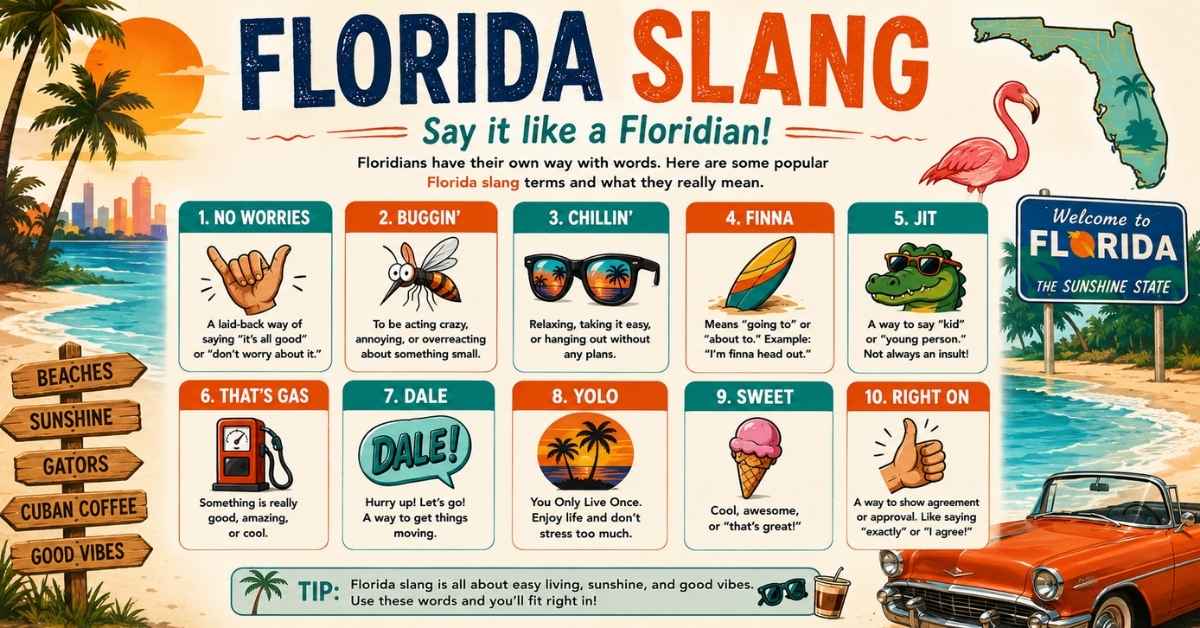
Florida slang refers to the informal words, phrases, and expressions used by people living in Florida that reflect the state’s unique mix of Southern culture, Caribbean influence, Hispanic communities, coastal lifestyles, and modern internet language. Unlike a single regional dialect, Florida slang changes depending on where you are—from the Southern expressions of North Florida to the multicultural vocabulary heard in Miami and South Florida.
Understanding Florida slang is about more than learning a list of words. It helps visitors, newcomers, and language enthusiasts understand how Floridians communicate, what expressions locals actually use, and how language reflects Florida’s diverse identity. A phrase heard in Miami may sound completely different from something common in Jacksonville or the Florida Panhandle.
Florida’s language has developed through generations of migration, tourism, music, and cultural exchange. The result is a constantly evolving collection of Florida phrases, regional expressions, local slang words, and conversational terms that reveal the personality of the state.
What Is Florida Slang?
Florida slang is the casual language used in everyday conversations by Floridians. These expressions may come from traditional Southern dialects, Caribbean English, Spanish-speaking communities, youth culture, hip-hop, social media, and local lifestyles.
Slang is different from standard vocabulary because it is usually:
- Informal
- Community-driven
- Region-specific
- Constantly changing
- Connected to social identity
For example, someone in rural North Florida may use expressions connected to Southern speech, while someone in Miami may use slang influenced by Cuban-American culture, Caribbean communities, and bilingual conversations.
Florida does not have one universal slang system. Instead, it has several overlapping language styles shaped by geography and culture.
Why Florida Slang Sounds Different From Other States
Florida’s language is unique because the state is a meeting point of several cultures. Unlike many regions with one dominant linguistic influence, Florida combines multiple traditions.
Southern Influence in North Florida
Northern parts of Florida often share language patterns with the broader American South.
Cities and areas such as:
- Jacksonville
- Tallahassee
- Pensacola
- Gainesville
often have stronger connections to traditional Southern speech.
Common examples include:
- Y’all — a casual way to say “you all”
- Fixin’ to — preparing or planning to do something
- Reckon — think or suppose
- Might could — informal expression meaning “might be able to”
Example:
“Y’all fixin’ to head out later?”
This type of speech reflects Florida’s historical connection to Southern culture.
Caribbean and Latin Influence in South Florida
South Florida, especially Miami, has one of the most culturally diverse language environments in the United States.
Florida slang in this region has been influenced by:
- Cuban culture
- Caribbean communities
- Latin American immigration
- Spanish-English bilingual speakers
- Miami street culture
This has created unique forms of communication often described as Miami slang or Miami English.
You may hear:
- English mixed with Spanish expressions
- Caribbean-influenced phrases
- Youth slang popularized through music and social media
This cultural blend is one reason Miami’s language feels different from other Florida regions.
Tourism and Coastal Culture
Florida’s beaches, boating communities, fishing culture, and tourism industry also influence local expressions.
Coastal communities often develop vocabulary connected to:
- Beach life
- Water activities
- Fishing
- Weather
- Outdoor lifestyles
The language of someone living near the Florida Keys may naturally differ from someone living inland in Orlando.
The Most Common Florida Slang Words Locals Actually Use
While some Florida slang terms are widely recognized, others are strongly connected to specific communities or age groups. Context matters because not every Floridian uses every expression.
The table below includes examples of Florida slang words and phrases, their meanings, and how they are commonly used.
| Florida Slang | Meaning | Example |
|---|---|---|
| Jit | A young person or kid | “That jit is fast on the basketball court.” |
| Y’all | You all | “Are y’all coming to the beach?” |
| Fixin’ to | About to do something | “I’m fixin’ to leave soon.” |
| The Keys | Florida Keys region | “We’re heading down to the Keys this weekend.” |
| No-see-ums | Tiny biting insects common in coastal areas | “Bring bug spray because the no-see-ums are bad.” |
| Snowbird | Someone who spends winters in Florida and summers elsewhere | “The snowbirds arrive every year.” |
| Freshwater | Refers to inland Florida areas away from the coast | “He’s from freshwater Florida.” |
Everyday Florida Slang Words You May Hear in Conversations
Jit
One of the most searched Florida slang terms is “jit.”
In many Florida communities, especially South Florida, jit is commonly used to describe a young person, teenager, or kid.
Example:
“That jit thinks he can outrun everyone.”
The word is strongly associated with Florida youth culture and is often found in music, online conversations, and casual speech.
However, usage depends heavily on community and age group. Older Floridians may recognize the term without using it themselves.
Y’all
Although y’all is not exclusive to Florida, it is extremely common in many parts of the state, especially North Florida.
It is a shortened form of:
“you all”
Example:
“Are y’all going to the game tonight?”
It is one of the clearest examples of Florida’s connection to broader Southern language patterns.
No-See-Ums
Florida residents know that outdoor life comes with unique challenges.
No-see-ums are tiny biting insects found in warm, humid environments, especially near beaches and wetlands.
Example:
“The sunset was beautiful, but the no-see-ums were everywhere.”
This phrase represents how Florida’s environment influences everyday language.
Snowbird
A snowbird is someone who moves to Florida during colder months, usually from northern states or Canada.
Example:
“Traffic gets busy when the snowbirds come back.”
This word is strongly connected to Florida’s seasonal population changes.
Florida Slang for Friends and People
Different communities have different ways of referring to friends, groups, or individuals.
Some expressions you may hear include:
- Bro
- Dude
- Homie
- My guy
- Fam
- Y’all
In younger Florida communities, especially influenced by social media and music culture, newer slang continues to develop.
The important thing to remember:
Authentic Florida slang depends on location, age, and community.
A phrase commonly used by teenagers in Miami may not sound natural in a small North Florida town.
Miami Slang: Expressions You Hear in South Florida
When people talk about Florida slang, they often think about Miami slang because Miami has one of the most recognizable language cultures in the state. The city’s unique vocabulary comes from decades of immigration, multicultural communities, music, nightlife, and the influence of Cuban-American, Caribbean, and Latin American cultures.
Miami does not simply have “Florida slang.” It has its own communication style shaped by:
- Spanish-English language mixing
- Caribbean expressions
- Urban youth culture
- Hip-hop and social media influence
- International communities
This makes Miami English different from the traditional Southern speech patterns found in parts of North Florida.
Common Miami Slang and Expressions
| Miami Expression | Meaning | Example |
|---|---|---|
| Dale | A Spanish expression meaning “let’s go” or “go ahead,” commonly heard in Miami conversations | “Dale, let’s head out.” |
| La familia | Family or close community | “I’m spending time with la familia.” |
| Papi | A casual term that can mean friend, man, or an affectionate expression depending on context | “What’s up, papi?” |
| Bih | Informal slang for a person or someone being discussed | “That bih was acting crazy.” |
| Jit | Young person, kid, teenager | “That jit is always outside playing.” |
Important: Not every Miami resident uses every slang term. Language changes based on age, neighborhood, cultural background, and social group.
How Miami Slang Differs From the Rest of Florida
Florida is often described as one state, but linguistically it contains several different worlds.
| Region | Language Influence | Common Characteristics |
|---|---|---|
| Miami / South Florida | Caribbean, Cuban, Latin American | Multicultural slang, bilingual expressions |
| Central Florida | Tourism, migration, younger communities | Mixed vocabulary and modern expressions |
| North Florida | Southern culture | Traditional Southern phrases |
| Florida Keys | Coastal lifestyle | Boating, fishing, island expressions |
Someone from Miami and someone from the Florida Panhandle may both be Floridians, but their everyday speech can sound very different.
Tampa, Orlando, Jacksonville, and Regional Florida Expressions
A major weakness in many Florida slang lists is that they treat the entire state as if everyone talks the same way. In reality, Florida has strong regional differences.
Tampa Slang and Gulf Coast Expressions
Tampa slang reflects the city’s combination of:
- Cuban heritage
- Gulf Coast lifestyle
- Sports culture
- Fishing communities
- Multicultural neighborhoods
Tampa’s language is influenced by both traditional Florida culture and newer urban expressions.
Common conversational themes include:
- Beach life
- Weather
- Boats
- Local neighborhoods
- Food culture
A phrase that sounds natural around Tampa Bay may not be commonly heard in inland Florida communities.
Orlando Slang and Central Florida Language
Orlando has a unique language environment because of:
- Tourism
- International residents
- Young professionals
- Theme park culture
The city attracts people from around the world, which creates a constantly changing mix of expressions.
Orlando slang often reflects:
- Modern internet language
- Youth culture
- Entertainment communities
- Diverse backgrounds
Because of its large visitor population, Orlando residents often develop their own ways of describing tourists, traffic, attractions, and local experiences.
Jacksonville and North Florida Expressions
Jacksonville and North Florida generally have stronger connections to traditional Southern speech.
You may hear:
- Y’all
- Bless your heart
- Fixin’ to
- Over yonder
- Might could
These expressions connect Florida’s northern region with the broader Southern United States.
However, Jacksonville’s growing population has also brought new influences, creating a blend of old and modern Florida speech.
Florida Keys Slang and Coastal Expressions
Life in the Florida Keys creates its own vocabulary.
Island communities often use expressions connected to:
- Fishing
- Boating
- Weather
- Ocean life
- Relaxed lifestyles
Common themes include:
- “Island time”
- Boat culture
- Water conditions
- Local fishing terms
The language reflects a slower-paced coastal lifestyle that feels different from cities like Miami or Orlando.
Learn More: What Does WBU Mean
Funny Florida Slang and Sayings That Capture Local Culture
Florida is famous for having a personality unlike anywhere else in the United States. Some expressions are funny because they reflect everyday realities of living in the state.
“It’s Florida”
One of the most recognizable Florida attitudes is accepting the unexpected.
A strange weather event, unusual animal encounter, or surprising situation may simply receive the response:
“Only in Florida.”
This phrase became popular because Florida has developed a reputation for unusual stories and unpredictable moments.
“The Weather Changes Every Five Minutes”
Many Floridians joke about the state’s unpredictable weather.
A common experience:
- Sunny morning
- Heavy rain afternoon
- Humidity by evening
Weather-related humor is a major part of Florida culture.
“Don’t Like the Weather? Wait a Minute.”
This saying captures Florida’s fast-changing climate.
It reflects:
- Sudden storms
- Tropical conditions
- Humidity changes
“Florida Has Two Seasons”
A popular joke among residents is:
- Hot
- Less hot
While humorous, it reflects how strongly climate shapes daily conversations.
Florida Slang Tourists Often Misunderstand
Visitors often search Florida slang because they want to understand locals. However, many online articles create confusion by mixing real expressions with stereotypes.
Here are examples of phrases outsiders may misunderstand.
Snowbird
Tourist understanding:
Someone who visits Florida.
Local meaning:
A seasonal resident, usually someone who spends winters in Florida and summers somewhere else.
Example:
“Traffic gets heavier when the snowbirds arrive.”
The Keys
Tourist understanding:
A random beach destination.
Local meaning:
A specific island chain with its own lifestyle, culture, and communities.
Freshwater Florida
Tourist understanding:
A place with lakes.
Local meaning:
An informal way of referring to inland areas away from coastal communities.
Florida Man
Tourist understanding:
A normal Florida expression.
Reality:
Mostly an internet meme based on unusual news stories.
It is part of Florida’s online identity but is not everyday slang used naturally by most residents.
Real Florida Slang vs Florida Stereotypes
One of the biggest problems with existing articles is confusing Florida culture with actual slang.
A good Florida slang guide should separate real language from internet jokes.
Real Florida Expressions
These are words and phrases connected to everyday life:
- Y’all
- Snowbird
- No-see-ums
- The Keys
- Jit
- Island time
- Freshwater Florida
These expressions have cultural meaning and are used in real conversations.
Florida Stereotypes That Are Not Really Slang
Some Florida-related terms are popular online but are not commonly used as everyday expressions:
Florida Man
A viral internet phrase, not a normal greeting or local nickname.
Gator Everything
Alligators are a real part of Florida wildlife, but constantly mentioning “gators” does not make someone sound like a local.
“Paradise”
Although Florida is associated with beaches and vacations, locals usually do not describe everyday life using tourist marketing language.
Why Authentic Context Matters When Learning Florida Slang
A common mistake outsiders make is trying to use slang without understanding the culture behind it.
Language works because of:
- Timing
- Relationship
- Location
- Community
Using a phrase naturally requires understanding:
- Who says it
- Where it is common
- Whether it is casual or outdated
The goal is not to imitate Floridians. The goal is to understand how Florida’s communities communicate.
How to Sound More Like a Floridian (Without Trying Too Hard)
Learning Florida slang is not about forcing yourself to use every local phrase you find online. In fact, one of the fastest ways to sound unnatural is to use slang without understanding the situation behind it.
Real local communication comes from understanding:
- Context
- Community
- Region
- Age group
- Culture
A person from Miami may communicate differently from someone in Jacksonville or the Florida Panhandle. A teenager in Orlando may use completely different expressions from someone who has lived in Florida for decades.
The best way to sound more natural is to listen first and use expressions only when they genuinely fit.
What To Do When Learning Florida Slang
Listen to Locals
The most authentic Florida phrases usually come from everyday conversations, not internet lists.
Pay attention to:
- How people greet each other
- How friends communicate
- How locals describe places
- How different generations speak
Understand Regional Differences
Do not assume all Florida slang works everywhere.
For example:
- Miami slang often reflects Caribbean and Latin influences.
- North Florida expressions often sound closer to traditional Southern speech.
- Coastal communities use language connected to boating and beach life.
Use Slang Naturally
A phrase becomes authentic when it fits the conversation.
For example:
Natural:
“Are y’all heading to the beach later?”
Forced:
“Hey y’all, I’m using Florida slang now.”
The difference is understanding the culture instead of copying words.
What To Avoid When Using Florida Slang
Don’t Use Every Word You See Online
Many “Florida slang” articles mix:
- Real local expressions
- General American slang
- Internet jokes
- Outdated phrases
Not every word associated with Florida is something locals actually say.
Don’t Overuse Regional Expressions
Someone from Miami may not naturally use expressions common in rural North Florida.
Language changes from:
- City to city
- Generation to generation
- Community to community
Don’t Confuse Florida Culture With Slang
Florida culture includes:
- Beaches
- Wildlife
- Theme parks
- Cuban food
- Southern traditions
- Coastal lifestyles
But not every Florida-related word is slang.
Florida Slang in Real Conversations
Seeing slang inside realistic conversations makes it easier to understand how locals actually use language.
Conversation Example 1: Friends Making Plans
Regular English:
“Are you all going to the beach later?”
Florida-style conversation:
“Y’all heading to the beach later?”
Explanation:
The word “y’all” is common throughout many Southern-influenced parts of Florida. It sounds casual and natural in everyday conversations.
Conversation Example 2: Talking About a Young Person
Conversation:
“That jit is always playing basketball after school.”
Meaning:
The speaker is referring to a younger person, often a teenager or kid.
Cultural Context:
Jit is strongly associated with Florida youth culture, especially in parts of South Florida.
Conversation Example 3: Talking About Seasonal Residents
Conversation:
“The roads are packed again. The snowbirds are back.”
Meaning:
The speaker is referring to seasonal visitors who spend colder months in Florida.
Cultural Context:
The term snowbird is deeply connected to Florida’s seasonal population patterns.
Florida Slang Compared With Southern Slang
Florida is often grouped with the American South, but its language is more complicated.
Some Florida expressions overlap with Southern slang, especially in North Florida, while other areas have completely different influences.
| Florida Slang Influence | Southern Slang Influence |
|---|---|
| Caribbean expressions | Traditional Southern phrases |
| Spanish-English mixing | Rural Southern vocabulary |
| Coastal language | Country expressions |
| Urban youth slang | Older regional speech |
Similarities
North Florida shares expressions common across the South:
- Y’all
- Fixin’ to
- Bless your heart
- Reckon
Differences
South Florida language often includes:
- Spanish influence
- Caribbean expressions
- Multicultural vocabulary
- International phrases
This makes Florida one of the most linguistically diverse states in the country.
How Florida Slang Has Changed Over Time
Like all language, Florida slang evolves constantly.
The expressions people use today are influenced by:
Migration
Florida has attracted millions of new residents from:
- Northern states
- Latin America
- Caribbean countries
- Other parts of the United States
Each group contributes new words and communication styles.
Music and Entertainment
Hip-hop, social media, and popular culture have accelerated the spread of youth slang.
Terms that begin in local communities can quickly become nationally recognized.
Internet Culture
Platforms like:
- TikTok
- YouTube
have changed how slang spreads.
A phrase that starts in one Florida neighborhood can reach millions of people within weeks.
Florida Slang Cheat Sheet
| Category | Examples |
|---|---|
| Everyday expressions | Y’all, fixin’ to |
| Youth slang | Jit |
| Coastal language | Island time, Keys |
| Seasonal Florida terms | Snowbird |
| Environmental terms | No-see-ums |
| Regional language | Miami slang, Southern expressions |
Frequently Asked Questions About Florida Slang
What is Florida slang?
Florida slang is the collection of informal words, phrases, and expressions used by Floridians in everyday conversations. It combines influences from Southern dialects, Caribbean culture, Hispanic communities, coastal lifestyles, and modern youth language.
What words make you sound like a Floridian?
Words and expressions often associated with Florida include:
- Y’all
- Snowbird
- The Keys
- No-see-ums
- Jit
However, sounding like a Floridian depends more on understanding local culture than memorizing slang.
What slang words are unique to Florida?
Some expressions strongly associated with Florida include:
- Jit
- Snowbird
- No-see-ums
- Freshwater Florida
- The Keys
Some are more regional than statewide.
What does “jit” mean in Florida slang?
Jit usually refers to a young person, kid, or teenager. It is especially associated with South Florida youth culture and casual conversations.
Example:
“That jit is always outside playing.”
Is Miami slang different from the rest of Florida?
Yes. Miami slang is heavily influenced by:
- Cuban culture
- Caribbean communities
- Spanish language
- International migration
It often sounds different from the Southern-style expressions common in North Florida.
Do all Floridians use the same slang?
No. Florida has several regional language styles.
A person from:
- Miami
- Orlando
- Tampa
- Jacksonville
- The Florida Keys
may use different expressions because of different cultural influences.
What Florida slang should tourists know?
Visitors should understand expressions like:
- Snowbird
- The Keys
- No-see-ums
- Y’all
- Island time
These terms can help tourists understand local conversations.
What are some funny Florida sayings?
Popular humorous Florida expressions include:
- “Only in Florida.”
- “Don’t like the weather? Wait a minute.”
- “Florida has two seasons: hot and less hot.”
These sayings reflect the state’s unusual weather and reputation for unexpected events.
How can I learn Florida slang?
The best way to learn authentic Florida slang is to:
- Listen to locals
- Spend time in different regions
- Understand cultural context
- Avoid copying internet stereotypes
Language is learned through interaction, not memorization.
Final Thoughts:
Florida slang is more than a collection of funny words. It is a reflection of the people, history, and communities that shaped the state.
From the Southern expressions of North Florida to the multicultural language of Miami and the coastal vocabulary of the Florida Keys, the way Floridians speak tells a story about migration, environment, and identity.
The most authentic way to understand Florida slang is not simply learning a list of phrases. It is understanding why people use them, where they come from, and what they reveal about local culture.
Whether you are visiting Florida, moving there, researching regional dialects, or simply curious about how locals communicate, knowing these expressions gives you a better connection to the people behind the language.
Because in Florida, words are not just words—they are a reflection of the places, communities, and experiences that make the state unique.